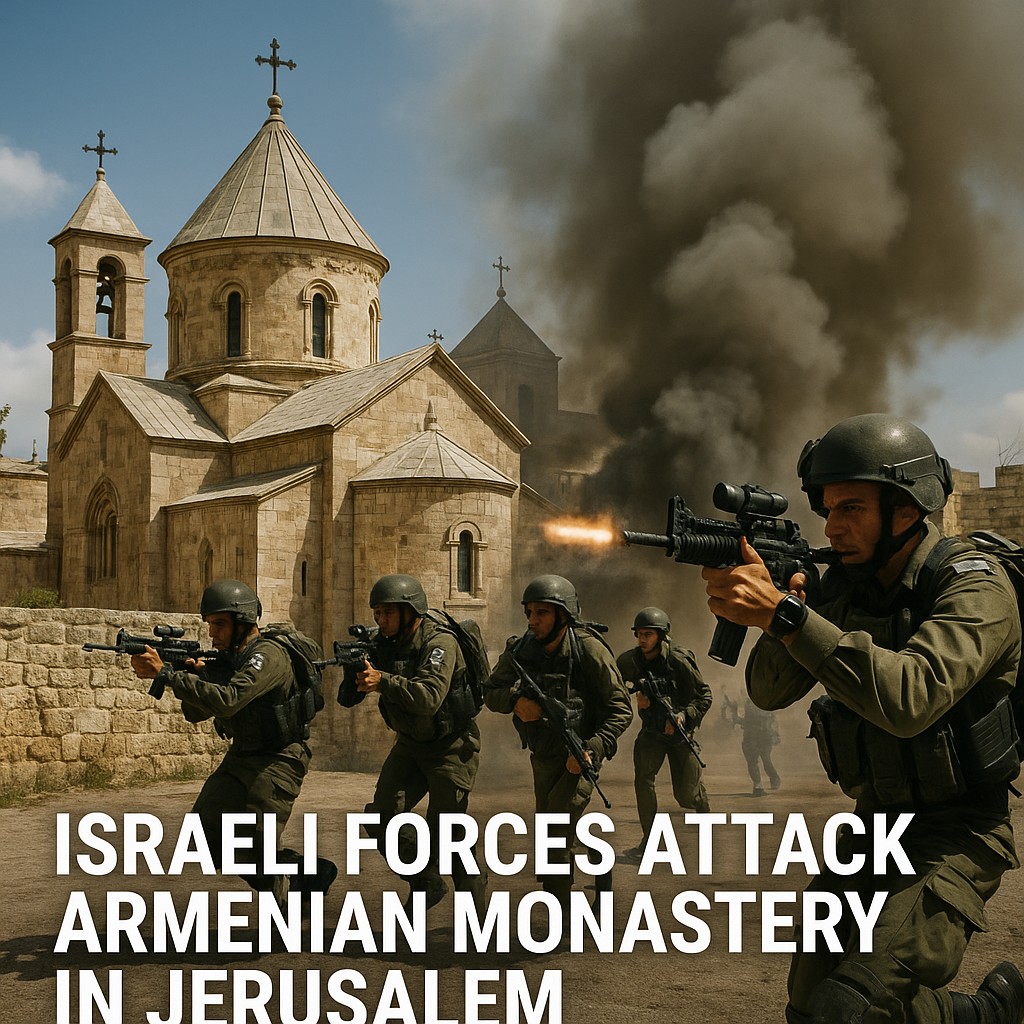
Israeli Forces Attack Armenian Monastery in Jerusalem
Tensions Escalate: Israeli Forces Attack Armenian Monastery in Jerusalem
The recent attack on an Armenian monastery in Jerusalem has sparked significant concern and debate about the ongoing tensions in the region. As reported by multiple news sources, this incident has reignited discussions around religious freedoms, cultural heritage, and the complexities of the Israeli-Palestinian conflict.

Context of the Attack
Located within Jerusalem’s Old City, the Armenian Monastery is a significant site not just for the Armenian community but for the Christian heritage of the region as a whole. Reports indicate that the Israeli forces entered the monastery while confronting what they deemed security threats. Al Jazeera’s coverage highlights that the incident occurred amid rising tensions over administrative policies and practices that affect various religious communities, particularly in the area surrounding the Old City.

According to Turkish news outlets and independent reports circulated via Sky News, the Israeli forces’ actions were characterized as part of a broader pattern of enforcement measures that raise alarms about the rights of religious minorities in Jerusalem. Various groups within the Armenian community, including church leaders, have condemned the attack, arguing that it represents an infringement on their rights and freedoms.

Diverse Perspectives on the Incident
The responses to the attack have been polarized, reflecting the multifaceted realities of life in Jerusalem. On one side, advocates for Israeli security measures argue that actions taken by the military are necessary to prevent violence and maintain order. They position the Armenian monastery incident within a context of alleged threats by various factions in the region, suggesting that the military’s presence is crucial for the safety of all inhabitants, including religious minorities.
Conversely, Armenian community leaders and rights organizations depict the military’s actions as oppressive and unjustified. They argue that such confrontations not only threaten the sanctuary of religious sites but also symbolize a broader neglect of minority rights under Israel’s governance. “This is not just an attack on our monastery; it’s an attack on our existence and our rights,” stated an Armenian community representative in one report. The emotional toll of such events is particularly poignant for communities with historical roots in the region, as many fear that their heritage is at risk.
The Role of Heritage and Religious Rights
The Armenian monastery represents more than just a building; it embodies centuries of faith, culture, and resilience. Attacks on such sites can be perceived as symbolic assaults on the identities of communities that have coexisted in Jerusalem for generations. Various stakeholders, including religious leaders and international observers, express concerns that the increasing militarization of religious sites may lead to broader conflicts.
A nuanced understanding of the religious landscape in Jerusalem is crucial for fostering dialogue and understanding. Past incidents have demonstrated how tensions can escalate quickly, making it imperative for all sides to consider the implications of their actions. “We must remember that Jerusalem is a mosaic of faiths; we need to protect all our communities for peace to flourish,” emphasized a mediator familiar with interfaith relations in the area.
Future Implications
As tensions continue to rise, it becomes ever more important to foster dialogue among all parties involved. The Armenian monastery attack has amplified calls for better safeguarding of religious sites and more protective measures for minority rights.
Internationally, there is a growing sentiment that diplomacy should be prioritized over militaristic approaches. Advocates for human rights urge global actors to engage constructively, encouraging a peaceful resolution that respects cultural and religious diversity.
The complexities surrounding the Armenian monastery attack illustrate that the challenges in Jerusalem are deeply rooted in historical grievances and a struggle for identity in an increasingly turbulent political landscape. While differing opinions persist, the necessity for understanding and dialogue among the various communities remains paramount for any lasting resolution.
Conclusion
The recent attack on the Armenian monastery in Jerusalem has underscored a pressing need for dialogue and mutual respect among diverse religious communities in the region. As the situation evolves, it is vital to reflect on the broader implications of such events and to advocate for the protection of cultural heritage and religious rights. Achieving lasting peace will require a commitment to understanding the intricate dynamics at play in Jerusalem and fostering an environment of coexistence.