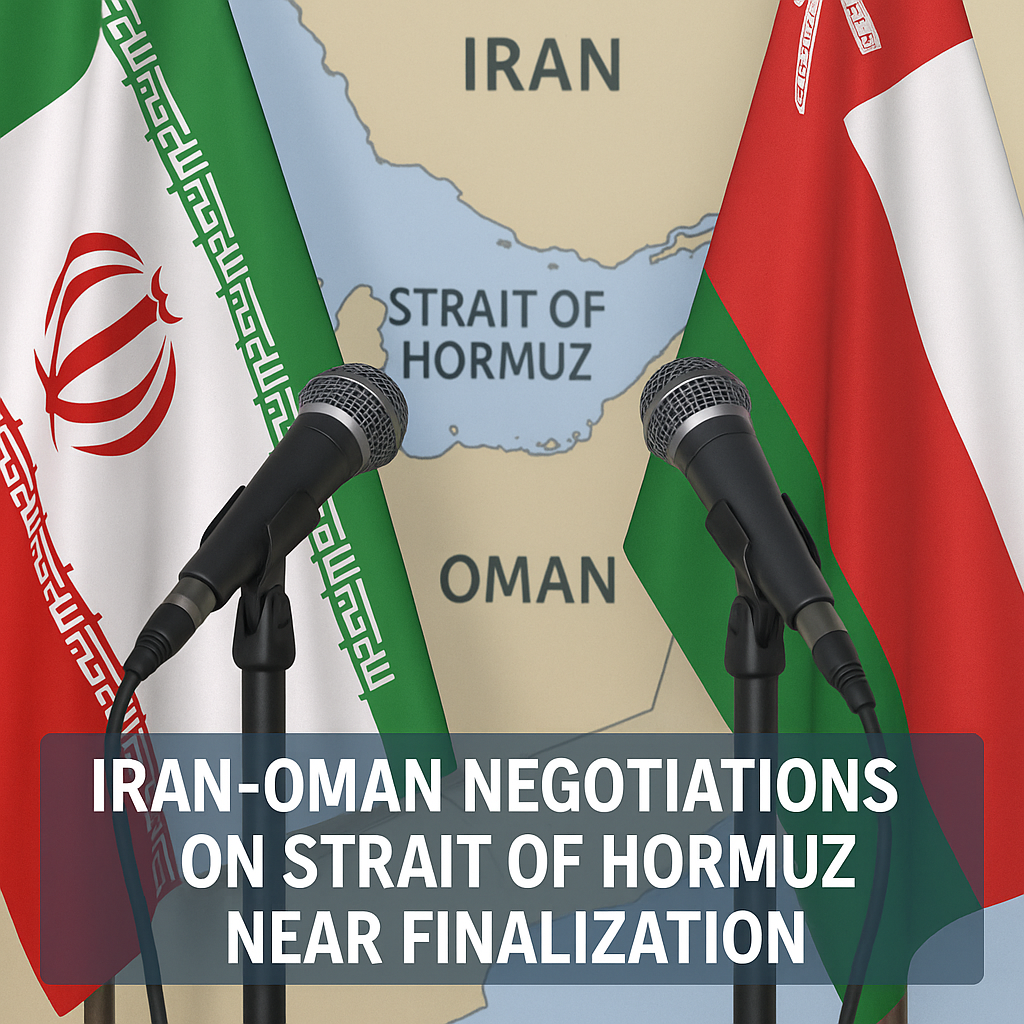
Iran-Oman Negotiations on Strait of Hormuz Near Finalization
Iran-Oman Negotiations: The Strait of Hormuz at a Critical Juncture
Recent developments indicate that negotiations between Iran and Oman regarding the strategic Strait of Hormuz are nearing finalization. This region is crucial for global oil and gas transportation, making the discussions particularly vital not just for the involved parties but also for international stakeholders.

The Strategic Importance of the Strait of Hormuz
The Strait of Hormuz serves as a gateway for a significant portion of the world’s oil exports. Approximately 20% of the global oil supply passes through this narrow waterway, making it a focal point for geopolitical dynamics in the Middle East. Control and stability in the region are of paramount importance to ensure the continuity of global trade routes.

Iran’s initiative to strengthen ties with Oman is interpreted as part of its broader strategy to enhance stability in the region. As Al Jazeera reports, the Iranian Foreign Minister, Hossein Amir-Abdollahian, expressed optimism over the negotiations, indicating that they are progressing favorably. These discussions include pivotal issues such as maritime security and trade facilitation, which directly affect both nations’ economic prospects.

Diverse Perspectives on the Negotiations
While many experts see the potential for a pivotal agreement, others caution against overestimating the impact of the negotiations. For instance, RT News stresses that any agreement is contingent upon Iran’s broader relations with the West and regional powers, particularly Saudi Arabia. The geopolitical chessboard remains complex, with various regional players influencing the stability of the Strait.
Additionally, Oman’s role as a mediator has historically positioned it as a neutral party in Middle Eastern conflicts. It has cultivated relationships with both Iran and Western nations. Such a balancing act might be critical in facilitating an agreement, as highlighted in various analysis pieces. However, the extent to which Oman can exert influence over Iran remains an open question, especially given the latter’s robust stance on its territorial claims and maritime rights.
Economic and Political Implications
As negotiations progress, the economic implications for both countries become increasingly salient. The Strait of Hormuz is not only vital for oil transportation but also for the broader economic stability of the region. If an agreement is reached, it could lead to more consistent oil supplies, benefiting global markets still recovering from prior disruptions.
However, opportunities for economic partnership need to be balanced with political realities. The long-standing tensions between Iran and Saudi Arabia, alongside the unpredictable nature of U.S.-Iran relations, add layers of complexity to the prospects of a stable agreement. Analysts suggest that the outcome of these negotiations could significantly influence the geopolitical climate in the Gulf, potentially leading to either a decrease or an escalation of tensions in the region.
Conclusion: A Path to Stability or a Mere Illusion?
As the negotiations between Iran and Oman approach their final stages, the dual-edged nature of diplomacy in such a critical region is on full display. While there is hope for a stabilizing agreement, the political landscape remains fraught with uncertainties. For many experts, these talks symbolize a potential for easing tensions, but the road ahead is anything but clear.
The deliberations not only spotlight the Strait of Hormuz’s significance but also illuminate the intricate web of relationships that define Middle Eastern geopolitics. As stakeholders worldwide keep a close eye on these negotiations, the outcome will undoubtedly impact both regional security dynamics and global energy markets for years to come.