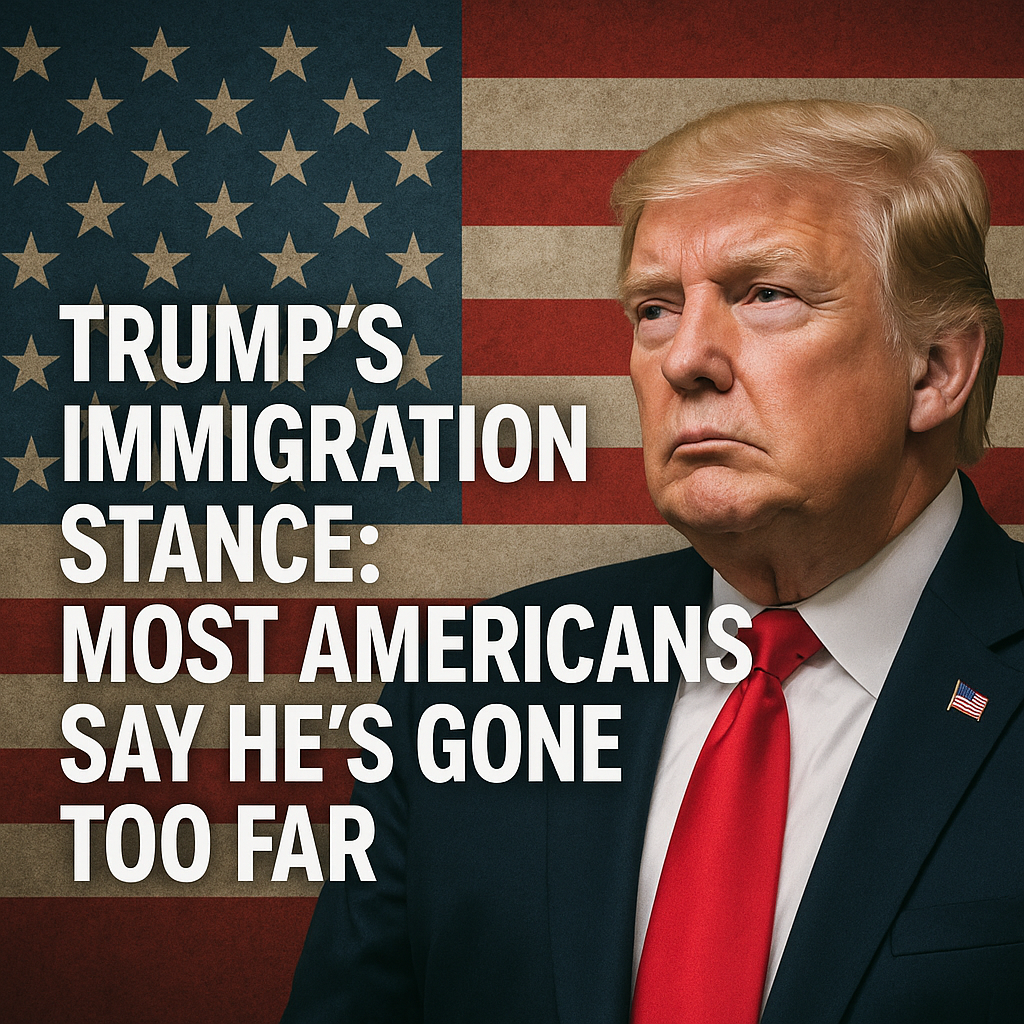
Trump’s Immigration Stance: Most Americans Say He’s Gone Too Far
In the ongoing debate over U.S. immigration policy, former President Donald Trump’s stance is often seen as a defining feature of his political identity. Amid shifting societal attitudes, recent polls reveal a significant trend: many Americans now feel that Trump has gone too far regarding immigration policies. This article explores various perspectives on this complex issue, examining public sentiment, policy impacts, and the broader implications for American society.

Public Sentiment on Trump’s Immigration Policies
Recent polling data indicates a substantial shift in public opinion regarding Trump’s hardline approach to immigration. According to a report by Al Jazeera, a survey conducted among a diverse demographic shows that over 60% of respondents believe Trump’s immigration policies have been excessively strict. This response reflects a growing unease among the American populace about the effects of such policies on families and communities.

Diverse Perspectives: Support vs. Opposition
While there is a noticeable segment of the population that supports Trump’s views—predominantly among conservative voters—this support seems to be waning. Many argue that strict immigration controls are essential for national security and economic stability. A representative from a think tank cited in one of the feeds mentioned that “border security is fundamental for any nation-state,” emphasizing a belief that stringent immigration controls are necessary to safeguard jobs and public services.

Conversely, detractors argue that Trump’s policies have fostered an environment of fear and discrimination. Critics highlight the humanitarian implications of strict immigration measures, stating they have led to family separations and disruptions within communities. The damage caused to the fabric of American society, they argue, outweighs any perceived benefits of these policies.
Impact on Families and Communities
One of the most pressing concerns regarding Trump’s immigration stance is its impact on families. Reports indicate that many families have faced significant disruptions due to deportations and the inability to reunite with loved ones. This situation has led to a ripple effect, where children of undocumented immigrants, often American citizens themselves, endure emotional and financial turmoil. Social services, educational institutions, and healthcare providers report increased cases of anxiety and stress linked to the uncertainties that come with such stringent policies.
Furthermore, a study highlighted in various news outlets indicates a direct correlation between Trump’s immigration rhetoric and reported increases in discrimination against minority communities. This raises critical questions about the implications of national leadership on social cohesion and community trust.
The Broader Implications for American Society
As public sentiment shifts, the consequences of Trump’s approach to immigration extend beyond individual families and directly affect the political landscape. Analysts predict that the growing discontent may reshape the dynamics of upcoming elections. With many voters indicating a desire for more compassionate immigration policies, candidates who advocate for moderation may have an edge.
This shift in sentiment could also influence the Democratic Party’s platform, as leaders recognize the need to address immigration reform more comprehensively. A balanced approach that considers both security and humanitarian needs may emerge as a central tenet of future policy discussions.
Navigating a Complicated Landscape
The ongoing polarization of immigration policy makes it challenging to forecast the future. With both sides entrenched in their views, finding common ground could prove elusive. However, an emerging consensus suggests that many Americans, regardless of political affiliation, desire a system that balances security with compassion.
The key question remains: How can policymakers adapt to a public increasingly disillusioned with extreme positions? Listening to diverse voices, fostering open dialogues, and considering comprehensive reforms may help bridge the growing divide.
In conclusion, while Trump’s immigration stance has undoubtedly resonated with a substantial portion of the electorate, the shifting public opinion signals a call for re-evaluation. As more Americans express the sentiment that his administration has gone too far, the implications for future immigration policies are profound, necessitating a nuanced and empathetic approach to one of society’s most pressing issues.