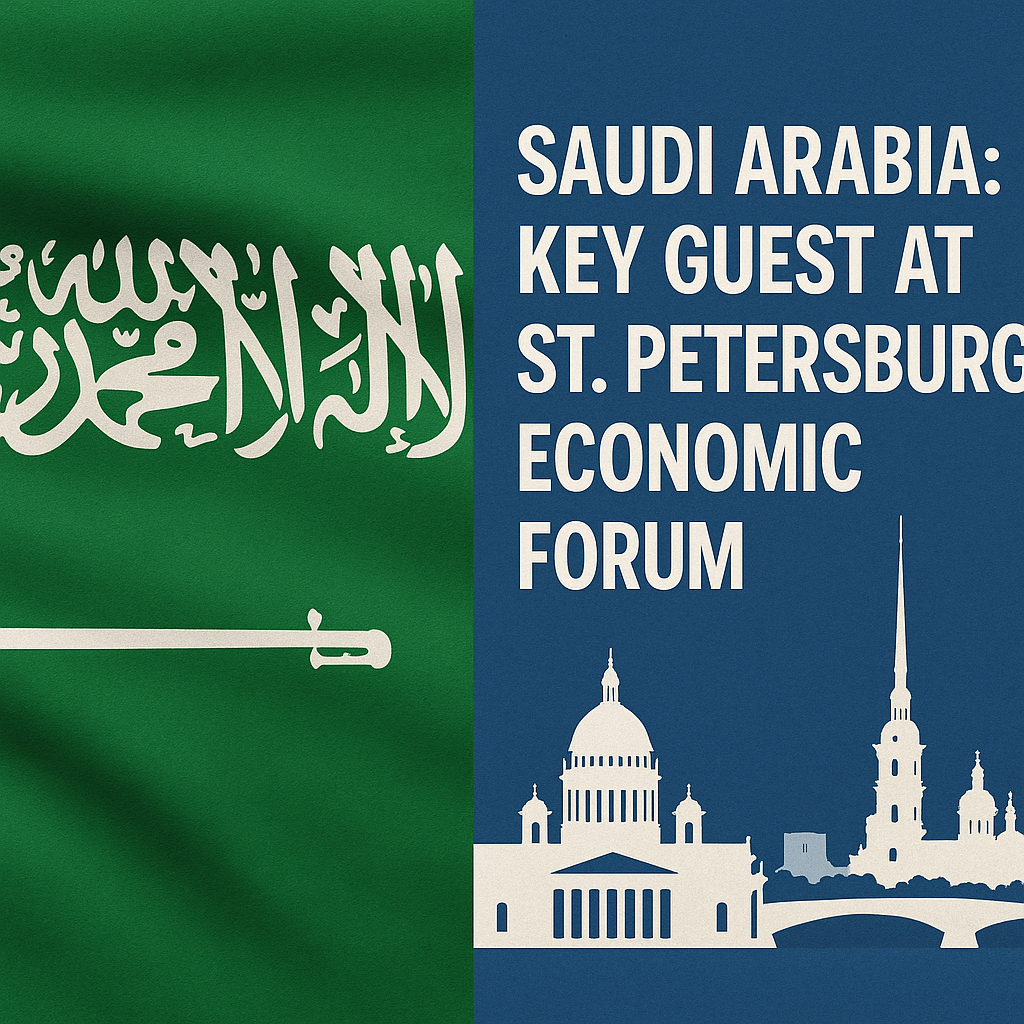
Saudi Arabia: Key Guest at St. Petersburg Economic Forum
Saudi Arabia’s Strategic Role at the St. Petersburg Economic Forum
Saudi Arabia has emerged as a key player at international forums, and its recent participation in the St. Petersburg Economic Forum (SPIEF) underscores its growing influence in global economic discussions. The forum, which draws leaders from various sectors to explore pressing economic issues, provided a platform for Saudi Arabia to showcase its economic diversification efforts under the Vision 2030 initiative.

The Significance of Saudi Arabia’s Participation
Saudi Arabia’s presence at SPIEF represents not only its commitment to fostering economic ties with Russia but also its desire to reshape its image as a leader in the Middle East. By engaging in dialogue with other nations, especially those traditionally viewed as adversaries, Saudi Arabia is seeking to leverage economic partnerships to gain greater strategic autonomy.

According to reports from Al Jazeera, the Saudi delegation emphasized the importance of collaboration and investment opportunities, particularly in energy markets. This aligns with the Kingdom’s ongoing efforts to diversify its economy beyond oil dependency. Developing sectors such as tourism and information technology were highlighted, as these are pivotal to the Kingdom’s long-term growth strategy.

Contrasting Viewpoints on Saudi-Russian Relations
While some analysts view Saudi Arabia’s involvement as a pragmatic step toward increasing its international stature, others express caution. Articles from RT and Sky News reveal a spectrum of apprehension surrounding the implications of closer ties with Russia—especially given the geopolitical tensions following the Ukraine crisis.
Critics argue that these relations might complicate Saudi Arabia’s positioning with Western countries and its commitments to organizations like OPEC. There is a tangible concern that increased collaboration with Russia could lead to moral and political dilemmas, especially as global sentiment shifts against nations perceived as aggressors. In contrast, proponents of Saudi engagement with Russia argue that it fosters a multipolar world, enabling the Kingdom to enjoy a wider range of diplomatic options.
The SPIEF also provided a space for discussions related to energy security, a priority for both nations amid fluctuating global oil prices. The shared interests in stabilizing oil markets were highlighted, emphasizing that collaboration could yield mutual benefits.
Potential Economic Partnerships
Economic partnerships emerged as a central theme during the forum, spotlighting joint ventures and investments that could reshape regional economic landscapes. Saudi Arabian officials highlighted various sectors ripe for investment, including agriculture, technology, and renewable energy.
The Kingdom’s efforts to engage with Russian businesses and vice versa suggest a growing recognition of the need for diversified markets. Saudi Arabia’s participation was framed as beneficial not only for fostering bilateral trade but for enhancing regional stability through economic interdependence.
Furthermore, the discussions also revolved around Saudi Arabia’s goals for sustainable energy development and how collaborating with Russia may assist in achieving these ambitions. Despite fears regarding the potential economic consequences of aligning too closely with Russia in the current geopolitical climate, some view such partnerships as necessary steps toward establishing a resilient economy capable of weathering global challenges.
Conclusion: A Complex Road Ahead
Saudi Arabia’s role at the St. Petersburg Economic Forum symbolizes a transformative moment in the Kingdom’s foreign policy and economic strategy. While the potential benefits of increased economic collaboration with Russia are notable, the complexities of international relations and the shifting geopolitical landscape cannot be overlooked.
As Saudi Arabia navigates its partnerships, the outcomes can reshape not just its economic trajectory but also its strategic positioning on the global stage. As discussions continue to evolve, what remains clear is that the road ahead is fraught with both opportunities and challenges, requiring a careful balance between pursuing national interests and maintaining international relations.