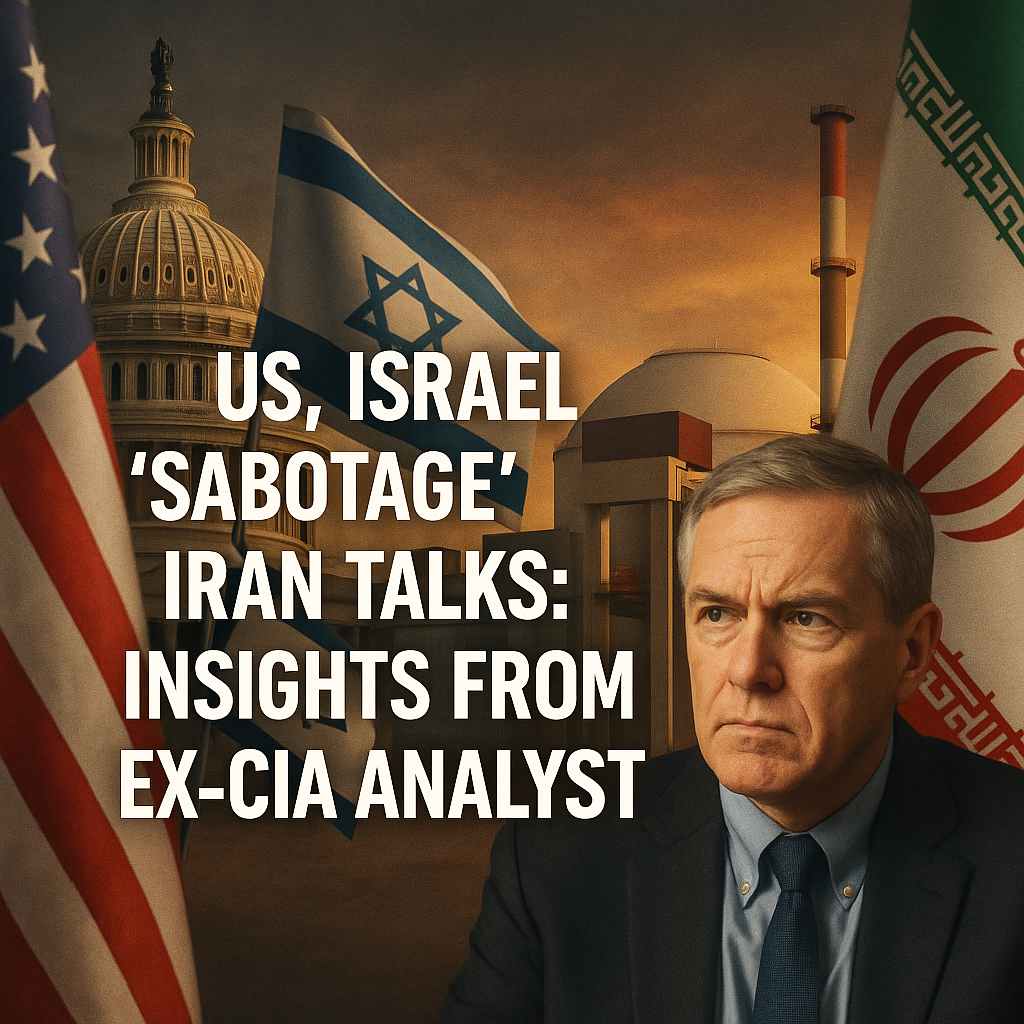
US, Israel ‘Sabotage’ Iran Talks: Insights from Ex-CIA Analyst
In recent discussions surrounding the geopolitical landscape of the Middle East, the sentiment among some analysts, including former CIA operative and analyst John Kiriakou, is that the United States and Israel are actively undermining diplomatic negotiations with Iran. This stance has raised questions about the long-term implications for regional stability and international relations.

The Disruption of Diplomatic Efforts
Reports suggest that the US and Israel have employed various tactics to sabotage talks aimed at renewing the Iran nuclear deal, formally known as the Joint Comprehensive Plan of Action (JCPOA). Analysts argue that both nations perceive a nuclear-capable Iran as a significant threat, which drives them to take actions that obstruct peace efforts.

Recent fallout from Israel’s airstrike in Damascus and the continual presence of US military operations in the region are cited as tactical measures aimed at dissuading Iran from advancing its nuclear ambitions. According to Kiriakou, these actions not only jeopardize negotiations but also risk escalating tensions that could lead to military confrontations.

Furthermore, sources indicate that some factions within the Israeli government advocate for a hardline approach against Iran, leading to a more extensive sabotage agenda. The Israeli narrative often highlights Iran’s activities in Syria and its support for militant groups as justification for such measures, framing them within a broader context of self-defense.
Diverging Perspectives on the Impact of Sabotage
On the other hand, some observers contend that the disruption caused by the US and Israel may not have the intended deterrent effects. Analysts from Al Jazeera suggest that Iranian leaders persist in pursuing nuclear capabilities despite external pressures. The perception that the US and Israel are attempting to sabotage talks could galvanize Iranian public opinion in favor of nuclear advancement, reinforcing the notion that the country must strengthen its positions against perceived aggression.
Critically, the ongoing economic sanctions imposed by the US have severely impacted Iran’s economy, which also plays a role in the complexities surrounding the negotiations. Many believe that rather than fostering diplomatic resolution, the current strategies could entrench divisions even further.
The Need for Constructive Engagement
A growing number of analysts emphasize the importance of reconciliation and dialogue over confrontation. The challenge remains that the existing geopolitical narrative often prioritizes security interests over diplomatic engagement. The idea is that, if the US and Israel were to recalibrate their approach, focusing more on diplomacy rather than sabotage, it could open up avenues for fruitful discussions.
Constructive engagement with Iran does not imply turning a blind eye to its nuclear ambitions but instead aims to address underlying tensions through negotiation. This perspective aligns with those who argue for a multilateral approach, where powers in the region collaborate rather than act unilaterally.
Additionally, efforts by European nations to mediate and create a conducive environment for dialogue between the US, Israel, and Iran could serve as a blueprint for resolving these complexities. The international community must recognize that a stable Middle East is contingent upon cooperative efforts rather than ongoing hostilities.
Conclusion: The Path Forward
The contention over whether the US and Israel are sabotaging talks with Iran highlights the intricacies of international relations and the stakes involved for multiple parties. As various viewpoints continue to unfold, it is clear that finding a path forward will be fraught with challenges.
What remains essential is a balanced approach — one that recognizes legitimate security concerns while simultaneously fostering the necessary conditions for constructive dialogue. In a world increasingly interconnected, the imperative to seek common ground may ultimately outweigh individual agendas. The future of Iran’s nuclear ambitions, and the broader regional dynamics, may depend heavily on the ability of involved nations to pivot from a posture of sabotage to one of engagement.