
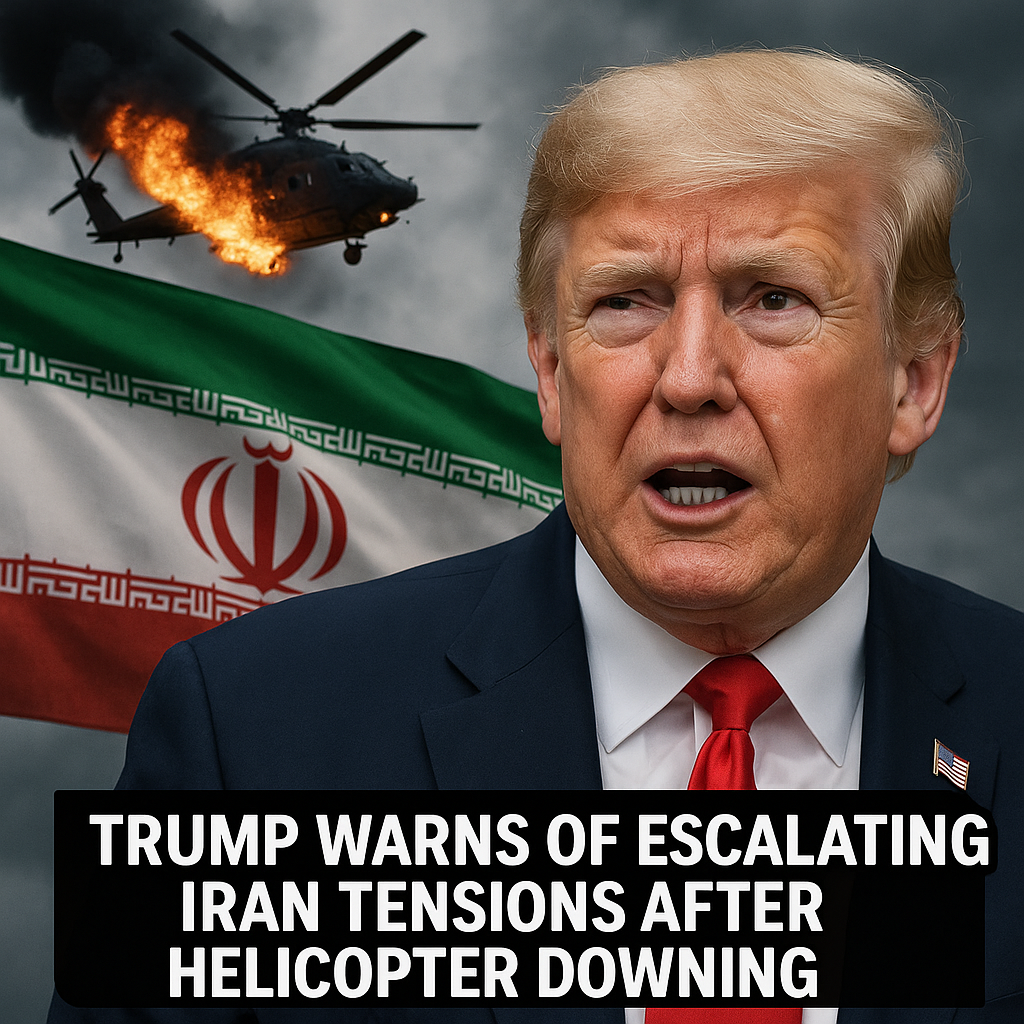
Trump Warns of Escalating Iran Tensions After Helicopter Downing
Rising Tensions: Trump’s Warning on Iran Following Helicopter Incident
In light of the recent downing of a U.S. Apache helicopter, former President Donald Trump has issued a stark warning regarding escalating tensions with Iran. This incident has sparked a renewed debate over U.S.-Iran relations and the potential for further conflict in the region.

The Context of the Helicopter Incident
The Apache helicopter reportedly went down in an area where both U.S. and Iranian military forces have been active, raising immediate concerns about the implications this incident carries for international relations. While specifics surrounding the event continue to unfold, reports suggest that the helicopter went down due to hostile action, which has fueled speculation about Iran’s involvement.

In his comments, Trump emphasized that the downing reflects the growing threat from Iran, implying that the U.S. may face further provocations unless decisive action is taken. According to Al Jazeera, Trump referred to the incident as a “call to arms,” indicating that the U.S. should bolster its military presence and readiness in the region.

Diverse Perspectives on the Situation
Analyzing the situation, it is critical to consider varying viewpoints from multiple reputable sources. On the one hand, supporters of Trump’s stance argue that a firmer military response is necessary to deter Iran’s ambitions, which they believe include destabilizing actions against U.S. interests and allies in the Middle East. According to RT News, some military analysts have echoed Trump’s calls for increased readiness, claiming that the helicopter downing is part of a larger pattern of Iranian aggression.
Conversely, other experts caution against a knee-jerk military response. They argue that escalation could further destabilize an already volatile region. For instance, viewpoints shared on Sky News emphasize the risk of potential military retaliation sparking an all-out conflict, which could have dire consequences not only for U.S. forces but for civilians caught in the crossfire. The consensus among a segment of foreign policy analysts is that diplomatic avenues should remain the priority, despite the urgent tone of Trump’s warning.
Implications for U.S. Foreign Policy
The incident and Trump’s subsequent comments highlight a pivotal moment for U.S. foreign policy towards Iran. Historically, American responses have shifted between military interventions and diplomatic negotiations, leaving a complicated legacy in the relationship between the two nations.
Current discourse suggests that while some policymakers advocate for military fortification, others stress the importance of diplomatic channels to prevent future crises. This divergence calls into question the effectiveness of America’s longstanding strategy in the Middle East.
Furthermore, the political repercussions domestically cannot be ignored. As Trump seeks to bolster his influence and base in light of potential 2024 ambitions, his warnings about Iran may resonate with constituents who prioritize national security. That said, this approach potentially polarizes the political landscape, dividing advocates of a more interventionist foreign policy from those who support a more restrained, dialogue-driven approach.
The Road Ahead: Uncertainty and Caution
As tensions simmer between the U.S. and Iran, the uncertainty surrounding the helicopter incident remains palpable. While Trump’s call for vigilance makes headlines, the international community watches closely, navigating the delicate balance between military readiness and diplomatic engagement. The dynamics at play reflect broader questions about how nations confront acts of aggression without spiraling into extended conflict.
In conclusion, while there is a clear call for readiness in light of recent events, the complexity of U.S.-Iran relations demands a nuanced approach. Decisive action must be balanced with an understanding of the potential consequences of escalation. With no clear resolution in sight, stakeholders must remain vigilant as the situation evolves, weighing the risks of military intervention against the prospects for peace.















