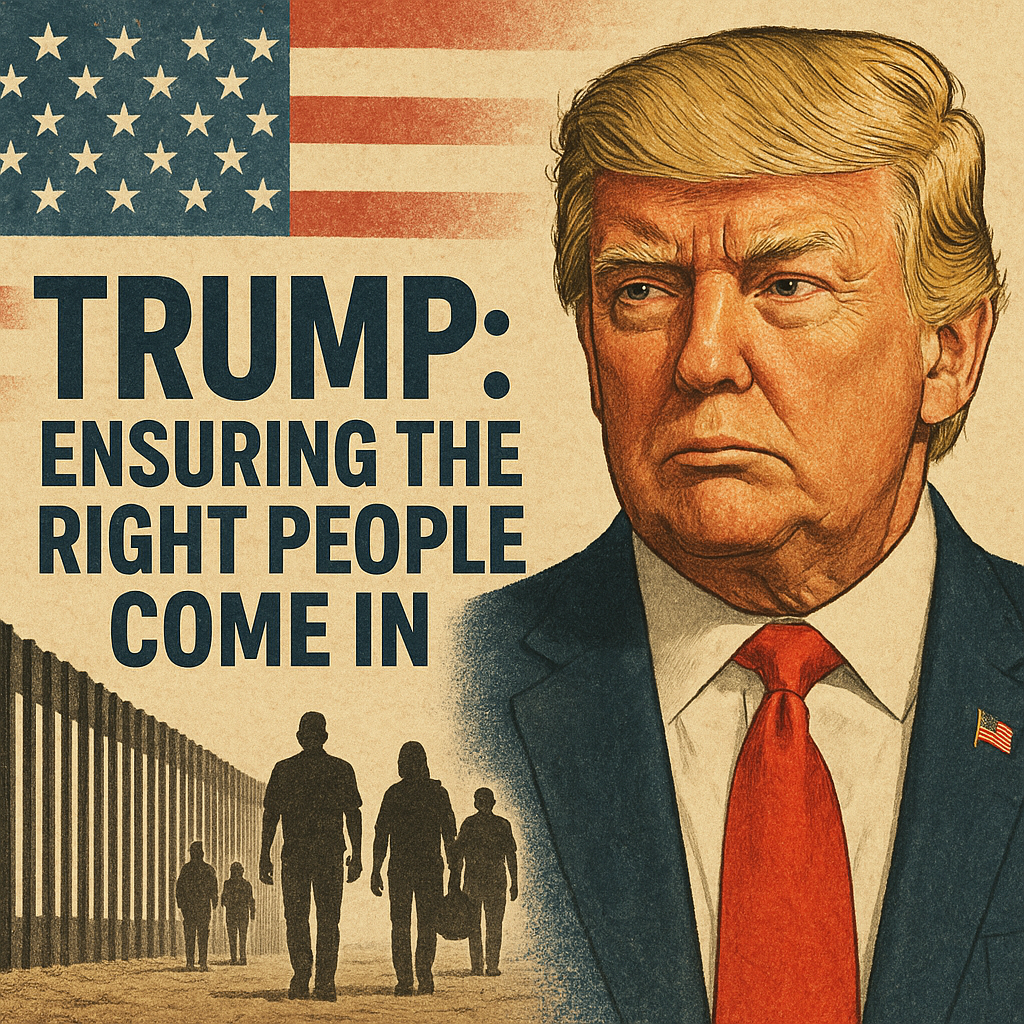
Trump: Ensuring the Right People Come In
Trump: Ensuring the Right People Come In
In an era where immigration policies are under fierce scrutiny, former President Donald Trump has reignited discussions with his recent remarks about ensuring that “the right people” enter the United States. This statement resonates deeply within the complex landscape of immigration reform, drawing both support and criticism across the political spectrum.

Understanding the Context of Trump’s Remarks
Trump’s comments come as part of a broader discourse on national security and immigration policy, themes that were focal points during his presidency from 2017 to 2021. His administration adopted a hardline stance, advocating for stricter border controls and a merit-based immigration system. The underlying premise is to prioritize individuals based on skills and contributions rather than family ties or refugee status.

According to a recent report from Al Jazeera, Trump emphasized the importance of evaluating potential immigrants through a lens of national interest. He argued that the current immigration system allows for too many individuals who do not align with American values or contribute meaningfully to the economy. Supporters of Trump’s viewpoint assert that this ideology is essential for preserving national security and fostering an environment conducive to economic growth.

However, this perspective is met with substantial opposition. Critics, including various human rights organizations and immigration advocates, warn that such a binary approach to immigration ignores the rich complexity of human lives and the myriad reasons people migrate. Many come seeking safety from persecution or to reunite with family, and reducing immigration to a mere transactional process risks dehumanizing individuals whose stories are often fraught with hardship.
The Debate on National Security vs. Human Rights
When discussing immigration, the tension between national security and human rights frequently emerges. Proponents of Trump’s approach argue that safeguarding the nation must take precedence. They point to various data indicating that a substantial portion of immigrants may require extensive public resources, thereby justifying a stricter filtering process. An article from RT highlights concerns regarding the effects of unchecked immigration on social services, emphasizing a need for reform that not only prioritizes economic gain but also national safety.
Conversely, detractors argue that characterizing immigration as a risk rather than an opportunity overlooks the contributions immigrants have made to American society. Many studies demonstrate that immigrants play a pivotal role in the economy, from starting businesses to filling critical job vacancies in various sectors. They argue that a merit-based system could inadvertently marginalize those in desperate need of asylum, potentially leaving vulnerable populations without protection.
As a point of contention, the consensus among immigration reform advocates is that reforms should not only streamline processes for skilled immigrants but also retain pathways for families and refugees. A balanced approach might entail a dual system—one that encourages skilled workers while also providing humanitarian relief for those escaping violence or persecution.
Moving Forward: A Nuanced Approach to Immigration
As discussions around enforcing stricter immigration policies continue, it becomes increasingly crucial to engage with the underlying complexities. A nuanced approach that considers both national security and humanitarian needs could serve as a foundation for constructive dialogue. By acknowledging the multifaceted reasons individuals seek to enter the United States, stakeholders can work towards solutions that uphold both American values and global responsibilities.
Ultimately, Trump’s assertion about ensuring only “the right people” enter the U.S. should spark a broader conversation on how immigration policy can be both fair and effective. As the nation grapples with its identity and values, the challenge lies in reconciling the need for security with the moral imperatives of compassion and family unity.
Moving ahead, an understanding of immigration that incorporates these varied perspectives may pave the way for policies that reflect the complexity and humanity of this vital issue.