
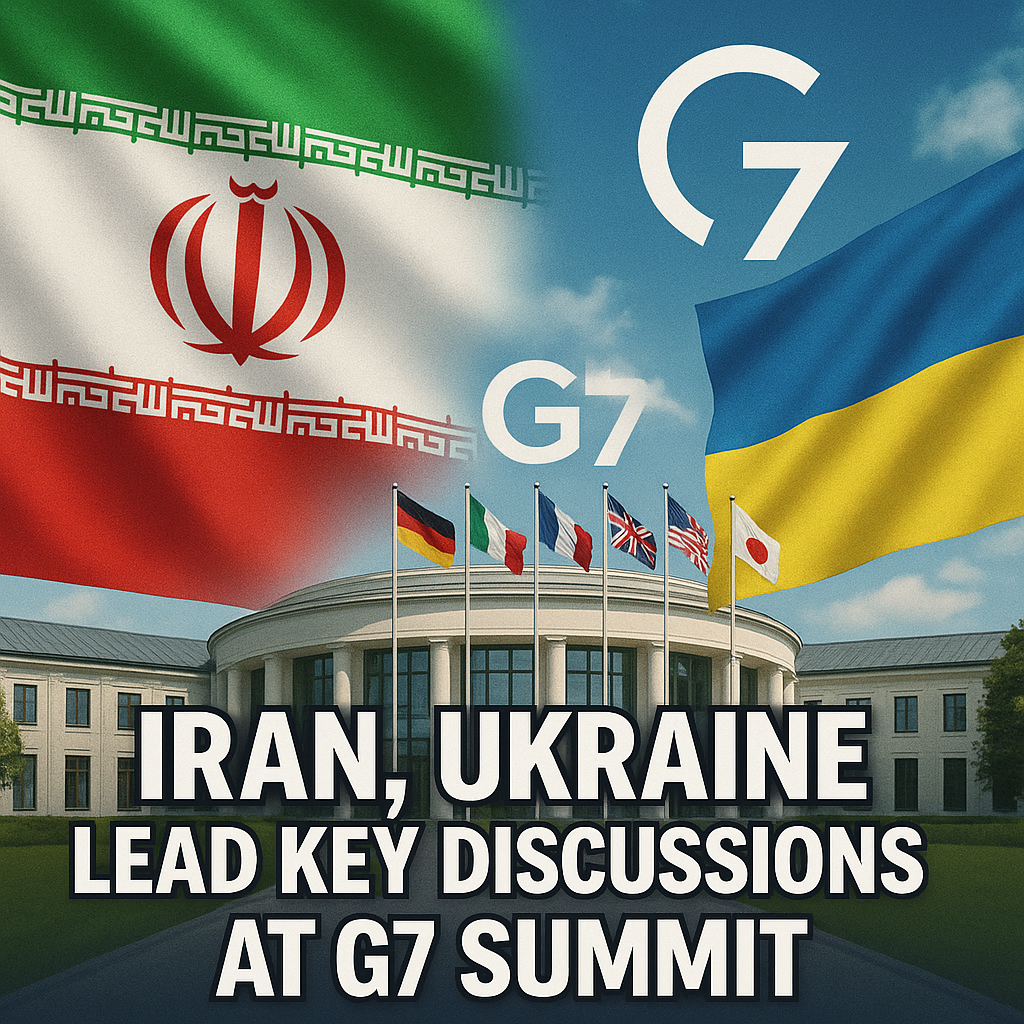
Iran, Ukraine Lead Key Discussions at G7 Summit
Iran and Ukraine Lead Key Discussions at G7 Summit
The G7 summit this year has turned its spotlight on significant global issues, with discussions centered around the complex geopolitical situations in Iran and Ukraine. These two nations, each facing a set of unique challenges, were at the forefront of debates among G7 leaders, underscoring the intertwined nature of modern diplomacy.

Ukraine: A Call for Solidarity
The ongoing conflict in Ukraine remains a focal point for the G7 nations, which include Canada, France, Germany, Italy, Japan, the United Kingdom, and the United States. Ukrainian President Volodymyr Zelensky attended the summit in pursuit of increased military support and economic aid. His country, under siege from Russian aggression since 2022, seeks to strengthen its defenses and sustain its economy amid ongoing hostilities.

Recent discussions have revealed a consensus among G7 leaders about the necessity of robust support for Ukraine. According to reports, they agreed to enhance sanctions on Russia while considering more military assistance. In a statement, U.S. Secretary of State Antony Blinken emphasized the importance of united support for Ukraine, asserting, “As long as it takes, we will stand with Ukraine.” This sentiment resonates with many within the summit, highlighting a shared commitment among G7 nations to counteract Russian advances and support Ukraine’s sovereignty.

However, contrasting opinions emerged regarding the level of military engagement. Some countries advocate for an immediate increase in weapon supplies, while others express caution, stressing the potential escalation of the conflict. This divergence reflects a broader concern among G7 leaders about balancing support for Ukraine with the risks of provoking a wider conflict with Russia.
Iran: Navigating Tensions and Diplomatic Efforts
Parallel to the discussions on Ukraine, Iran’s nuclear ambitions and regional provocations were heavily scrutinized at the G7 summit. Tensions have surged recently, with Iran’s advancements in nuclear technology raising alarm bells for Western nations. The G7 leaders reiterated their commitment to ensuring that Iran does not develop a nuclear weapon.
French President Emmanuel Macron articulated the shared frustration over Iran’s stalled negotiations regarding its nuclear program. He noted, “We must resume dialogue but hold Iran accountable for its actions.” This statement reflects a cautious yet firm stance among G7 leaders, who are wary of Iran’s intentions while recognizing the need for diplomatic avenues.
Debate around how to engage with Iran highlighted differing strategies among G7 members. While some advocate for a renewed framework of negotiations, others call for a more aggressive approach, including additional sanctions. The G7 faces the challenge of formulating a unified strategy, considering Iran’s influence in the Middle East, which extends beyond nuclear concerns to encompass regional stability.
Conclusion: A Complex Diplomatic Landscape
The G7 summit demonstrates the complex web of global diplomacy, particularly surrounding the issues of Ukraine and Iran. As leaders navigate these discussions, they must balance national interests with global stability. The stakes are high, and while there is a solidified front on supporting Ukraine, the approach towards Iran remains a point of contention.
As further developments unfold, the G7’s ability to maintain unity while addressing these pressing issues will be crucial. With the international community closely monitoring these discussions, it remains to be seen how the outcomes will influence geopolitical dynamics in the months to come.















