
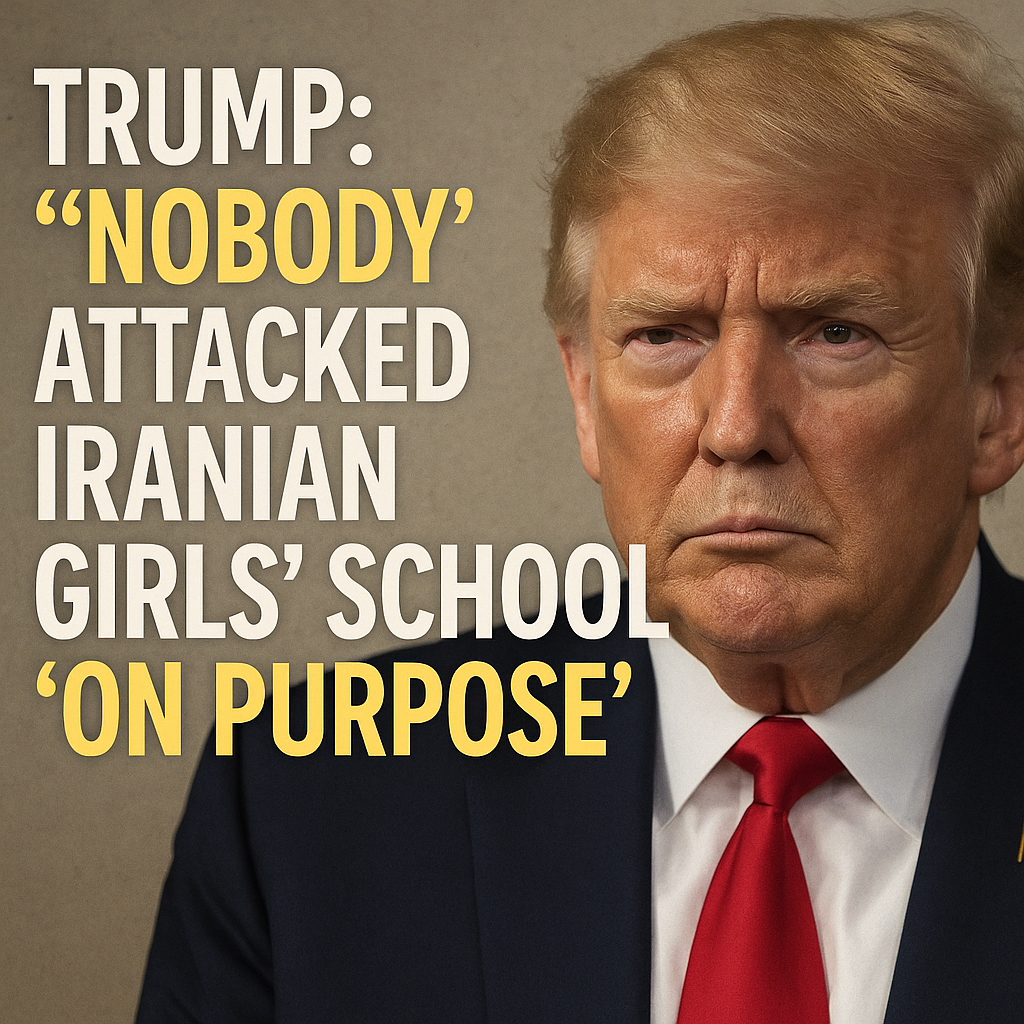
Trump: ‘Nobody’ Attacked Iranian Girls’ School ‘On Purpose’
In a recent statement, former President Donald Trump asserted that “nobody” attacked an Iranian girls’ school intentionally, following an incident that attracted global attention. The event, which left the international community divided on the issue of accountability, prompts critical analysis of both the facts and the narratives that shape them.

Contextualizing the Incident
The Iranian girls’ school incident refers to reports that suggested civilian casualties resulting from military strikes in areas near educational institutions in Iran. As details unfolded, various sources, including Al Jazeera and Sky News, reported mixed reactions regarding whether these attacks were a consequence of direct military aggression or the collateral damage of ongoing conflicts in the region.

The situation raised pressing questions about the rules of engagement and the ethical implications of wartime conduct. While some media outlets pointed to evidence indicating a pattern of negligence concerning civilian safety, others echoed Trump’s sentiments, framing the attacks as unfortunate accidents rather than deliberate acts.

The Responses and Reactions
Different stakeholders have responded to Trump’s statement in varied ways, reflecting a spectrum of opinions regarding military engagement and accountability. Supporters of Trump often align with his perspective, arguing that military operations can be complex, and unintended consequences should not lead to accusations of malice.
Conversely, human rights advocates emphasize the importance of scrutinizing military activities to ensure accountability and protection for vulnerable populations like schoolchildren. The notion of collateral damage, while a recognized aspect of warfare, does not absolve parties from the responsibility to mitigate harm, particularly against civilians.
The Complexity of Accountability
The debate around the attacks underscores the inherent complexities involved in conflict situations, especially those that impact children and educational institutions. Nations involved in military actions often struggle with the balance between strategic objectives and humanitarian considerations. In this instance, the argument that these attacks were not purposeful conflicts with the larger narrative of ensuring the safety and sanctity of education for all children.
Diverging Perspectives
As the global discourse continues, considerable divergence remains on accountability. Some analysts suggest that the strategic landscape in Iran must be viewed within a broader context of international relations and historical grievances, which contributes to civilian experiences during conflicts. In this light, a straightforward read of intentions might overlook significant geopolitical factors and historical precedents that shape military actions.
On the contrary, those focusing on the immediate impact of such actions highlight that irrespective of intention, the outcome for innocent civilians—especially children—is catastrophic. They argue that the ethical implications of “collateral damage” require a robust framework of accountability that prioritizes human life over strategic gains.
Conclusion
As the narrative surrounding the Iranian girls’ school incident evolves, Trump’s assertion that no one attacked the school “on purpose” invites a complex reflection on the nature of conflict and accountability. While he emphasizes the lack of intentionality, advocacy groups and human rights organizations push for greater scrutiny on military actions to avert civilian casualties. The varying interpretations remind us that discussions about war and peace not only engage with factual realities but also encompass deep moral questions about human rights and the protection of the most vulnerable.
As the global community continues to grapple with these challenges, achieving a balanced conversation that accounts for both strategic imperatives and humanitarian obligations will be vital to fostering a safer and more just world.















