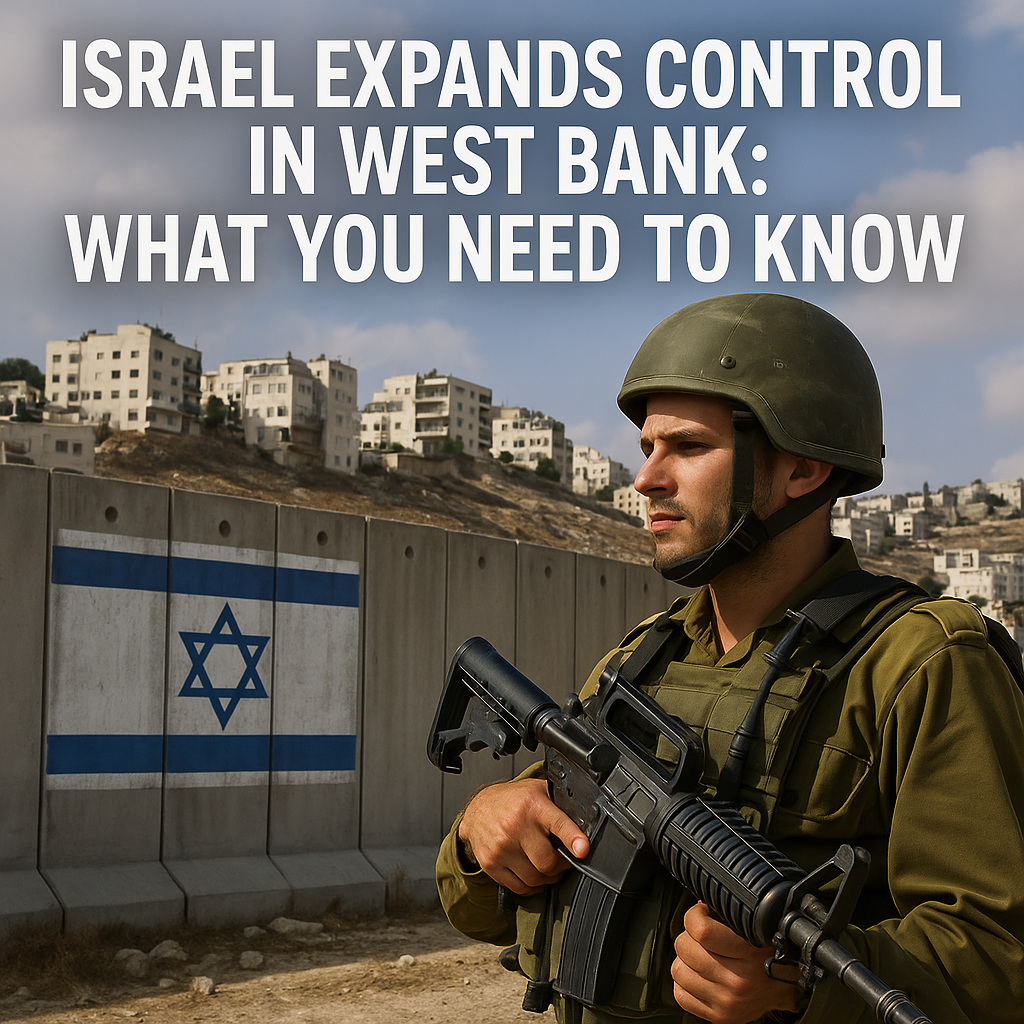
Israel Expands Control in West Bank: What You Need to Know

Israel Expands Control in West Bank: What You Need to Know
The ongoing expansion of Israel’s control in the West Bank has reignited global debate and concern. With new settlement developments and military operations, the situation is increasingly complex, affecting not only regional stability but also key international relations in the Middle East.

The Current Landscape of Control in the West Bank
Recent reports highlight Israel’s intensified actions in the West Bank, particularly focusing on areas like Hebron. According to various news sources, the Israeli government has been expanding its military presence and settler communities, which many international observers view as illegal under international law. Al Jazeera reports that these actions have led to increased tensions between Israeli forces and Palestinian communities, sparking frequent clashes and a surge in violence.


The Israeli government, however, defends its position by citing security concerns, claiming that these expansions are necessary to protect its citizens from potential threats. A statement from the Israeli military mentioned that operations in the area aim to dismantle security threats and prevent attacks. This perspective aligns with longstanding Israeli policy, where national security often takes precedence over considerations of territorial disputes.


Diverse Perspectives on the Expansion
Different stakeholders perceive the situation through varying lenses. For many Palestinians and human rights organizations, the expansion represents a blatant violation of their rights and aspirations for statehood. Reports from RT emphasize that Palestinians feel marginalized and threatened, particularly by the presence of new settlements that have encroached upon land they consider theirs. Demonstrations and protests in response to these expansions have been reported, illustrating the growing frustration within Palestinian communities.
Conversely, supporters of the Israeli government argue that the West Bank operations are not only about security but also about historical and biblical claims to the land. This point of view underscores a fundamental divide over narratives and historical grievances that complicate the situation further. Some Israeli citizens believe that expanding control over the West Bank is essential for the future of the Jewish state, reflecting a sentiment deeply rooted in their cultural identity.
The International Response
The international community appears divided on this issue. Some countries and organizations have condemned Israel’s actions, with the United Nations labeling the new settlement activity as illegal, urging Israel to halt these expansions. Meanwhile, others, particularly the United States, have maintained a more cautious approach, balancing support for Israel with calls for restraint. This nuanced stance illustrates the difficulty in reaching a consensus on a pathway forward in a region fraught with historical animosities.
Diplomatic efforts to address the tensions and find a resolution to the Israeli-Palestinian conflict have largely stalled. Various initiatives over the years, such as the Oslo Accords in the 1990s, focused on achieving a two-state solution but have struggled to materialize in any meaningful way.
Conclusion: A Complicated Path Forward
As Israel expands its control in the West Bank, the implications of these actions ripple far beyond the immediate territorial conflicts. Clashes between military forces and civilians, increased international scrutiny, and deepening divisions among various stakeholders paint a stark picture of the current landscape.
While some may argue that expanding control is crucial for Israel’s security, the growing resentment among Palestinians and the negative global perception present significant challenges. With traditional avenues for peace seemingly exhausted, a comprehensive solution will require innovative thinking, empathy, and the willingness to confront deep-seated grievances on both sides. Only then can the possibility of lasting peace in this historically rich yet contentious region be envisioned.