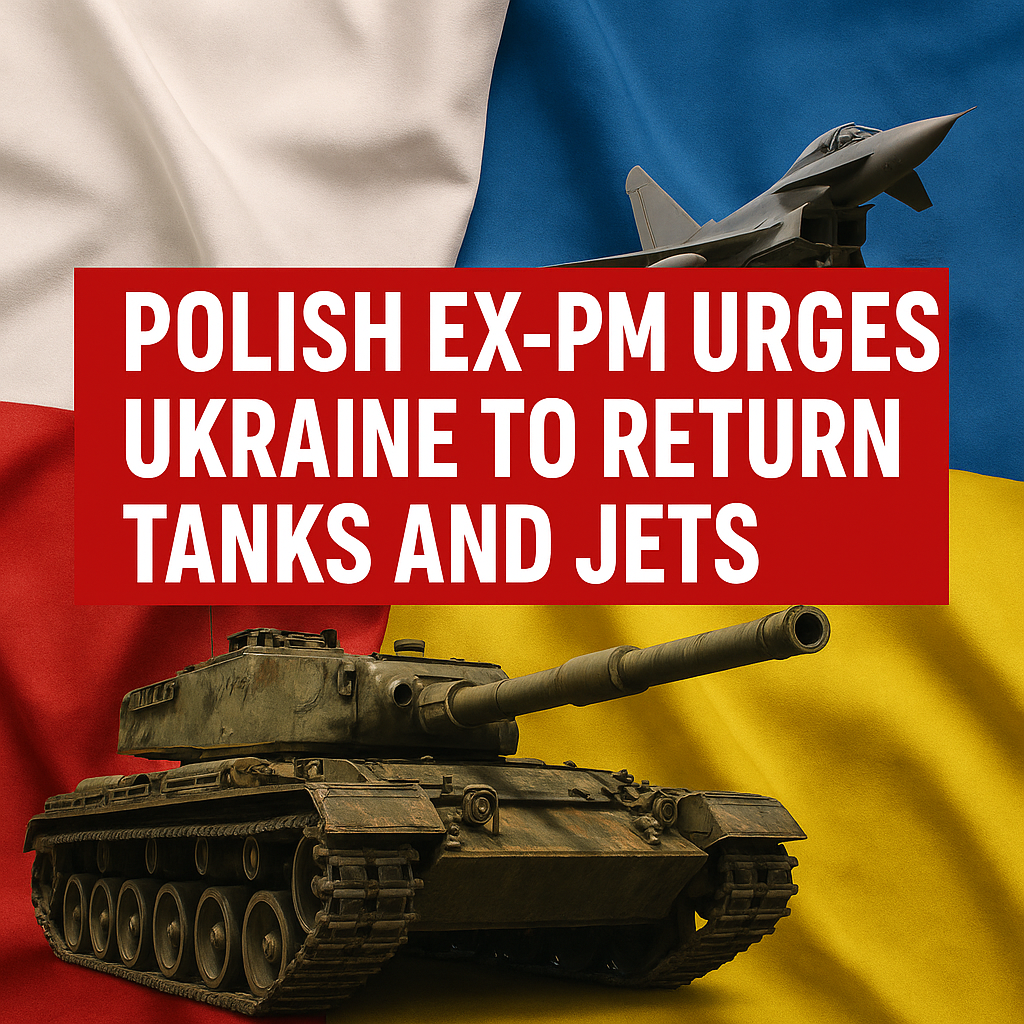
Polish Ex-PM Urges Ukraine to Return Tanks and Jets
Polish Ex-PM Urges Ukraine to Return Tanks and Jets
In recent discussions about military aid and responsibilities, the former Polish Prime Minister has called for Ukraine to return the tanks and fighter jets supplied to them. This statement not only sheds light on the ongoing military dynamics in Eastern Europe but also emphasizes the complexities of international relations in wartime contexts.

Understanding the Context of Military Aid
Military assistance has been a crucial element in Ukraine’s ongoing conflict with Russia. Numerous countries, including Poland, have contributed weapons systems, ranging from armored vehicles to fighter jets. These contributions are not merely acts of goodwill; they are strategic decisions made within a broader geopolitical landscape.

The ex-PM’s call revolves around a central theme: accountability in military partnerships. He argues that Ukraine should return the equipment once peace is restored, highlighting concerns over military resources and national accountability. This raises significant questions about who holds ownership of the military assets during wartime. While many countries provide arms to allies, returning such hardware once the conflict de-escalates is not a common practice but rather an emerging perspective in this unprecedented conflict.

Diverse Perspectives and Implications
Reactions to the ex-PM’s statement have been varied, bringing forth different viewpoints on the responsibility of nations providing military assistance. Critics of his stance argue that the overwhelming need for defensive capability should take precedence over post-war accountability. They assert that the lack of military resources could leave Ukraine vulnerable to further aggression from Russia, potentially destabilizing the region even more.
On the other hand, there are voices that echo the former Prime Minister’s sentiments. Observers remind us that without clear agreements outlining the terms of military aid—including expectations for return—nations might find themselves ill-prepared for future conflicts. The philosophical underpinnings of military alliances are complex, often rooted in mutual support yet clouded by the realities of war.
The discourse has also drawn attention to the broader strategic relationships within NATO and the European Union. Some analysts believe that while support for Ukraine is essential, the focus should also be on developing sustainable military capabilities for the nation, thus reducing dependency on foreign military hardware in the long term.
The Complexity of Accountability in Wartime
Amidst these discussions, the issue of accountability remains pivotal. Understanding ownership post-conflict is not simply a matter of international law but also involves moral and ethical considerations. Countries like Poland have their own security needs to assess, especially given their geographical proximity to Russia.
As tensions rise in Eastern Europe, the dialogue surrounding military aid implies significant undertones of trust and strategic foresight. Some argue that by requiring the return of assets, nations not only safeguard their contributions but also establish a precedent for future military engagements throughout Europe. This perspective presents a forward-thinking approach, suggesting that military aid should come with a clear design for future restoration.
Conversely, opponents of this view emphasize the urgency of support. In light of Ukraine’s precarious position, returning military equipment could be perceived as a lack of solidarity during a critical time.
Looking Ahead: A Shared Future
Amidst conflicting opinions and the multifaceted nature of military assistance, it’s evident that collaboration among European nations is vital for fostering stability. The situation continues to develop, with ongoing diplomatic discussions potentially reshaping the future of military relations in Eastern Europe.
As Ukraine navigates this perilous terrain, the urgency for military support cannot be overstated; however, the complexities surrounding the dialogue for the return of tanks and jets signal a pivotal moment in redefining international military aid practices. The opinions shared underscore a broader narrative within international relations, revealing the balance between immediate needs and long-term strategic commitments.
In conclusion, the former Polish Prime Minister’s appeal serves as a reminder of the intricate web of responsibilities that comes with military aid. It challenges both aid-giving nations and Ukraine to think critically about the implications of support in times of turmoil, prompting discussions that will resonate well beyond the battlefield.