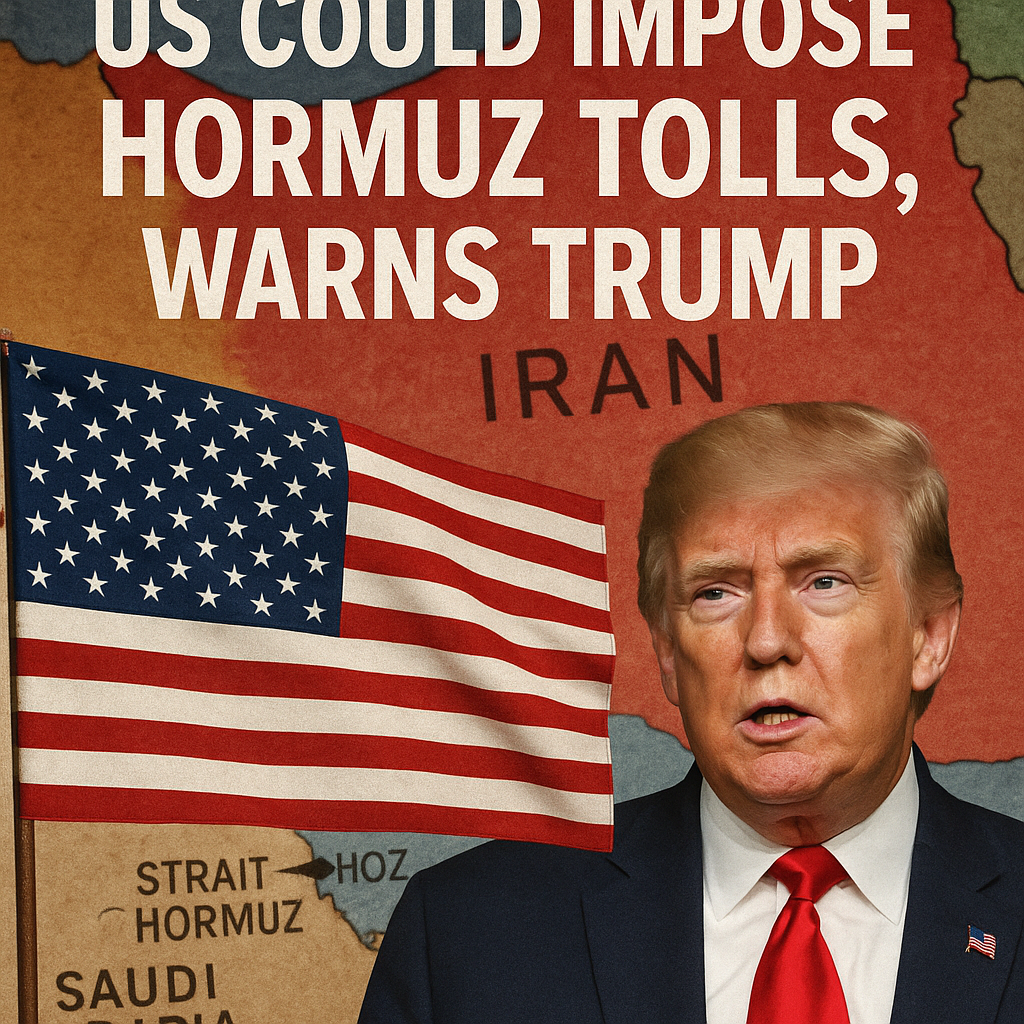
US Could Impose Hormuz Tolls, Warns Trump

The prospect of the US imposing tolls on the Strait of Hormuz has prompted significant discussion, particularly in light of remarks made by former President Donald Trump. This proposition opens a complex dialogue surrounding international maritime laws, energy security, and the geopolitical landscape of the Middle East.

Understanding the Proposal
Trump’s warning about potential tolls on ships passing through the Strait of Hormuz, a crucial shipping lane for global oil transport, has stirred various reactions. His comments hinted at a strategy of economic leverage that could impact the flow of oil and gas, particularly from Iran. This discussion occurs against a backdrop of ongoing tensions between the US and Iran, particularly regarding the latter’s nuclear program and regional activities.


The Strait of Hormuz, through which nearly 20% of the world’s oil travels, has often been a flashpoint for geopolitical strife. Imposing fees for passage would represent a significant shift in the operational norms of maritime navigation, potentially inflaming relations with countries relying on this route for energy exports.


Diverging Perspectives
Reactions to Trump’s proposal have varied significantly across international lines. Supporters argue that tolls could serve as a vital means of ensuring the security of maritime routes amid continuous threats perceived from Iran. They assert that such a move would deter hostile actions by Iran and other nations that may disrupt international shipping.
Critics of the proposal, however, contend that imposing tolls could face significant legal challenges under international maritime law. The United Nations Convention on the Law of the Sea (UNCLOS) mandates freedom of navigation in international waters, which raises questions about the legality of tolls imposed by a sovereign nation. Moreover, experts warn that this could provoke retaliatory measures from Iran, possibly leading to an escalation of military tensions in the region.
Economic Implications
The economic ramifications of such a move could be far-reaching. Should the US follow through with this strategy, it might not only affect shipping costs but also lead to fluctuations in global oil prices. The added financial burden on shipping companies could deter trade and catalyze discussions about alternative routes, potentially undermining the US’s and its allies’ influence in global energy markets.
Conversely, there is an argument to be made about enhancing the US’s position in negotiations regarding energy security. If the tolls are perceived as a protective measure for the global economy, it could strengthen US leverage in future discussions with Iran or any other nation unfavorable to US interests.
Navigating Nuances and Uncertainties
While Trump’s statement raises compelling questions about economic strategy and international relations, many uncertainties remain. It is unclear how such tolls might be enforced or collected, especially in a region rife with existing military and political tensions. Moreover, the willingness of foreign nations, particularly oil-exporting countries that rely on transit through the Strait, to accept these tolls without resistance remains highly debatable.
Additionally, the legal ramifications of enforcing maritime tolls will be scrutinized by international courts, and any effective decision would require broad cooperation from allied nations, complicating an already intricate geopolitical situation.
Conclusion
While the idea of charging tolls for passage through the Strait of Hormuz may align with certain strategic goals in US foreign policy, it is crucial to assess the proposal in a wider context of international law, economic consequences, and regional stability. As discussions unfold, the implications of such a strategy will need careful examination, balancing the necessity of security with the risks of exacerbating existing tensions in an already volatile region.