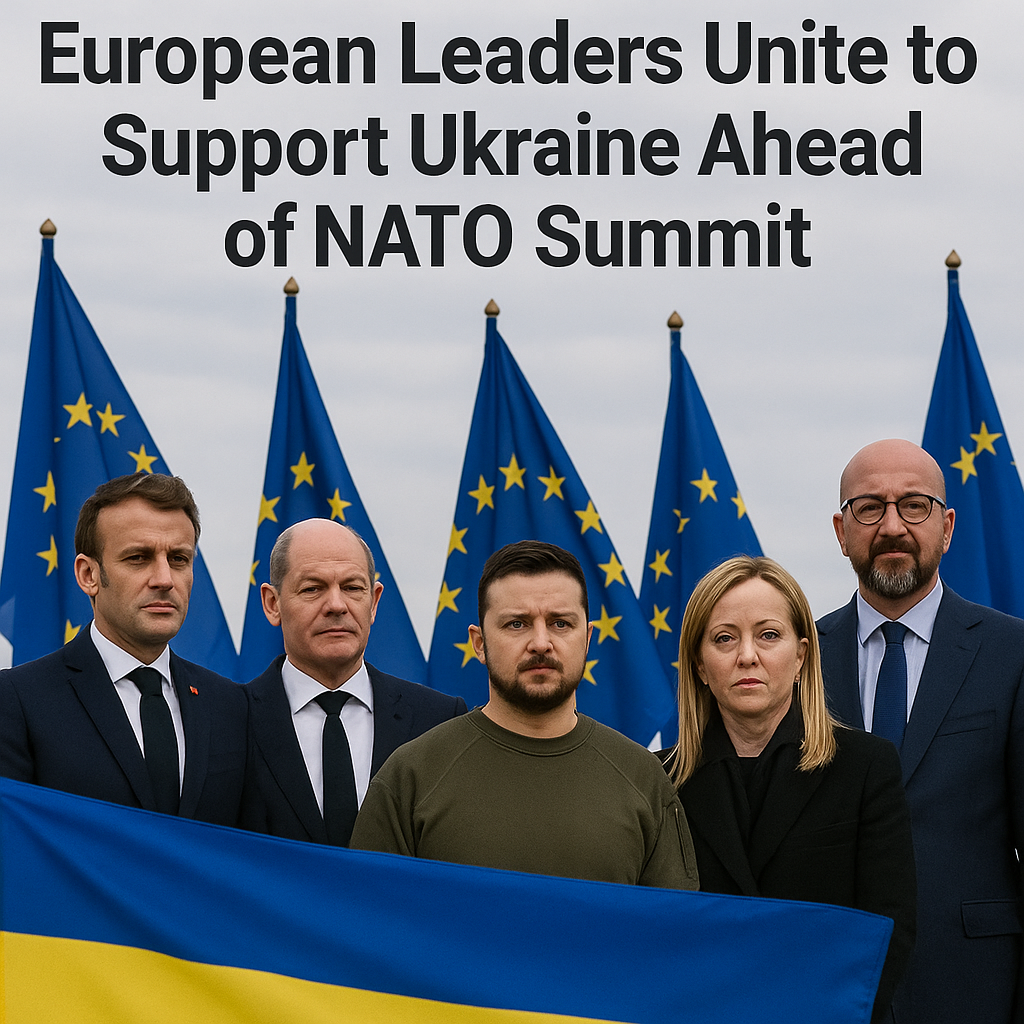
European Leaders Unite to Support Ukraine Ahead of NATO Summit
European Leaders Show Solidarity with Ukraine Ahead of NATO Summit
In a significant display of unity, top European leaders are reinforcing their support for Ukraine as the NATO Summit approaches. This upcoming gathering is poised to address the ongoing conflict in Ukraine and the broader implications for European security. The commitment from European leaders reflects a collective resolve to assist Ukraine in the face of ongoing aggression from Russia.

A Unified Front
As tensions escalate in Eastern Europe, European Union and NATO leaders are vocalizing their commitment to supporting Ukraine. Several key figures have recently reiterated their intentions to bolster military aid and provide economic assistance. German Chancellor Olaf Scholz emphasized the necessity of “unwavering support” and described the alliance as “a bulwark against tyranny.” This sentiment is echoed across various European capitals, signaling a robust collective response to Russian advances.

In addition to military support, leaders are also advocating for increased humanitarian assistance. French President Emmanuel Macron highlighted the importance of aiding civilians affected by the conflict, stating, “We owe it to the Ukrainian people to provide both defensive and humanitarian aid.” This holistic approach combines military readiness with humanitarian concern, signaling a growing recognition of the multifaceted nature of the conflict.

Diverging Perspectives: Risks and Strategies
Despite this strong show of support, there exists a spectrum of opinions on the best course of action. Some leaders advocate for immediate escalations in military support, while others stress the importance of diplomacy. For instance, Hungary’s Prime Minister Viktor Orban has often expressed his apprehension over further military involvement, arguing that it could exacerbate tensions and lead to broader conflict. He emphasizes caution, advocating for a diplomatic route as a means of resolution.
In contrast, Baltic leaders, who border Russia, argue for a more aggressive posture in supporting Ukraine. Lithuanian President Gitanas Nausėda remarked, “Any hesitation may be interpreted as weakness, and this is the last thing we want to convey to Moscow.” This dichotomy highlights the diverse perspectives within Europe, influenced largely by geographic proximity to the conflict and historical experiences with Russia.
Looking to the Future
As the NATO Summit approaches, the pressure intensifies for member states to present a united front. The discussions are expected to focus not only on military support but also on long-term strategies for Ukraine’s recovery and integration into European institutions. The complexities of the situation demand careful balancing; while military assistance is crucial, so too is the need for a robust diplomatic framework to avoid further escalation.
The solidarity expressed by European leaders is crucial, yet it faces challenges from internal divisions and differing strategic priorities. As the situation evolves, it remains vital that NATO allies continue to reassess their positions, ensuring that their responses are both effective and sustainable.
Conclusion: A Call for Continued Solidarity
In conclusion, as Europe prepares for the upcoming NATO Summit, the commitment to aiding Ukraine stands as a testament to the continent’s solidarity in the face of aggression. While there are varying viewpoints on how to best support Ukraine, the overarching message is clear: European leaders recognize the stakes involved and are willing to adapt their strategies to meet the challenges ahead. The call for cooperation, be it through military support or humanitarian efforts, reflects a concerted effort to stabilize the region and uphold democratic values.