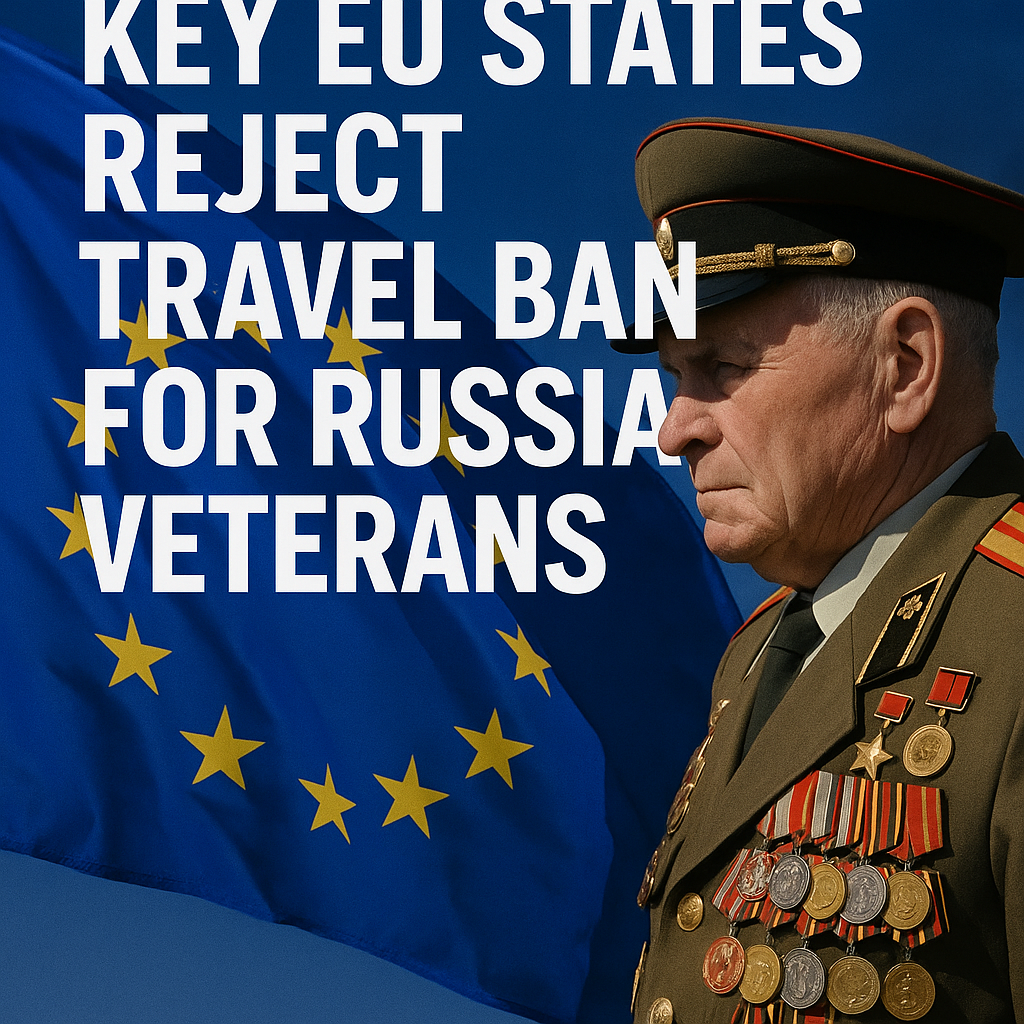
Key EU States Reject Travel Ban for Russian Veterans
Key EU States Reject Travel Ban for Russian Veterans
In a significant development, several key European Union states have chosen to reject proposals for a blanket travel ban on Russian veterans. This decision reflects a complex interplay of diplomatic considerations, national security concerns, and the need for humanitarian gestures amidst a strained relationship with Russia due to ongoing conflicts.

The Context of the Proposed Ban
The call for a travel ban emerged in the wake of Russia’s military actions and ongoing tensions between Russia and Ukraine. Advocates of the ban argue it serves as a punitive measure aimed at those who have served in an army perceived as an aggressor. France and Italy, however, have taken notable stances against such measures, suggesting that sweeping bans would be counterproductive and potentially exacerbate the divide between nations.

Critics of the ban, including officials from these countries, have emphasized the importance of engagement over exclusion. They argue that not all Russian veterans support the actions of the Kremlin and that penalizing them collectively could hinder future diplomatic efforts. The discourse shows a clear divide in opinion: some see a need for regulation to respond to aggression, while others preach the importance of individuality and engagement over alienation.

Humanitarian Considerations vs. National Security
A core argument against the travel ban revolves around humanitarian concerns. France’s position, articulated by various officials, highlights the need for compassion and understanding for individuals affected by a regime’s actions. This view stresses that many veterans may not align with the state’s military ambitions and thus should not be punished for the actions of their government.
On the opposite side, proponents of the ban assert that allowing Russian veterans to travel freely poses potential risks to national security. They point to fears about espionage and misinformation campaigns that could complicate the already tense geopolitical landscape. The nuances in these positions reflect the broader dilemma that community and state relationships face in times of unrest.
Divergent Pathways: France and Italy’s Diplomatic Stance
France’s rejection of the travel ban emerged from a recognition that punitive measures may not yield the desired outcomes. President Macron’s government has been vocal about the need to maintain diplomatic channels, advocating for dialogue as a means to resolve conflicts rather than deepening animosities.
Similarly, Italy’s decision reflects its long-standing tradition of balancing diplomacy and security in foreign relations. By allowing Russian veterans to travel, Italy hopes to foster a space for dialogue and understanding that could prove beneficial in the long term, despite ongoing hostilities.
This approach contrasts with other EU member states that support stricter measures. Countries like the Baltic states have pushed for more stringent reactions against all Russian citizens, citing national security threats that transcend individual behaviors.
The EU’s Collective Identity in Crisis
As the EU navigates these challenging waters, the rejection of a blanket travel ban illuminates deeper questions regarding the bloc’s identity and strategic direction. European leaders face pressure to respond forcefully to threats, but they must balance this with the realities of engagement and diplomacy.
The varying responses among member states highlight a critical aspect of the EU’s collective identity: the alliance is not monolithic. The complexities of national interests, historical grievances, and diverse political ideologies complicate consensus. Some advocate for a hardline stance believing it represents a united front against aggression, while others urge a more tempered approach.
Conclusion: A Path Forward
The debate over the travel ban for Russian veterans underscores the intricate dynamics at play within the European Union. France and Italy’s rejection of a collective ban illustrates an alternative vision for diplomacy—one that values individual histories and leverages dialogue over exclusion.
As the EU continues to grapple with the fallout from its interactions with Russia, these discussions will shape not only its internal cohesion but also its position on the global stage. Balancing national security with humanitarian considerations will remain a pivotal challenge in the months and years ahead, as each state navigates its approach to an increasingly complex geopolitical environment.