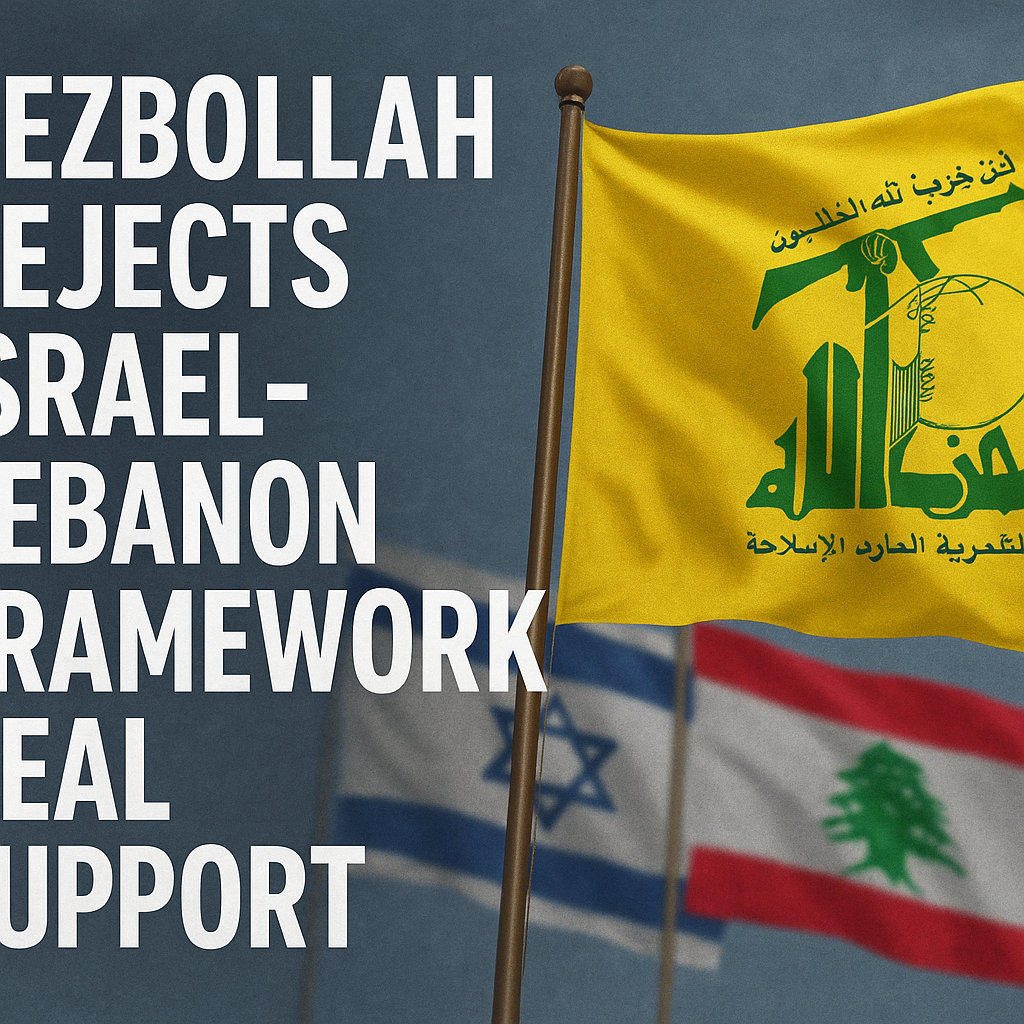
Hezbollah Rejects Israel-Lebanon Framework Deal Support

Hezbollah has recently issued a firm rejection of the proposed Israel-Lebanon framework deal aimed at resolving long-standing maritime and territorial disputes. The announcement carries significant implications for regional stability and the ongoing negotiations between Israel and Lebanon, raising questions about the future of peace talks in this volatile area.

Context of the Israel-Lebanon Framework Deal
The Israel-Lebanon framework deal was conceived to address disputes over maritime borders and potential resource exploration in the Eastern Mediterranean. Both countries, which have a history of conflict, seek to delineate their territorial waters to facilitate oil and gas exploration. The deal has the backing of the United States, which sees it as a pathway to economic stability in Lebanon and improved relations in the region.


While Israel has expressed optimism about the deal, hoping it will prevent future conflicts and assert economic interests, Lebanon’s position has been divided. The Lebanese government has shown willingness to negotiate, but this has faced substantial hurdles from various factions within the country, particularly Hezbollah.


The Hezbollah Stance
Hezbollah’s rejection centers on claims that the framework undermines Lebanon’s rights and sovereignty. According to statements from the group’s leadership, the proposed agreements do not adequately protect Lebanon’s interests in the potentially resource-rich maritime areas. They argue that concessions made in the framework deal could weaken Lebanon’s bargaining position and empowerment over its natural resources.
This perspective is supported by various analysts who argue that Hezbollah seeks to maintain its stance as a key player in Lebanese politics and a protector of national interests. By opposing the deal, Hezbollah is attempting to assert military and political influence amid a complex landscape of challenges facing the Lebanese state, including economic crises and social unrest.
Contrasting Views on the Potential for Peace
Supporters of the Israel-Lebanon framework deal argue that it presents a unique opportunity for peace in a region fraught with tension. Advocates believe that economic collaboration through shared resources could foster stability, ultimately benefiting both countries. Many experts highlight how successful negotiations could lead to an easing of hostilities and a refocus on economic development.
In contrast, Hezbollah’s rejection signifies a broader skepticism regarding Israel’s intentions and a belief that Israel may not be negotiating in good faith. This skepticism is steeped in historical grievances, including conflicts and violent skirmishes, leading to an entrenched sense of mistrust. Regional commentators point out that Lebanon’s internal divisions, particularly with the influence of Hezbollah, complicate any potential for a unified Lebanese front in negotiations.
The Role of External Influences
The role of international powers cannot be overlooked in this scenario. The United States, which is backing the deal, has vested interests in stabilizing Lebanon and limiting Iranian influence through Hezbollah. Key international players are closely monitoring developments, hoping that a successfully negotiated framework could deter further hostilities and set a positive precedent for future diplomatic efforts in the region.
However, the mixed signals from Lebanon complicate this agenda. If Hezbollah continues to reject the framework, its influence could exacerbate tensions, dragging Lebanon further into political instability and conflict, which would be detrimental not only to Lebanon but to regional peace efforts more broadly.
Conclusion: A Path Forward?
The rejection of the Israel-Lebanon framework deal by Hezbollah signals a significant challenge for ongoing diplomatic efforts between the two countries. The internal divisions within Lebanon, particularly concerning Hezbollah’s military and political role, will continue to play a critical part in shaping the future of these negotiations. While there is potential for economic collaboration, the political realities on the ground paint a complex picture. The international community must navigate this intricate landscape carefully, considering not only the immediate implications of the deal but also its long-term impact on the region’s stability and security. The road ahead remains uncertain, as competing interests and deep-seated mistrust continue to undermine the prospects for peace.