
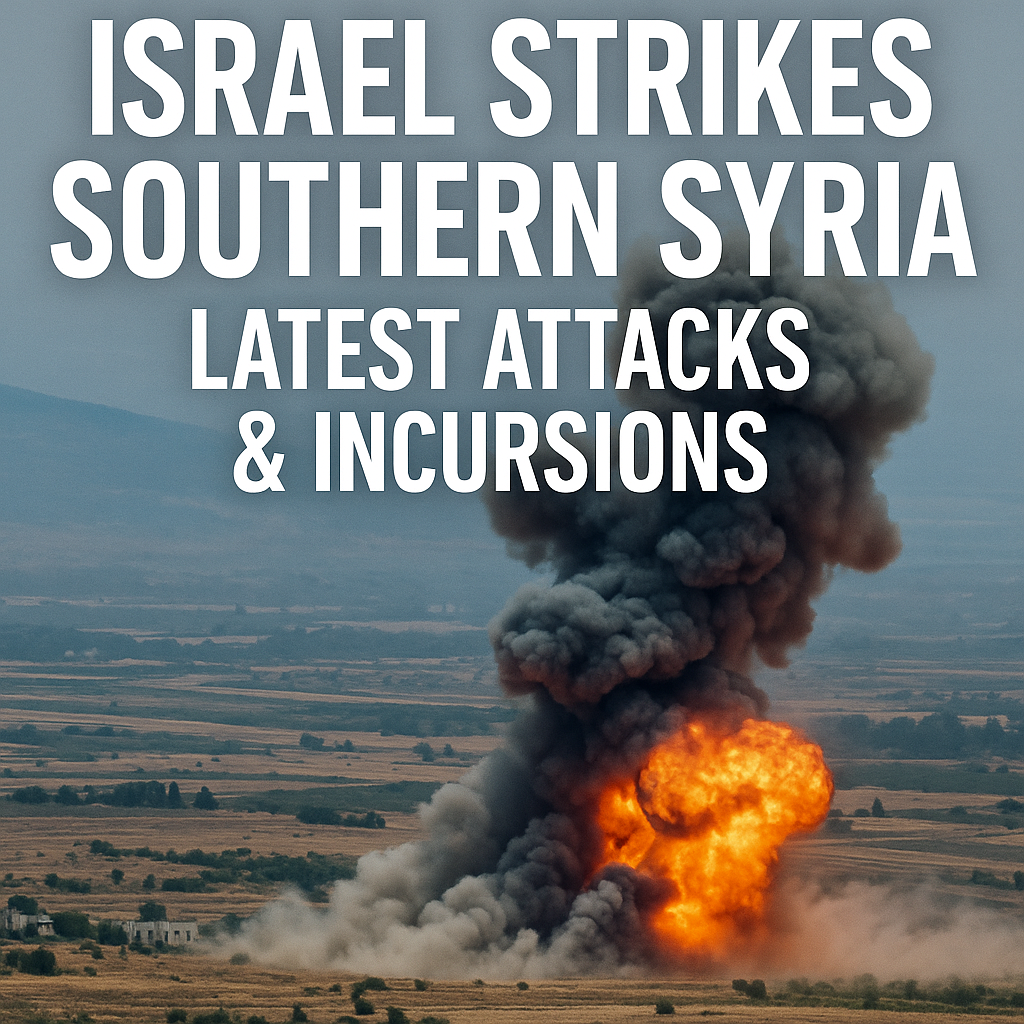
Israel Strikes Southern Syria: Latest Attacks & Incursions
Israel Strikes Southern Syria: Understanding the Latest Attacks and Incursions
Recent developments in the ongoing conflict between Israel and its neighbors have once again brought the spotlight to southern Syria, where Israel has launched a series of strikes against various targets. These actions raise critical questions about regional security, international responses, and the implications for Syrian sovereignty.

The Context of the Strikes
In the last few months, Israel has intensified its military operations in southern Syria, primarily targeting Iranian military installations and Hezbollah positions. This pattern reflects Israel’s long-standing strategic goal of preventing Iranian entrenchment close to its borders, which it perceives as an existential threat. According to reports from various sources, these strikes have included aerial bombardments and ground incursions aimed at dismantling what Israel describes as “imminent threats” from Iran-backed groups.

During a recent operation, Al Jazeera highlighted that the attacks resulted in significant military asset losses for these militia groups, reinforcing Israel’s commitment to its security doctrine. However, the strikes have not come without repercussions. Local sources report civilian casualties and infrastructural damage, stirring condemnation from Syrian officials and human rights organizations that argue these attacks violate Syria’s territorial integrity.

Diverging Perspectives on Israel’s Strategy
The narrative surrounding Israel’s military strikes is often polarized. On one hand, supporters argue that these actions are essential for national security. They contend that Iran, through its support of factions like Hezbollah, poses a direct threat to not only Israel’s safety but also to regional stability. In this light, Israel’s preemptive strikes are framed as necessary measures in a region rife with hostility and unpredictability.
Conversely, critics point out that such military interventions exacerbate the humanitarian crisis within Syria and raise the risk of wider conflict. Organizations such as RT argue that these strikes engender resentment and resistance, noting that acts of aggression can lead to a cycle of violence that complicates an already volatile situation. Furthermore, they stress that international laws protecting national sovereignty have been undermined, as illustrated by the lack of global condemnation regarding Israel’s actions in southern Syria.
Implications for Regional Stability
The impact of Israel’s offensive operations extends beyond military calculations. The strikes have drawn the attention of global powers, particularly Russia and the United States, who have vested interests in the region’s stability. Russia has previously expressed its disapproval of Israeli strikes, citing the danger of destabilization. The Syrian government, backed by Russia, views these incursions as acts of aggression that hinder any potential for peace negotiations.
Israeli officials maintain that their strikes are lawful and necessary. They cite intelligence assessments of imminent threats, arguing that inaction could lead to devastating consequences for their national security. However, this pressing narrative invites a broader question: Does continuous military intervention ultimately serve Israel’s long-term interests, or does it sow the seeds of future conflicts?
Conclusion
The ongoing strikes by Israel against targets in southern Syria encapsulate a situation rife with complexity, diverse perspectives, and significant implications. While Israel insists on its right to defend itself against threats emanating from Iran and allied groups, the humanitarian costs and risks of escalating conflict must also be considered. Balancing security interests with respect for sovereignty and human rights continues to present a formidable challenge in the region.
As stakeholders from various nations engage in discussions over the situation, the necessity for a nuanced understanding of this multifaceted crisis becomes increasingly apparent. As events unfold, it remains to be seen how Israel’s strategies will shape both immediate and long-term regional dynamics.















