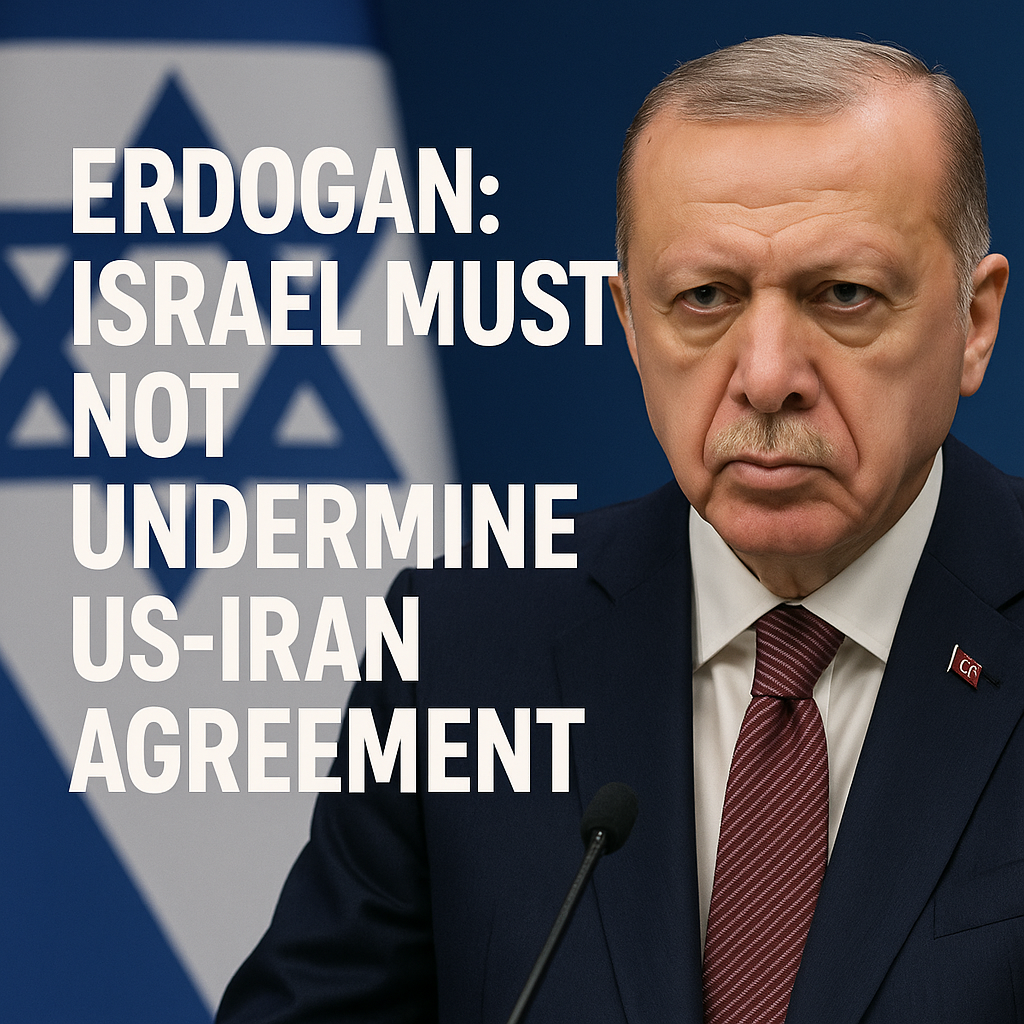
Erdogan: Israel Must Not Undermine US-Iran Agreement
In recent statements, Turkish President Recep Tayyip Erdogan has emphasized that Israel should not be allowed to disrupt the United States’ agreement with Iran. This sentiment arises amid escalating tensions in the region, highlighting the intricate web of diplomatic relations and the delicate balance of power in the Middle East.

The Context of Erdogan’s Statement
Erdogan’s assertions come at a time when the U.S. and Iran are grappling with a complex relationship, one characterized by both confrontation and temporary agreements. The 2015 nuclear deal, known as the Joint Comprehensive Plan of Action (JCPOA), initially aimed to limit Iran’s nuclear capabilities in exchange for the lifting of economic sanctions. However, the deal has faced numerous challenges, especially after the U.S. withdrawal in 2018 and subsequent attempts at re-engagement.

Erdogan’s remarks position Turkey as a mediator and a voice of caution in the face of potential Israeli actions that could destabilize the region further. According to Al Jazeera, Erdogan expressed that any Israeli steps that threaten this diplomatic breakthrough “should not be allowed to dynamite the agreement,” indicating Turkey’s strategic interest in regional stability and a favorable outcome for Iran.

Israel’s Role in Regional Tensions
Israel’s foreign policy has often been characterized by its unwavering stance against Iran, viewing the latter as a primary threat to its national security. The Israeli government, led by Prime Minister Benjamin Netanyahu, has been vocal in its opposition to the revival of the JCPOA. Israeli officials warn that reinstating the agreement would embolden Iran and allow it to expand its military capabilities, disrupting the power dynamics in the Middle East.
This outlook is echoed in various reports, including those from RT, which highlight Israel’s engagement in preemptive strikes against Iranian interests in Syria. Such actions aggravate tensions and complicate international efforts to foster dialogue between Tehran and Washington. Erdogan’s warning to Israel reflects a growing realization among regional leaders that unchecked military actions could lead to wider conflicts, affecting not just bilateral relations but also regional stability.
Diverse Reactions to Erdogan’s Stance
Erdogan’s comments have drawn mixed responses within international circles. On one hand, some analysts support his position, arguing that a cooperative approach is essential for long-term peace. Supporters claim that instead of sidelining Iran, regional players—including Turkey—should engage constructively to mitigate threats posed by extremist groups and military expansion.
Conversely, critics of Erdogan highlight Turkey’s own complicated relationship with Iran. While Turkey seeks closer ties for economic reasons and as a counterbalance to Kurdish movements, it also navigates its alliances with NATO and Israel carefully. The dichotomy in Turkey’s position raises questions about Erdogan’s genuine desire for stability versus national interests that may align differently at various times.
In any case, the broader consensus among experts emphasizes the importance of dialogue and compromises. Many argue that the U.S. needs to reassess its approach to Iran, while regional powers should collaborate rather than allow individual ambitions to derail collective security.
The Future of U.S.-Iran Relations
As the Biden administration grapples with the complexities of re-engaging Iran, the landscape is anything but straightforward. Some experts remain skeptical about the feasibility of resurrecting a robust agreement, as underlying issues—such as Iran’s ballistic missile program and its regional proxy networks—remain unresolved.
The potential fallout from a failed agreement could exacerbate regional tensions, making Erdogan’s warning all the more pertinent. With Israel continuously asserting its role in thwarting Iranian influence, there is a fear that retaliatory actions could spiral into armed conflict that spills over into neighboring countries.
Moreover, as the Ukraine conflict shifts global geopolitical alliances, Turkey’s positioning as a mediator could gain further significance. Erdogan’s statement underscores an emerging narrative that seeks to prevent unilateral actions from destabilizing an already volatile situation.
In conclusion, Erdogan’s assertion that Israel must not undermine the U.S.-Iran agreement illustrates the intricate web of diplomacy in the Middle East. While fostering dialogue and cooperation remains imperative, diverse perspectives highlight the challenges that persist. As developments unfold, the stakes remain high for not just Turkey, Israel, and Iran, but for the entire region. The roadmap to stability requires careful navigation, a collaborative spirit, and a commitment to diplomatic solutions — an endeavor that policymakers must prioritize as the dynamics continue to evolve.