Trump Thanks FIFA for Lifting Balogun’s Ban Ahead of World Cup
Trump Thanks FIFA for Lifting Balogun’s Ban Ahead of World Cup
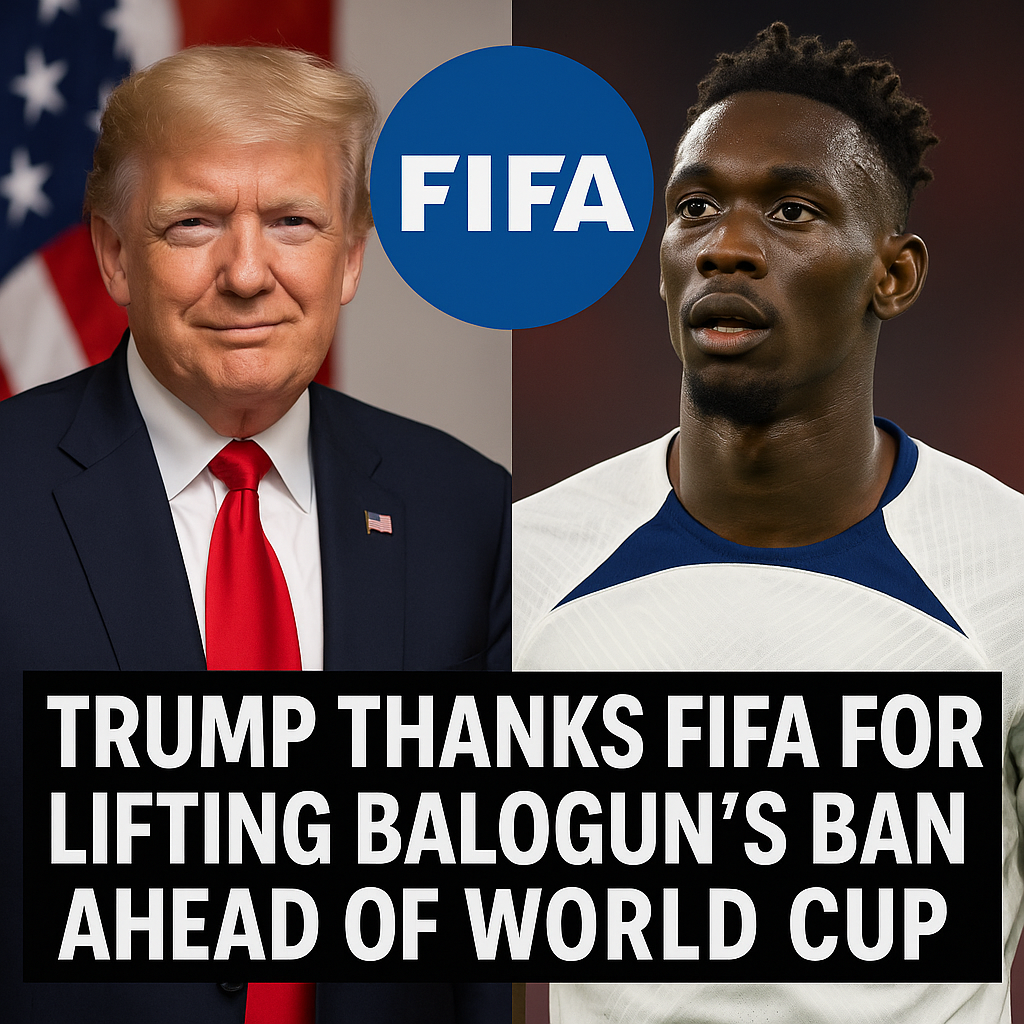
Former President Donald Trump expressed gratitude to FIFA for its recent decision to lift the ban on U.S. soccer player Folarin Balogun ahead of the anticipated World Cup. This development has ignited conversations about sportsmanship, national representation, and the intertwining of politics and sports on a global scale.

The Background: Balogun’s Controversial Ban
Folarin Balogun, a promising forward, found himself embroiled in controversy when he received a ban from FIFA due to an alleged eligibility dispute concerning his international playing status. Initially, Balogun had represented the U.S. at youth levels but later decided to switch allegiance to Nigeria, a choice that had not been without its complications.

As tensions surrounding player eligibility have evolved, FIFA’s ban was seen as part of a broader strategy to ensure clean lines of representation in international soccer. Critics argued that it was a punitive measure that overstepped the boundaries between governance and athlete rights. Supporters, however, saw it as necessary for maintaining the integrity of international competitions.

The lifting of the ban just months before the World Cup was met with mixed emotions. For some, it was a relief, allowing one of soccer’s rising stars to participate on a global stage. For others, it raised questions about the consistency of FIFA’s enforcement of rules and whether political influence was at play.
A Political Perspective: Trump’s Involvement
Trump’s message of thanks to FIFA, conveyed through social media, has certainly added another layer to the narrative. By aligning himself with the lifting of Balogun’s ban, he has positioned himself as an advocate for U.S. interests in international sports, a move likely aimed at bolstering his image among soccer fans and securing the support of younger demographics.
The former president’s engagement also sparked debate about the role of politics in sports. While some laud Trump’s intervention as a positive reflection of American spirit and support for athletes, others criticize it as an opportunistic maneuver. Critics argue that it is a politicization of sports to serve personal agendas rather than focusing on the athlete’s rights and well-being.
Divergent Views on the Implications
The opinions surrounding Trump’s gratitude to FIFA are sharply divided. Proponents of Balogun’s return highlight the player’s talent and the importance of allowing young athletes the opportunity to showcase their skills on an international platform. They argue that this decision is not just about one player but reflects a more significant commitment to promoting athletic diversity and representation in international sports.
Conversely, some commentators caution that the entire situation hints at a wider issue within FIFA and the politics that permeate international sports. They argue that the lifting of Balogun’s ban, especially after Trump’s public thanks, casts doubt on the independence of FIFA as a governing body. If FIFA is seen as reactive to political pressure, it raises concerns about the integrity of future tournaments and the ability to enforce regulations fairly.
Ultimately, the complexities involved cannot be entirely resolved, as perspectives vary widely based on individual allegiances and political beliefs. This situation illustrates how intertwined sports and politics can be, often leading to a nuanced understanding and discussion about athlete representation.
What’s Next for Balogun and the U.S. Team?
Looking ahead to the World Cup, Balogun’s inclusion in the squad is expected to boost the U.S. team’s chances significantly. His skill set and performance at the club level indicate he can make substantial contributions on the field. Soccer analysts and fans alike are keen to observe how his experience adjusts as he transitions from youth competitions to the world stage.
In conclusion, the lifting of Balogun’s ban represents a pivotal moment not only for the player himself but also for the U.S. soccer narrative. While Trump’s expression of gratitude adds a political dimension to the story, the implications of this event extend beyond the immediate context. As the World Cup approaches, the blend of sports, politics, and representation will likely remain a point of contention, sparking further discussions about the future of international athletics.