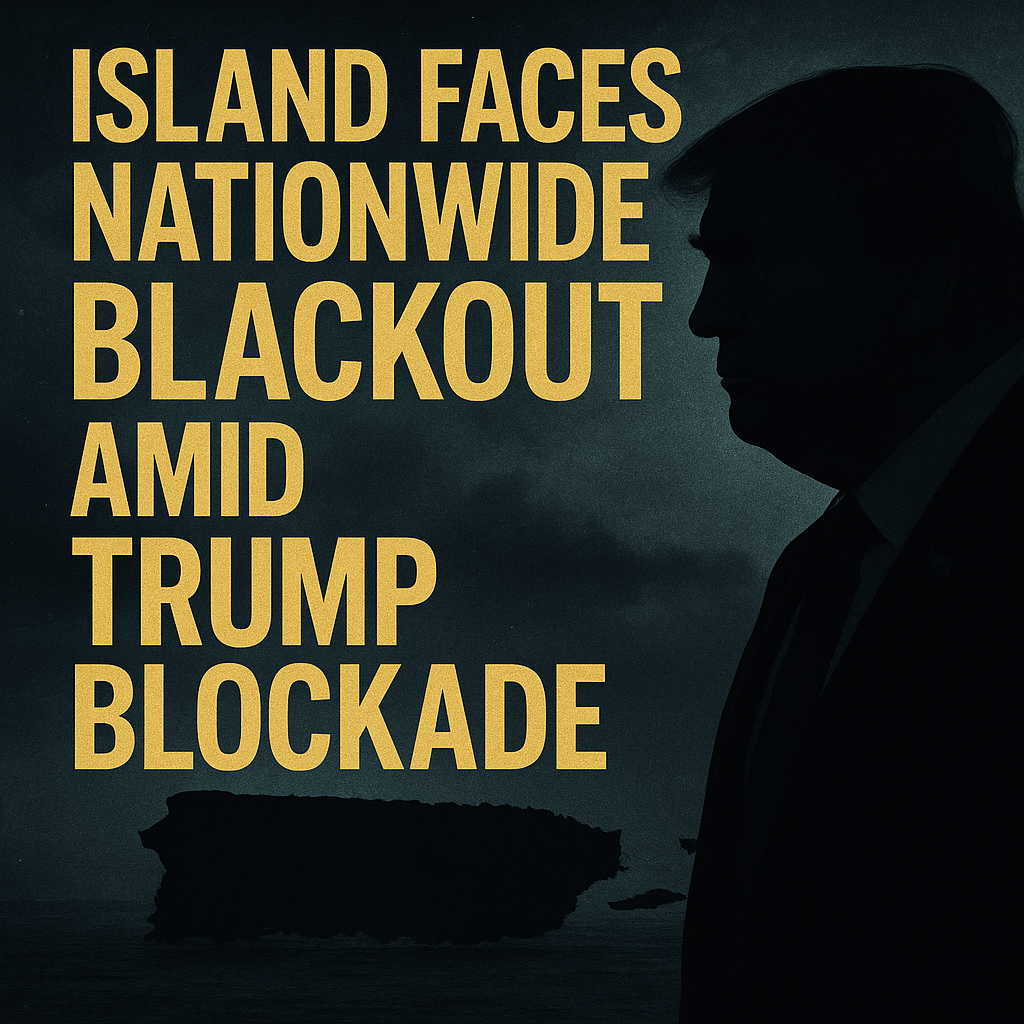
Island Faces Nationwide Blackout Amid Trump Blockade
Nationwide Blackout Plagues Cuba Amid Ongoing Political Struggles
Cuba recently encountered a nationwide blackout affecting millions, a situation that has intensified discussions around governance, infrastructure, and the enduring impacts of historical policies, including those from the Trump administration.

Infrastructure Woes and Their Impact
The recent electricity crisis in Cuba can be attributed to a combination of aging infrastructure, mismanagement, and recent weather events. The country’s power plants are operating well below capacity, leading to rolling blackouts that disrupt daily life for many Cubans. According to reports, the grid requires significant repairs and modernization to effectively meet the demands of its populace. During the blackout, people were left without power for extended periods, impacting everything from healthcare services to food preservation.

The immediate reactions from citizens were understandably one of frustration. Many took to social media to express their discontent. Protests erupted in various areas as Cubans called for better services and accountability from their government. This highlights an ongoing struggle in Cuba where the populace is increasingly vocal about its needs and frustrations, particularly in the wake of economic hardships exacerbated by both internal mismanagement and external pressures.

The Blockade’s Role in the Crisis
Examining the broader political context, the blockade imposed by the U.S. has undeniably played a role in exacerbating Cuba’s economic difficulties. While the Cuban government often attributes its crises to these sanctions, critics argue that misgovernance has also significantly led to the current state of affairs. The Trump administration tightened the blockade, introducing new sanctions and effectively restricting remittances from Cubans abroad, a lifeline for many families on the island.
However, not all analysts agree on the blockade’s impact. Some underscore that the Cuban government bears responsibility for developing resilient infrastructure capable of withstanding external pressures. They argue that while the sanctions are severe, the government’s inability or unwillingness to innovate and maintain key services is a core issue that long predates recent U.S. policies.
A Nation in the Balance
Cuba’s current moment opens up a complicated dialogue about governance and the effects of international policy. On one hand, the hardships stemming from the blackout are undeniably tied to an ailing infrastructure and a growing discontent with government responses. On the other, the external factors, particularly from the U.S., complicate an already challenging scenario for the Cuban people.
As citizens demand answers and accountability, the debate surrounding the blockade continues to intensify. Proponents of lifting the sanctions argue that it would enable the Cuban government to access necessary resources and bolster the economy. Opponents assert that this could lead to further consolidation of power within a regime already criticized for its lack of human rights.
Approaching Resolution: Paths Forward
As Cuba navigates these turbulent waters, the solutions seem multifaceted. Engaging in international dialogues to discuss beyond sanctions could be a step towards finding mutually beneficial approaches. Cuba might benefit from establishing partnerships with non-traditional allies in renewable energy to help stabilize its electricity supply.
Moreover, empowering local communities to explore sustainable practices could also be vital. Decentralizing control over resources might enable quicker, localized responses in times of crisis, fostering resilience against both internal mismanagement and external pressures.
In conclusion, the nationwide blackout in Cuba reflects not just an outage of electricity but also a significant upheaval in the socio-political fabric of the island. The interplay between infrastructure, governance, and international relations creates a complex scenario requiring careful navigation. As Cubans look to the future, the balance between external pressures and internal reforms will undoubtedly shape the country’s path to recovery.