Trump Slams NATO on Summit’s First Day in Turkiye

Trump Critiques NATO During Turkiye Summit
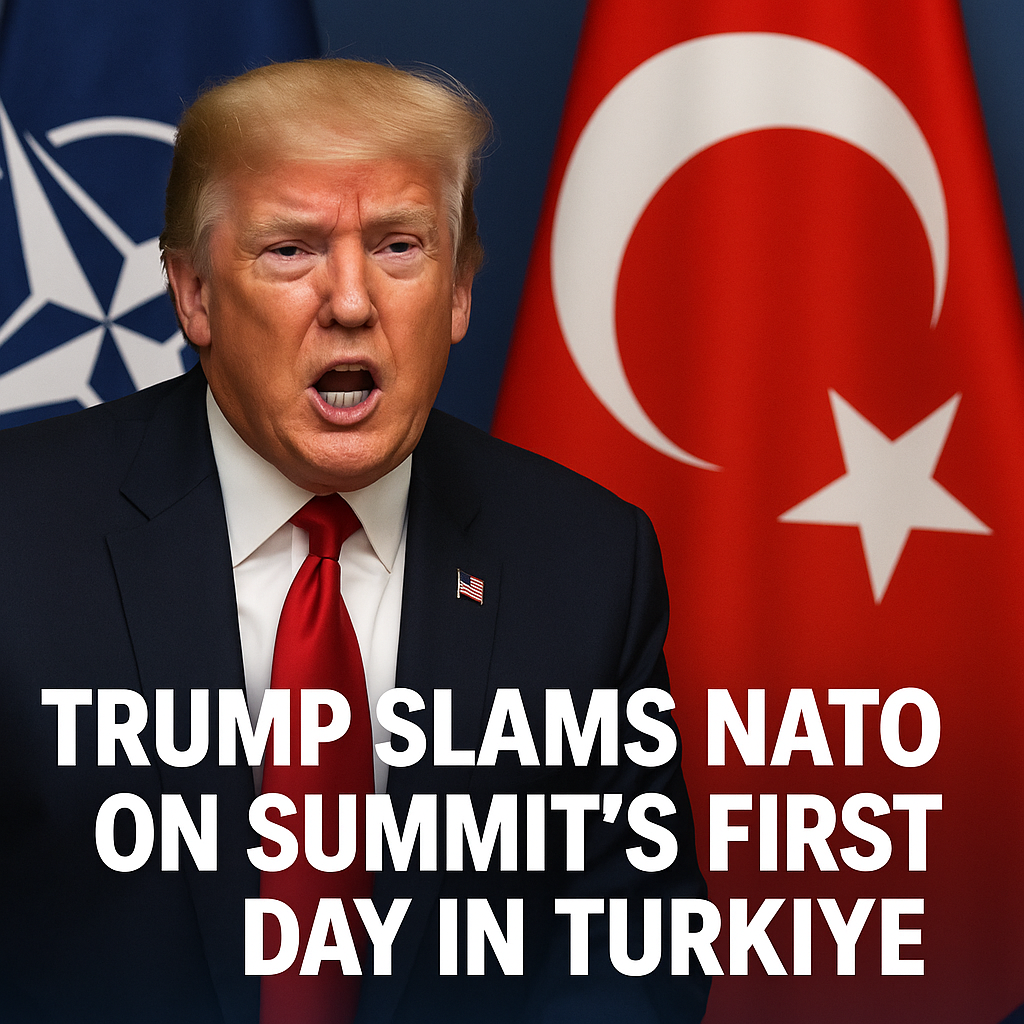
Former President Donald Trump did not hold back in his criticisms of NATO during the first day of the alliance’s summit in Turkiye, reigniting discussions on America’s commitment to international alliances. His statements reflect ongoing tensions surrounding NATO’s role, particularly in light of Russia’s actions in Ukraine and broader geopolitical shifts that have raised questions about military funding and collective security.

Trump’s Key Complaints
In his remarks, Trump focused on several key issues that have long defined his relationship with NATO. He emphasized the expectation that member nations increase their military spending to meet the alliance’s guidelines of 2% of GDP. Trump has often criticized European nations for not adequately contributing to shared defense costs, dubbed this a “disgrace,” and underscored that the U.S. shoulders an outsized financial burden. This sentiment echoes concerns from various corners about disparities in defense spending, especially as Europe faces heightened security threats from aggressive actions by Russia.


Experts note that Trump’s abrasive style and unfiltered comments could further strain transatlantic relations. Analysts from Al Jazeera highlighted that Trump’s rhetoric at the summit served to resurrect his administration’s skepticism about NATO’s relevance, drawing both support and condemnation from delegates convened in Turkiye. While the organization has adjusted its mission in response to contemporary threats, the perception of inequitable burden-sharing remains a contentious topic.


Diverging Perspectives on NATO’s Future
Reactions to Trump’s comments varied across the political spectrum and within NATO itself. Some European leaders echoed Trump’s calls for increased defense spending, recognizing the need to bolster their military capabilities in light of evolving challenges. For instance, the Baltic States have been vocal about enhancing their own defense budgets and military readiness, responding to the Russian threat head-on. Their stance aligns with Trump’s assertion that NATO members should pay their fair share, which, according to some, sets a constructive tone for future discussions on military cooperation.
Conversely, many NATO allies expressed concern that Trump’s remarks could undermine the unity that NATO seeks to project. A Sky News report highlighted that several leaders were dismayed by Trump’s approach, viewing it as a potential threat to the partnership’s principle of collective defense. They argue that NATO must evolve but do so in a manner that maintains alliance cohesion and prepares adequately for threats beyond just financial commitments.
The Broader Implications of Trump’s Stance
The implications of Trump’s commentary extend beyond mere rhetoric. Analysts emphasize that his remarks come at a pivotal time when NATO is navigating an era of uncertainty and escalating global tensions. The ongoing war in Ukraine, for instance, has forced NATO to reevaluate its strategic goals and operational readiness. Countries such as Finland and Sweden are seeking membership to strengthen the alliance, while contentious debates around defense spending continue to arise.
Furthermore, Trump’s criticisms highlight a broader question about America’s role in global security. The former president’s approach resonates with a segment of the U.S. population advocating for a more isolationist foreign policy. This perspective is juxtaposed against the viewpoints of those who champion the need for robust international alliances to counterbalance threats like authoritarianism and aggressive nationalism.
Conclusion: An Uncertain Path Forward
Trump’s remarks at the NATO summit have reignited significant debate regarding the future of the alliance. While he may have allies in calling for increased defense spending, many NATO members recognize the need for unity in the face of emerging global challenges. As the alliance grapples with these issues, it remains crucial for leaders to strike a balance between addressing financial disparities and preserving the foundational ideals of mutual defense and cooperation.
Looking ahead, the challenge for NATO will be to navigate these differing perspectives and work towards a consensus that strengthens the alliance against today’s complex geopolitical landscape. How the U.S. and its allies respond to Trump’s assertions will not only influence NATO’s trajectory but may also redefine America’s role in global security for years to come.