
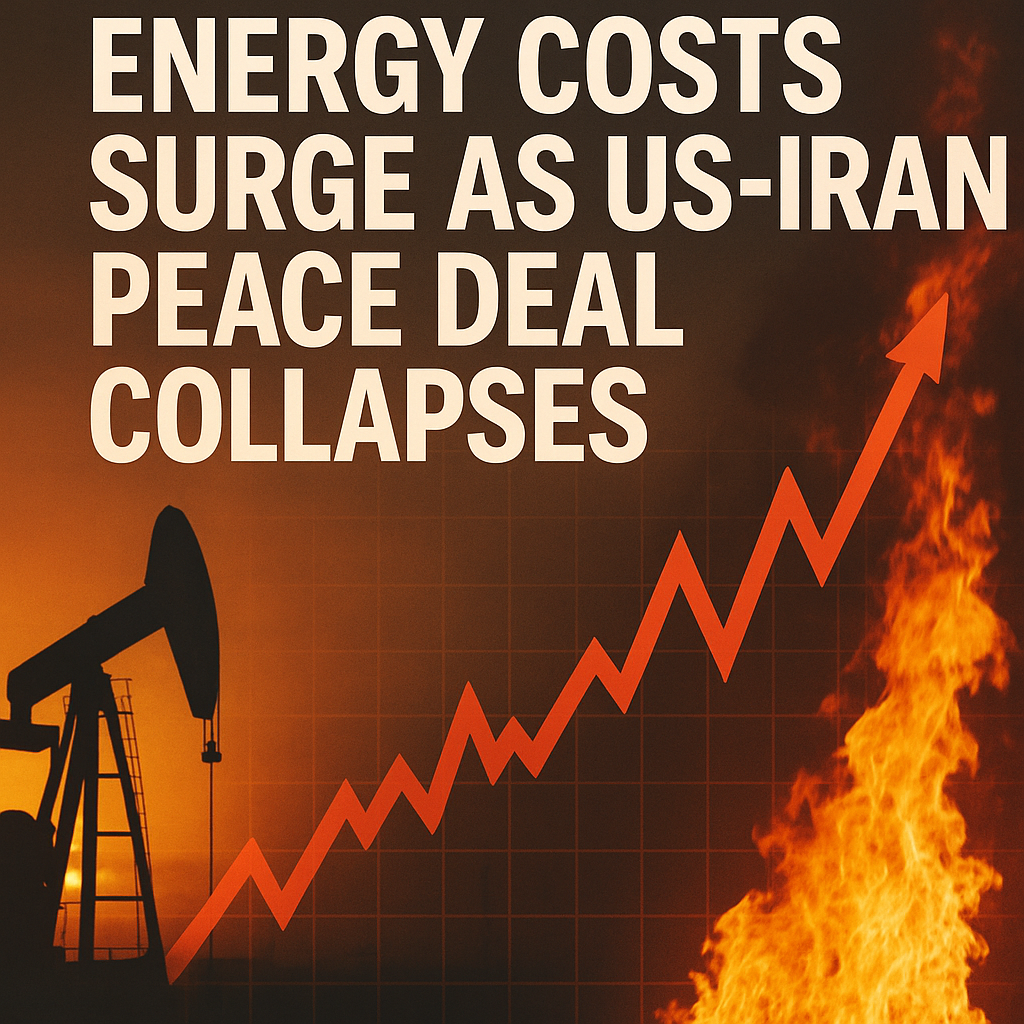
Energy Costs Surge as US-Iran Peace Deal Collapses
Energy Costs Surge as US-Iran Peace Deal Collapses
The recent collapse of the US-Iran peace deal has sent shockwaves through global energy markets, causing energy costs to surge. This dramatic shift highlights the complex interplay between geopolitics and economic stability, with the ramifications stretching far beyond the borders of the two nations involved.

Impacts on Energy Prices
In the wake of the faltering negotiations, analysts note that energy prices have surged considerably. Reports indicate that crude oil prices have risen significantly, reflecting market fears of potential supply disruptions. According to a report from Sky News, energy costs have seen an uptick as traders anticipate that instability in the Middle East could hinder oil exports from Iran, a country key to the global oil supply.

While some experts argue that the immediate increase in prices may be somewhat exaggerated, the sentiment in the market is heavily weighted towards caution. They point out that geopolitical tensions typically lead to a spike in prices, often driven by speculation among traders. This speculation was evident in the immediate aftermath of the peace deal’s collapse, as oil futures experienced a sharp increase.

Conversely, other analysts caution against panicking based on short-term fluctuations. The market is known to be unpredictable, and the long-term effects will depend significantly on how the situation evolves in the coming weeks and months. The differing opinions underscore the uncertainty looming over the energy market and reflect wider concerns regarding economic instability.
Broader Economic Consequences
The consequences of this geopolitical crisis extend beyond just higher energy prices. As energy costs soar, businesses across various sectors are likely to feel the pinch, which could lead to increased consumer prices. Many companies rely heavily on stable energy supplies, and a sustained increase in energy costs could stifle growth.
Additionally, stock markets reacted negatively in response to the news of the collapsed negotiations. Reports from Al Jazeera highlighted that the immediate fallout saw sharp declines in stock prices, a reflection of investor anxiety surrounding potential long-term instability in energy supplies. Such reactions demonstrate how intertwined energy politics are with the broader economic landscape.
Amid the turmoil, some analysts suggest that while higher energy prices often lead to immediate inflationary effects, they can also spur accelerated investments in alternative energy sources. Countries that are heavily reliant on oil imports may seek to diversify their energy sources or invest in renewable technologies as a counterbalance to volatility in fossil fuel markets.
Navigating Uncertainties
While the immediate reaction has been one of increased volatility, the longer-term outlook remains uncertain. The interplay of energy costs, stock market responses, and geopolitical considerations introduces layers of complexity that make predictions precarious. As both the US and Iran navigate their diplomatic channels, market watchers will be closely observing signals that could indicate shifts in rhetoric or policy.
At this juncture, the consensus among various sources indicates that while energy costs are likely to remain elevated in the short term, the trajectory beyond that is less clear. Economic analysts urge caution, advising stakeholders to prepare for a range of possible scenarios.
In summary, the collapse of the US-Iran peace deal has resulted in an immediate surge in energy costs and a downturn in stock markets. However, the full spectrum of consequences remains to be seen, as the intricacies of international relations continue to unfold. The situation serves as a sharp reminder of the influence geopolitical dynamics exert over global markets and everyday consumer experiences.















