Rahm Emanuel: Israel Can’t Expect Unconditional US Aid

Rahm Emanuel: Israel Can’t Expect Unconditional US Aid
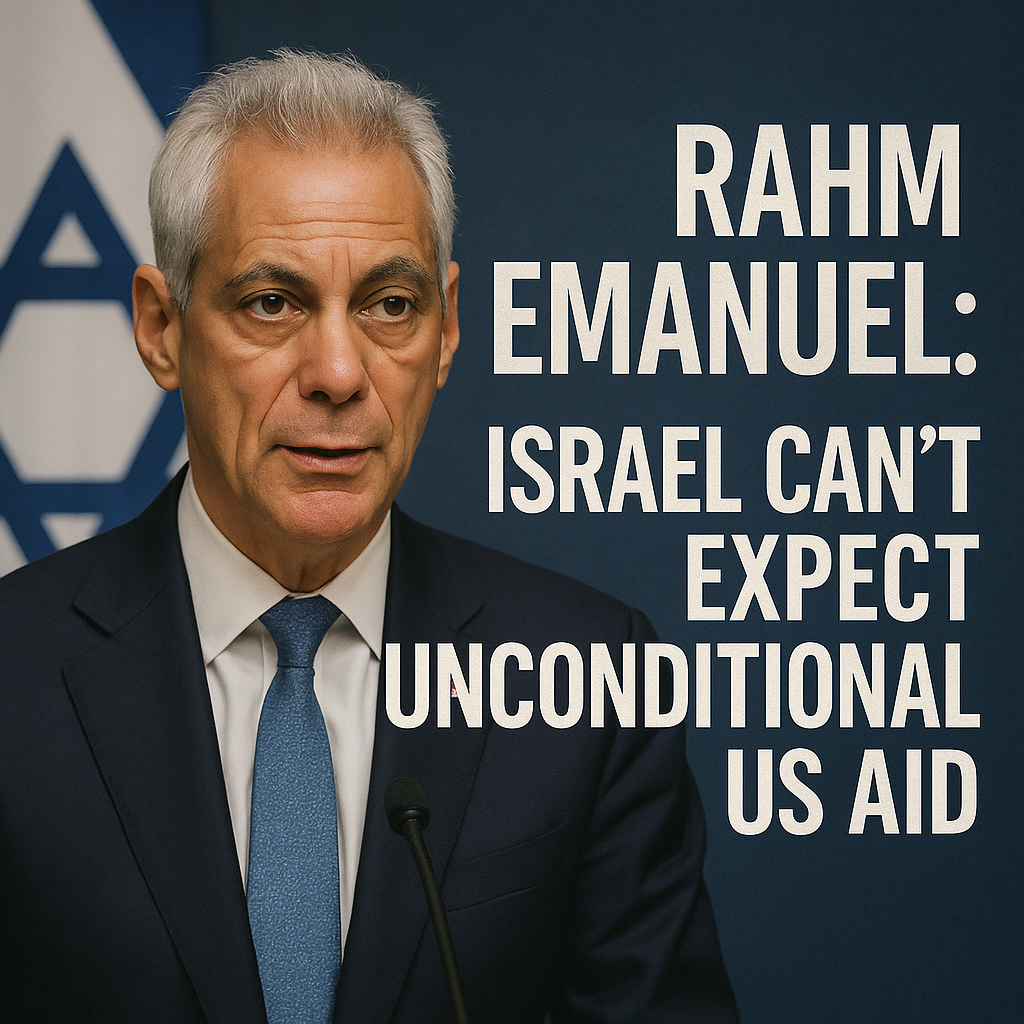
Rahm Emanuel’s recent statements have reignited the discussion surrounding the nature of U.S. aid to Israel. Emanuel, a former U.S. ambassador to Japan and a long-standing figure in American politics, emphasized that Israel can no longer rely on unconditional support from the U.S. This assertion signals a potential shift in the dynamics of U.S.-Israel relations and raises questions about how future aid packages may be structured.

Shifting Perceptions of U.S. Support
Historically, Israel has enjoyed overwhelming support from the United States, often framed as a cornerstone of American foreign policy in the Middle East. However, recent trends indicate a growing discourse around reassessing this relationship. Emanuel’s remarks reflect a sentiment that has surfaced among various factions within U.S. politics, particularly among progressives who advocate for a more balanced approach to Middle Eastern diplomacy.


In a recent interview, Emanuel stated, “The idea of Israel moving forward with an expectation that the U.S. will provide unqualified support is no longer sustainable.” This perspective resonates with the increasing calls from within the Democratic Party for a more nuanced relationship with Israel. Progressive lawmakers have begun to urge a re-evaluation of the terms under which aid is provided, particularly regarding Israel’s policies towards Palestinians.


Emanuel’s caution against the notion of “blank checks” underscores the concerns that have arisen among critics of Israel’s actions, especially in light of ongoing tensions and violence in the region. The diverging viewpoints highlight a critical moment in U.S. foreign policy where unconditional support could evolve into a more conditional framework, tied to specific diplomatic benchmarks and social justice considerations.
Diverse Perspectives on Aid Conditionality
The conversation surrounding U.S. aid to Israel is not without its complexities. On one side, proponents of unconditional support argue that Israel is a vital ally amid a volatile region, and that maintaining military and economic assistance is essential for its security. They emphasize the geopolitical strategy of bolstering a partner nation that is viewed as a democratic stronghold in the Middle East.
Conversely, advocates for conditional aid suggest that it is essential to hold Israel accountable for its policies, particularly regarding Palestinian rights and peace negotiations. These voices argue that the U.S. should leverage its significant financial aid—approximately $3.8 billion annually—to promote a fair peace process, rather than enabling actions perceived as exacerbating tensions.
Emanuel’s comments reflect a growing acknowledgment of the latter viewpoint among mainstream political circles. Analysts suggest that this evolution is partially a response to shifting public opinions on the Israeli-Palestinian conflict. Recent polling indicates that younger Americans, particularly among the Democratic base, increasingly support a more equitable approach, emphasizing humanitarian rights.
Implications for Future U.S.-Israel Relations
The implications of Emanuel’s perspective extend beyond mere financial agreements. If U.S. aid is indeed expected to become conditional, there could be significant ramifications for Israel’s domestic and international policies. Analysts speculate that such a shift might pressure Israeli leadership to reconsider its approach towards the Palestinians, potentially fostering conditions for renewed peace talks.
Moreover, the reassessment of U.S. aid may impact Israel’s relationships with Arab nations, as it navigates the delicate balance of American expectations and regional dynamics. Some experts argue that this could pave the way for more collaborative efforts in the Middle East, where U.S. interests align with regional stability.
However, becoming more conditional does not come without its risks. Critics warn that imposing conditions on aid could lead to a fracturing of U.S.-Israel relations, possibly alienating a key ally in a pivotal region. Such a rift might embolden anti-Israel sentiments or destabilize partners currently aligned with U.S. interests.
Conclusion: A Critical Juncture for U.S.-Israel Aid
Rahm Emanuel’s assertion that Israel can no longer take U.S. support for granted is indicative of broader shifts within the political landscape. As pressures mount from within American society to reassess unconditional aid, the coming years could witness significant reevaluations in how the U.S. engages with Israel and the broader Middle Eastern region. The dialogue surrounding conditional aid is not merely a policy discussion; it reflects evolving values in American foreign policy, advocating for accountability while navigating longstanding alliances. This juncture presents both challenges and opportunities for a more balanced approach, potentially shaping the future of peace and stability in an ever-fractious landscape.