
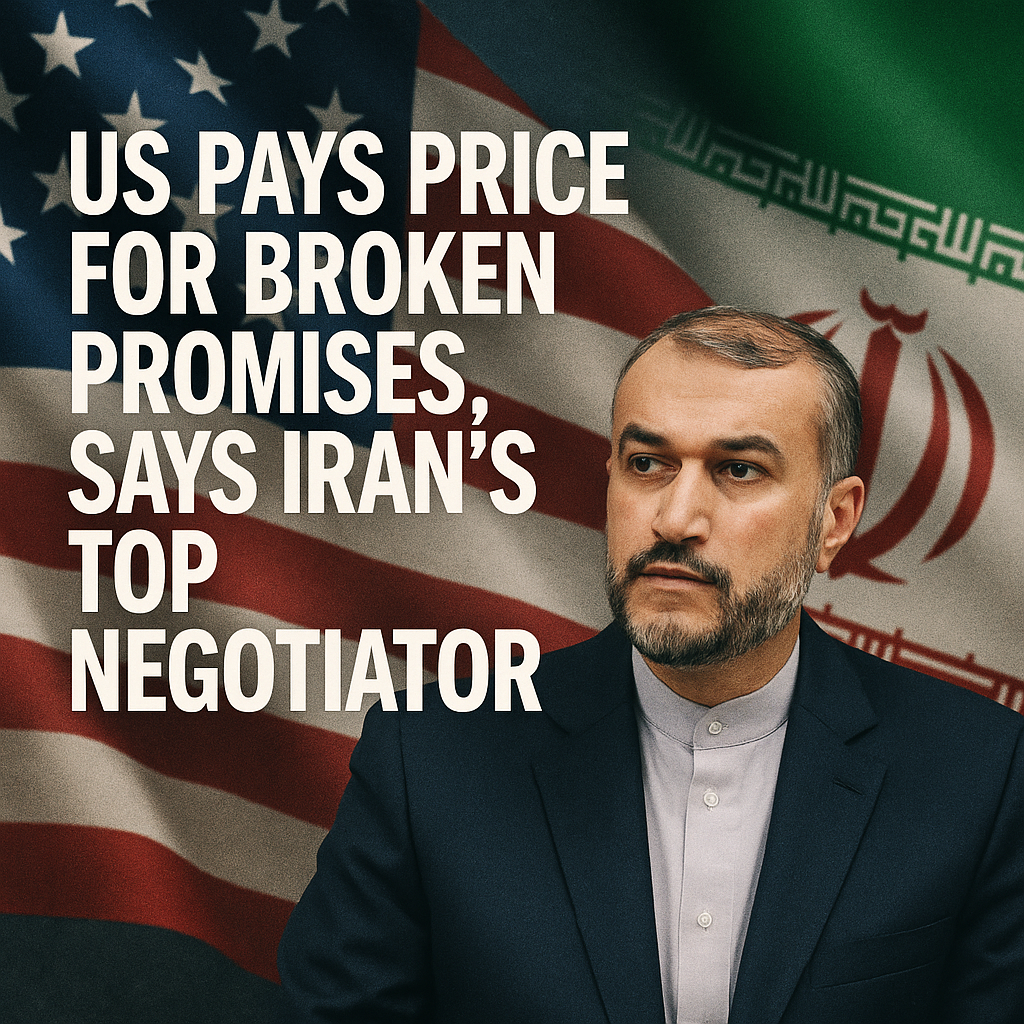
US Pays Price for Broken Promises, Says Iran’s Top Negotiator
The ongoing tension between the United States and Iran continues to cast a long shadow on international relations, particularly in light of recent statements from Iran’s chief negotiator. His remarks underscore the complexity of diplomatic negotiations and the consequences of unmet promises.

US-Iran Relations: A Fractured Landscape
In the wake of stalled negotiations regarding nuclear agreements and broader Middle Eastern policies, Iran’s top negotiator, Ali baghery Kani, articulated a sentiment that resonates deeply within Tehran: “The US pays the price for broken promises.” The assertion highlights Iran’s frustration over the perceived unreliability of American commitments, particularly since the 2015 nuclear deal often referred to as the Joint Comprehensive Plan of Action (JCPOA), was undermined by former President Trump’s withdrawal in 2018. As negotiations have oscillated between periods of hope and disillusionment, the rhetoric from both sides has become increasingly pointed.

The Iranian perspective frames U.S. actions as indicative of a broader pattern of distrust. Tehran maintains that the U.S. commitment to international agreements is more fragile than it should be, adversely affecting not just Iran but also the stability of the entire region. This sentiment was echoed in a recent statement from Iranian parliament speaker Mohammad Bagher Ghalibaf, asserting that America’s “ineffective and short-sighted policies” lead to not only regional turmoil but also national challenges within the United States itself.

Conversely, U.S. officials and analysts argue that Iran’s failure to adhere to the original terms of the JCPOA is a critical factor in the ongoing collapse of diplomatic relations. They contend that Iran has consistently exceeded its uranium enrichment limits and has not provided the transparency necessary to relieve international concerns regarding its nuclear capabilities. This perspective underscores a crucial point: what one party deems broken promises, the other might interpret as necessary safeguards.
The Costs of Distrust
The financial and political repercussions of these strained relations stretch far beyond immediate diplomatic failures. In a volatile region where alliances shift rapidly, nations are recalibrating their foreign policies, often in direct response to U.S.-Iran tensions. For instance, the Gulf Cooperation Council (GCC) has found itself walking a tightrope as it seeks to maintain relationships with both Washington and Tehran, making the dynamics significantly more complex.
Moreover, the hesitance of other countries to engage with Iran can have far-reaching consequences. Sanctions and restrictive policies imposed by the U.S. serve not only to isolate Iran but also set a precedent for other nations regarding how to approach their diplomatic engagements. This environment fosters a complex web of distrust, where each nation is forced to gauge its interactions within the context of fragile international agreements influenced heavily by U.S. actions and Iran’s responses.
The economic ramifications are palpable. As Iran continues to grapple with sanctions, its economy suffers—yet the leadership frames these hardships as a consequence of external actions rather than internal inefficiencies. This narrative serves to rally domestic support and consolidate power among Iranian officials. The U.S., similarly, faces its challenges, as deteriorating relations contribute to instability and unrest in various geopolitical arenas, leading to a situation where American foreign influence is questioned.
Navigating the Path Forward
As the international community watches, the road ahead appears uncertain. While the U.S. continues to push for renewed talks aimed at restoring the JCPOA, Iran’s leadership remains skeptical. The balancing act between maintaining national pride and pursuing economic relief creates a convoluted scenario for both parties. If either will is lacking, talks risk falling apart, further ingraining the cycle of distrust.
The question remains: will both sides recognize the mutual benefits that can arise from dialogue, or will rhetoric continue to overshadow potential agreements? The outlook hinges on an understanding that broken promises can lead to a cost that far exceeds immediate diplomatic failures. As both nations seek to reclaim agency over their narrative in a rapidly changing global landscape, recognizing the ripple effects of their decisions may be the first step toward breaking the cycle of skepticism.
In conclusion, Iran’s assertion that the U.S. “pays the price for broken promises” encapsulates the frustrations surrounding the intricate web of international diplomacy. The challenge lies not only in the resolution of immediate issues but also in rebuilding trust, which remains crucial for future collaborations. Until that trust is reinvigorated, the complexities of U.S.-Iran relations will likely continue to unfold within the context of mutual suspicion and strategic rivalry.















