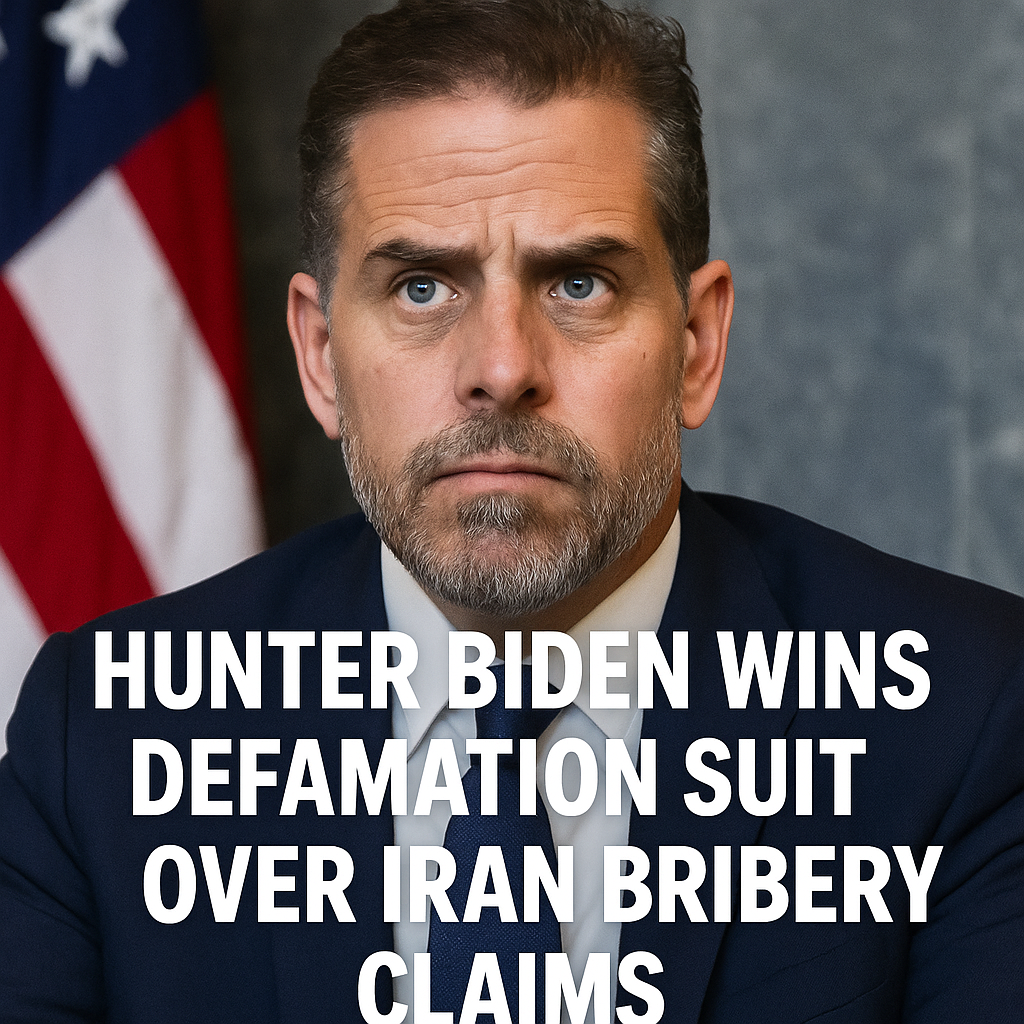
Hunter Biden Wins Defamation Suit Over Iran Bribery Claims

Hunter Biden’s Defamation Suit Victory: Implications and Reactions
In a recent legal battle, Hunter Biden achieved a notable win in his defamation suit regarding allegations linking him to bribery involving Iran. This outcome has sparked a mix of reactions, encapsulating the divisive sentiments surrounding Biden’s legal and political challenges.

Background of the Defamation Case
Hunter Biden’s defamation lawsuit was initiated following claims made by a group of individuals who alleged that he had engaged in corrupt dealings with Iran. The claimant’s assertions posed a significant threat not only to Biden’s personal reputation but also to the political standing of his father, President Joe Biden. The allegations underscored a recurrent theme in American politics: how family ties can influence public perception and legal proceedings.


The court’s ruling in favor of Biden determined that the claims lacked credible evidence, emphasizing the importance of protecting public figures from unfounded allegations. This decision reflects an essential legal principle: accusations must be grounded in substantial proof rather than mere speculation.


Public and Political Reactions
The political landscape reacted sharply to the verdict. Proponents of Hunter Biden see the ruling as a validation of his character and an acknowledgment of the smear tactics often deployed in political conflicts. This perspective is bolstered by many who argue that the allegations were politically motivated, reflecting a broader trend where individuals on both sides of the political spectrum leverage the judicial system to advance personal agendas.
Conversely, critics view the situation as emblematic of a lack of accountability within elite circles. Some commentators suggest that even dismissals of cases like this do little to resolve deeper concerns regarding the integrity of political figures. As one analyst from Sky News stated, “The case highlights a broader malaise in political communication, where allegations can run rampant without substantial scrutiny.”
The Broader Implications
Hunter Biden’s legal victory potentially sets a precedent concerning the liability of public figures in defamation cases. By reinforcing that accusations must stand up to rigorous factual checks, this ruling could deter unfounded claims that are often used as political weaponry.
However, the complexity of the case illustrates the ever-present tension between political discourse and personal attacks. The fervor surrounding Biden’s political family can overshadow the factual basis of legal claims, complicating public perception. Critics argue that regardless of the legal outcome, the mere act of bringing such allegations forward can have lasting repercussions on reputations and voter sentiments.
Given the polarized state of American politics, the landscape is ripe for both legitimate discussions about ethics in governance and an ongoing battle against misinformation. The Hunter Biden case serves as a cautionary tale that warns against quick judgments based on headlines without exploring the nuances of rebuffs and defenses in a legal context.
Conclusion: A Watershed Moment?
While Hunter Biden’s win in the defamation suit against the bribery claims linked to Iran marks a legal victory, it opens a broader conversation on the implications of defamation within a politically charged environment. Public response remains split, underlining the complex relationship between personal reputation and political narrative.
As society navigates the treacherous waters of media narratives and public judgment, this case prompts critical reflection on accountability and the boundaries of political discourse. Moving forward, it serves to remind us all that the legal system’s role is not just to adjudicate claims, but also to foster a culture where truth is diligently pursued over sensationalism.