US Strikes Resume in Southern Iran: What You Need to Know

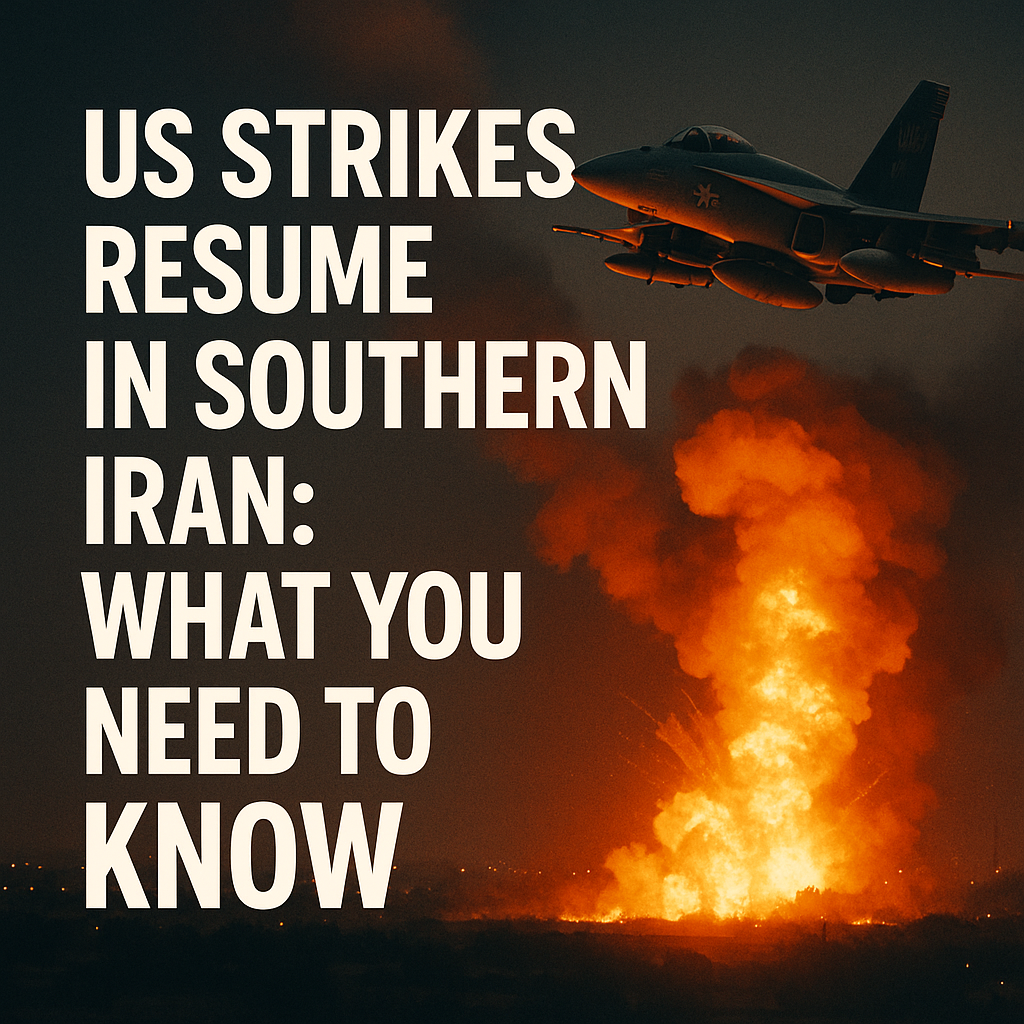
US Strikes Resume in Southern Iran: What You Need to Know
The recent resumption of U.S. strikes in Southern Iran marks a significant development in the Middle East’s turbulent geopolitical landscape. This escalation not only raises questions about the impact on regional stability but also highlights the ongoing complexities between Iran and the U.S. as tensions continue to simmer.

Background on the Recent Strikes
The U.S. military has launched what has been described as the “fourth wave” of strikes targeting positions in Southern Iran. According to reports from RT, these actions are primarily aimed at disrupting the operational capabilities of Iranian-affiliated militant groups. The strikes have garnered mixed reactions, with some viewing them as necessary measures in the fight against terrorism, while others criticize them as provocative and detrimental to peace efforts.


Iran has responded to these strikes with a fusillade of rhetorical retaliation. The Iranian government has condemned the U.S. actions as violations of its sovereignty, framing them as aggressive and unjustified. Al Jazeera cites Iranian military officials labeling these attacks as an “act of war,” heightening the risk of military confrontation in the region.


U.S. Perspectives: Strategic Justifications
From the U.S. standpoint, these operations are portrayed as vital to national security interests, particularly in curbing the influence of extremist factions within the framework of Operation Inherent Resolve. Proponents argue that military strikes are necessary to weaken groups that pose a direct threat to U.S. allies in the region and to disrupt illicit activities tied to terrorism financing.
Additionally, U.S. officials have emphasized that the strikes are targeted specifically at militant operational structures, with safeguards in place to minimize civilian casualties. This justification relies heavily on the notion of striking a balance between offensive military actions and the accountability that comes with engagement in foreign conflicts.
Regional Implications and Diverging Views
The ramifications of these strikes are complex and multifaceted. While U.S. officials argue that military action will stabilize the situation and deter future aggression, critics contend that such operations only serve to exacerbate anti-American sentiment and radicalize segments of the population in Iran and beyond.
Sky News reports that neighboring countries have expressed concerns about the potential for wider conflict. Nations in the Gulf region have a vested interest in a stable Iran but are cautious about overtly opposing U.S. actions. This ambivalence underscores the tensions that exist within Middle Eastern politics, where allegiances can swiftly shift.
Conversely, there are voices within the international community advocating for diplomacy rather than military options. These advocates argue that engagement, rather than strikes, could offer a pathway to de-escalation. They point to the historical precedent of dialogues yielding more sustainable results than military interventions.
The Uncertain Path Forward
As U.S. military operations in Southern Iran resume, the prospects for peace remain obscured by layers of complexity. The varied viewpoints—from the U.S.’s protective stance to Iran’s defiant resistance—illustrate the difficulty in reaching a consensus on how best to address the challenges facing the region.
Moreover, the uncertainty surrounding the outcome of these strikes raises pertinent questions: Will they effectively diminish militant capabilities, or will they catalyze further hostility? The potential for miscalculation is ever-present, which could lead to unintended consequences that exacerbate tensions between the U.S. and Iran.
Conclusion: A Call for Caution and Dialogue
In conclusion, the resumption of U.S. strikes in Southern Iran should be viewed through a lens of caution and strategic foresight. While the need to confront terrorism is undeniable, it is equally critical to weigh the long-term effects of military interventions against the benefits of diplomatic engagement. As the situation evolves, the global community must remain vigilant, advocating for solutions that prioritize peace and stability over further conflict.