
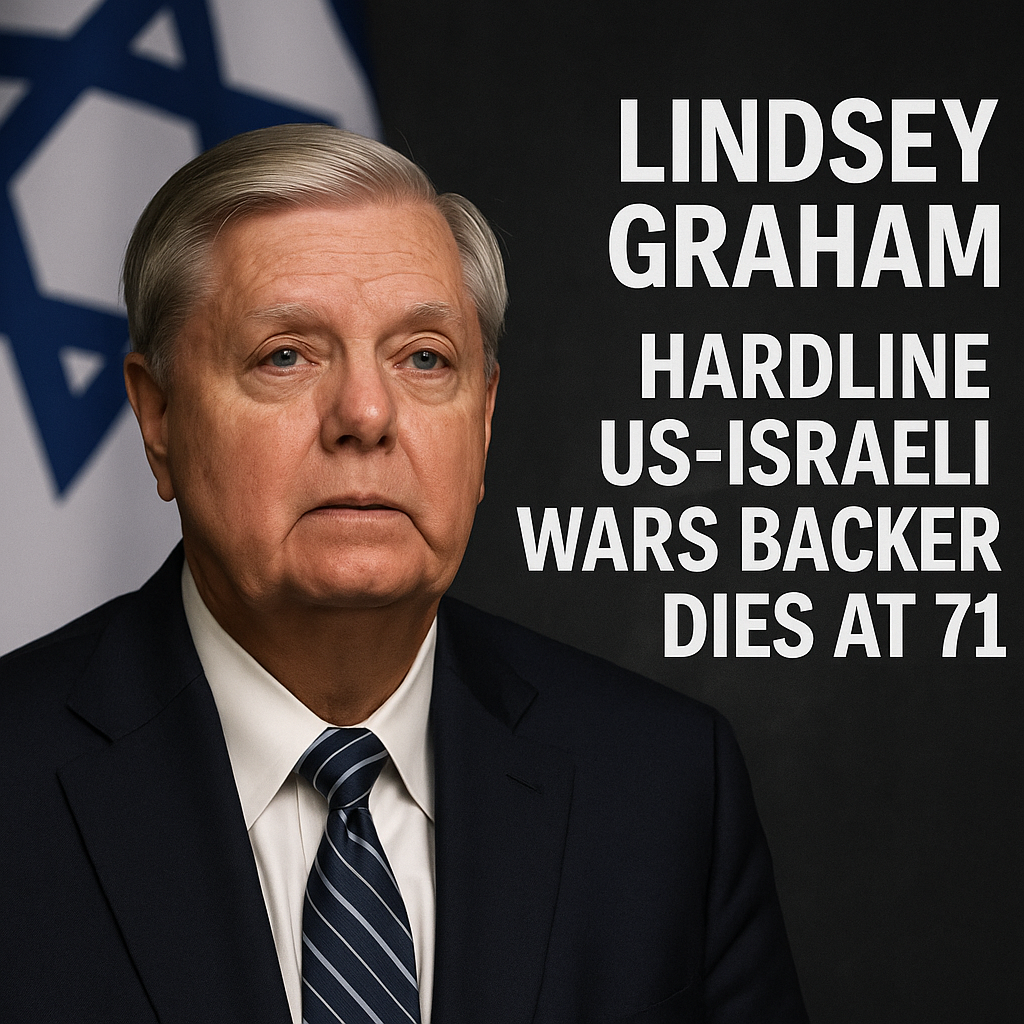
Lindsey Graham, Hardline US-Israeli Wars Backer, Dies at 71
Remembering Lindsey Graham: A Pillar of US-Israeli Relations
Lindsey Graham, a prominent figure in American politics and a staunch ally of Israeli interests, has passed away at the age of 71. His death marks the end of a career characterized by unwavering support for hardline US-Israeli policies and military interventions in the Middle East. The reactions to his passing vary significantly, reflecting the complexities of his political legacy and the polarized views surrounding his foreign policy stance.

A Legacy of Military Support
Graham’s support for US-Israeli relations is well-documented, with a focus on military cooperation and strategic partnerships. He was a vocal proponent of military aid to Israel, often arguing that safeguarding Israel was essential for U.S. national security. This view resonated with many in the Republican Party and among staunch pro-Israel groups who praised his efforts to strengthen ties through various initiatives and advocacy.

Critics, however, have often viewed Graham’s stance as overly aggressive, with some arguing that his hardline opinions exacerbate tensions in an already volatile region. Instead of pursuing diplomatic solutions, opponents contend, Graham favored military might, advocating for increased arms shipments and direct military involvement under the guise of promoting democracy and stability. The divide in perceptions of his policies indicates an ongoing debate about the effectiveness and ethical implications of such approaches in international relations.

Differing Perspectives on US Foreign Policy
In the wake of Graham’s death, reactions from political figures and analysts highlight the stark divides in U.S. foreign policy. Supporters laud his unwavering commitment to Israel and the fight against terrorism, framing his approach as crucial for regional stability. For example, conservative commentators have pointed to his efforts in promoting military funding and defense technology exchanges between the U.S. and Israel as foundational to their alliance.
Conversely, critics describe his perspective as short-sighted, arguing that it contributed to prolonged conflicts and humanitarian crises in areas like Gaza and Lebanon. They question the long-term efficacy of militaristic strategies that often overlook the human cost and lead to cycles of violence. This tension raises broader questions about the U.S.’s role in international conflicts and whether military support truly brings about lasting peace.
Balancing Priorities in U.S.-Israeli Relations
Understanding Graham’s impact requires navigating through various viewpoints on U.S.-Israeli relations. His death has sparked conversations not only about his individual legacy but also about the future of foreign policy in an era where global dynamics are rapidly changing. With rising tensions in the Middle East and shifting alliances, how the United States re-evaluates its support for Israel is crucial. Graham’s hardline stance exemplifies the historical recognition of Israel as a strategic ally, but it increasingly stands in contrast to calls for a more balanced approach to foreign relations.
As voices advocating for peace and dialogue gain traction, Graham’s legacy prompts considerations of how U.S. policies can evolve to better reflect the complexities of Middle Eastern geopolitics. His belief in military supremacy as a means to secure peace will likely be debated vehemently in the coming years, as will the fundamental question of how to balance national security interests with ethical considerations in foreign policy.
Conclusion: A Complex Legacy
The passing of Lindsey Graham resonates deeply within the framework of U.S. foreign policy, particularly regarding Israel. Marked by staunch support for military intervention and a firm bilateral relationship with Israel, his life’s work has left an indelible mark. As the nation reflects on his contributions and controversial policies, the discourse around U.S. involvement in international affairs may continue to evolve, spurred by the very debates Graham’s legacy has ignited. In this nuanced landscape, the call for a comprehensive understanding of U.S.-Israeli relations remains paramount.















