
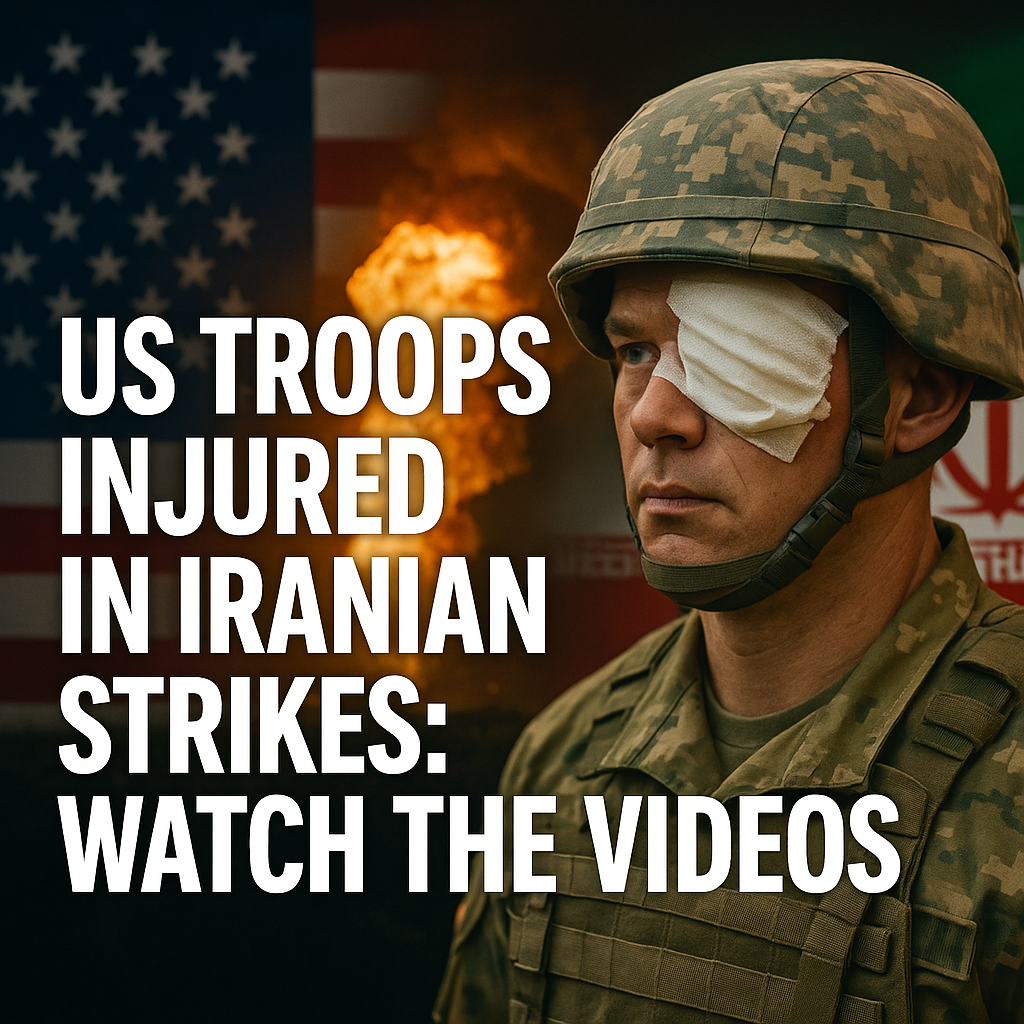
US Troops Injured in Iranian Strikes: Watch the Videos
US Troops Injured in Iranian Strikes: Analyzing the Impact
Recent events have heightened tensions between the United States and Iran, particularly surrounding the injuries sustained by US troops in strikes believed to be orchestrated by Iranian forces. This situation not only poses questions about military strategy but also about the implications for international relations in the region.

Overview of the Incident
Initial reports indicate that US troops stationed in Bahrain suffered injuries due to a missile strike attributed to Iranian-backed forces in Iraq. According to Al Jazeera, the strike marked a significant escalation in hostilities, emphasizing Iran’s ongoing military engagement in the region. This incident occurred amid an atmosphere charged with escalating rhetoric and military posturing, following recent threats exchanged between US officials and Iranian leaders.

In response to the attacks, the Pentagon has heightened security measures and is reportedly evaluating its military presence in the Middle East. These decisions come on the heels of a broader strategy to deter Iranian aggression in Iraq and Syria, areas heavily influenced by Tehran. In a statement, a Pentagon spokesperson remarked on the commitment to safeguard US personnel and maintain regional stability, hinting at possible retaliatory actions.

Weighing Perspectives on Military Engagement
The divergence of viewpoints regarding the US military’s ongoing presence in the Middle East cannot be overstated. On one hand, proponents argue that maintaining a robust military foothold deters threats from hostile actors, including Iran. They refer to the US’s historical role as a stabilizing force in the region, citing the need to support allies and counter terrorist organizations.
Conversely, critics argue that the military presence often exacerbates tensions rather than mitigates them. For instance, as highlighted in reports from RT, some analysts contend that such engagements breed resentment toward US forces and could potentially lead to more frequent attacks. They suggest that a reassessment of military strategy could prevent unnecessary military confrontations and create diplomatic openings for dialogue.
The Broader Implications
This incident raises significant questions not only about military strategy but also about the future of US-Iran relations. The cycle of violence and retaliation could escalate further, jeopardizing American credibility and leading to broader conflicts in a region already fraught with instability.
1. Potential for Escalation: Should further attacks occur, the US may feel compelled to respond more aggressively, which could spiral into a broader regional conflict. The US military has historically taken an assertive stance against perceived threats, and a restrained response might be viewed as weakness by adversaries like Iran.
2. Diplomatic Ramifications: Relationships with allied nations also hang in the balance. Countries in the Gulf region are closely monitoring the situation, weighing their own security needs with the necessity of maintaining strong ties to the United States. Meanwhile, Iran stands to gain popular support domestically if it can maintain its image as a regional power willing to confront US forces.
3. Public Sentiment: Domestically, public opinion on continued military involvement varies. Some Americans advocate for a shift toward diplomacy, arguing that repeated military engagements have not achieved lasting peace and have often resulted in unintended consequences.
In light of the recent events, opinions diverge sharply about the path forward. While some voice strong support for continued military presence as a means of deterrence, others call for a re-evaluation of US foreign policy, focusing on diplomatic solutions and avoidance of escalation.
Conclusion
The injuries sustained by US troops in the Iranian strikes are a poignant reminder of the precarious nature of military engagement in foreign territories. As the US navigates its response, the implications of these events extend beyond immediate military considerations. They delve deep into questions of strategy, international relations, and public sentiment regarding military involvement in ongoing regional conflict. Ultimately, the path taken could shape US foreign policy for years to come, necessitating a careful balance between deterrence and diplomacy.















