
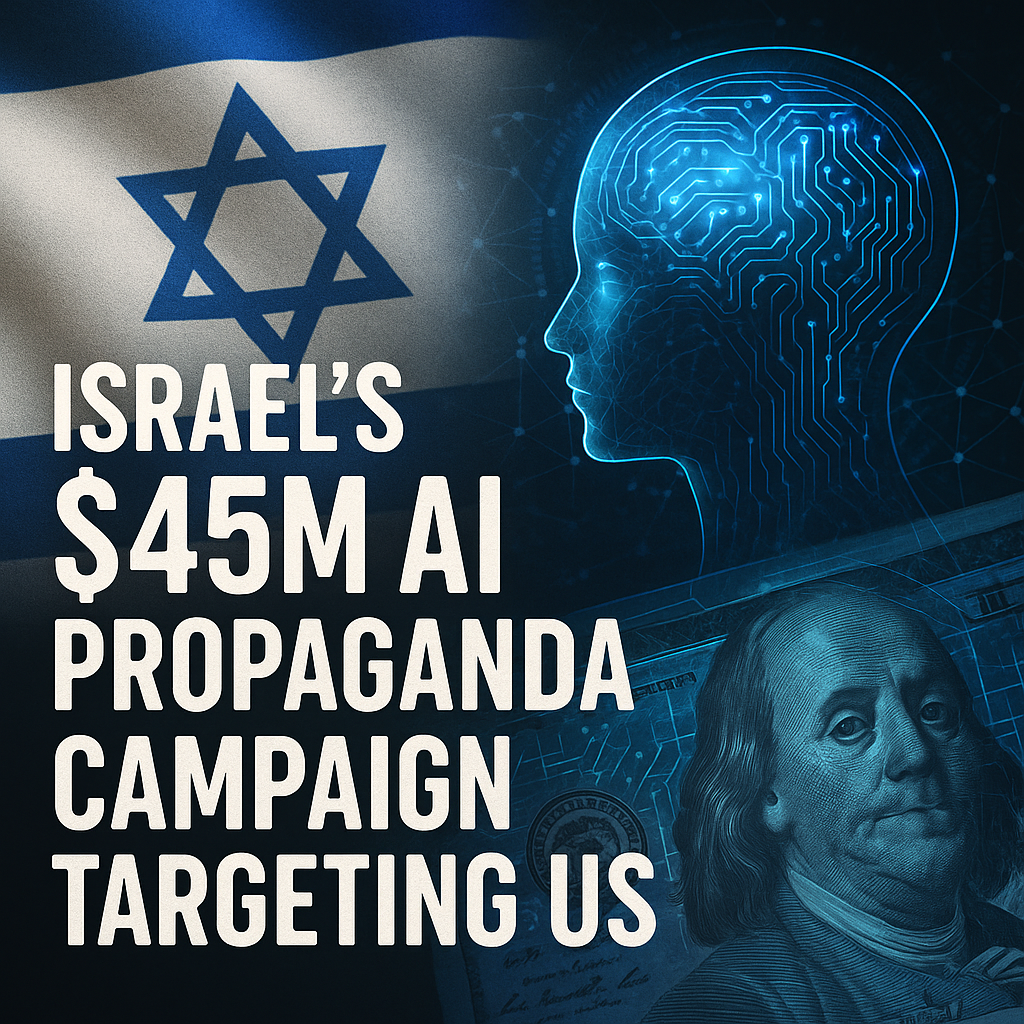
Israel’s $45M AI Propaganda Campaign Targeting US
Israel’s $45M AI Propaganda Campaign: Shaping US Public Opinion
In a groundbreaking initiative, Israel has launched a $45 million artificial intelligence (AI) propaganda campaign designed to influence public opinion in the United States. As digital warfare evolves, this campaign aims to bolster support for Israel’s policies by leveraging advanced technology to tailor narratives that resonate with American audiences.

Understanding the Campaign’s Aims
The primary goal of Israel’s AI initiative is to combat negative perceptions and promote its narrative on global platforms. This campaign signals a new era in geopolitical influence, utilizing sophisticated algorithms to analyze social media behavior and crafting messages that enhance support for Israeli actions—a strategy that raises questions about the ethics of using AI in propaganda.

This strategy is not entirely new; other countries have employed similar tactics, but the scale and investment highlight Israel’s commitment to controlling its image amid rising tensions in the Middle East. Critics of this approach argue that it represents a blatant manipulation of public opinion, challenging the ethical foundations of free discourse. They contend that the campaign effectively blurs the line between information and misinformation.

Technological Sophistication and Outreach
The AI-driven campaign employs machine learning algorithms capable of sifting through vast amounts of data to identify trends and sentiments. By engaging with millions of social media interactions across various platforms, the Israeli government hopes to disseminate messages that counter unfavorable narratives about its policies and military actions.
Many proponents of AI in communication argue that such technology can enhance political discourse by providing tailored information to diverse audiences. This perspective posits that when used ethically, AI could democratize information and foster a more informed public. However, the counter-argument suggests that these systems might be swayed to favor particular narratives, leading to echo chambers rather than a balanced discourse.
In light of this, the campaign’s efforts are met with skepticism. Some observers wonder whether the public can truly discern between authentic discussion and orchestrated influence. For instance, can AI-generated narratives genuinely reflect the complexities of the Israeli-Palestinian conflict, or do they risk oversimplifying deeply rooted issues?
Diverse Perspectives on AI Propaganda
The responses to this initiative are as varied as the technology employed. News outlets have highlighted divergent sentiments regarding Israel’s intentions and the broader implications of such a campaign. For supporters of the Israeli state, the initiative serves as a necessary measure in ensuring that its perspectives are adequately represented in a landscape that they perceive to be biased against them. They argue that the traditional media landscape often fails to provide a comprehensive view of Israel’s security concerns and historical context.
Conversely, critics from various sectors, including advocacy groups and political analysts, insist that this campaign may exacerbate divisions rather than bridge gaps. They argue that funding such a substantial operation can only be viewed as a misallocation of resources, particularly in times when both domestic and international issues are pressing. This concern is compounded by the potential it has to drown out authentic voices in favor of pre-packaged narratives.
The Ethical Debate Surrounding AI
At the heart of this issue lies a significant ethical debate about the deployment of AI in influencing public thought. Ethical considerations must include the integrity of information presented to the public and the potential for AI to intensify existing biases. As noted by critics, the manipulation of public opinion via AI not only threatens the quality of discourse but also raises important questions about accountability in the digital age.
Furthermore, debates around privacy and data utilization not only highlight concerns about consent but also the broader implications of social media as a tool for political campaigning. With AI’s growing role in shaping narratives, questions about the transparency of these technological applications will be paramount. Stakeholders across the board must grapple with these issues to establish ethical standards that govern AI’s role in public life.
Conclusion: Navigating a Complex Landscape
In essence, Israel’s $45 million AI propaganda campaign targeting the U.S. underscores the evolving landscape of information warfare. While it promises a more tailored approach to communication, the ethical conundrums it presents cannot be overlooked. As both domestic and international audiences contend with varied narratives, the collective challenge lies in discerning truth amidst technological advancements in shaping public opinion.
As public discourse continues to wrestle with these developments, it remains crucial for individuals to remain vigilant consumers of information, questioning not only the sources but also the motivations behind the narratives they encounter. The future of informed citizenship may well depend on our ability to navigate these complex terrains in an era dominated by AI-driven influence.















