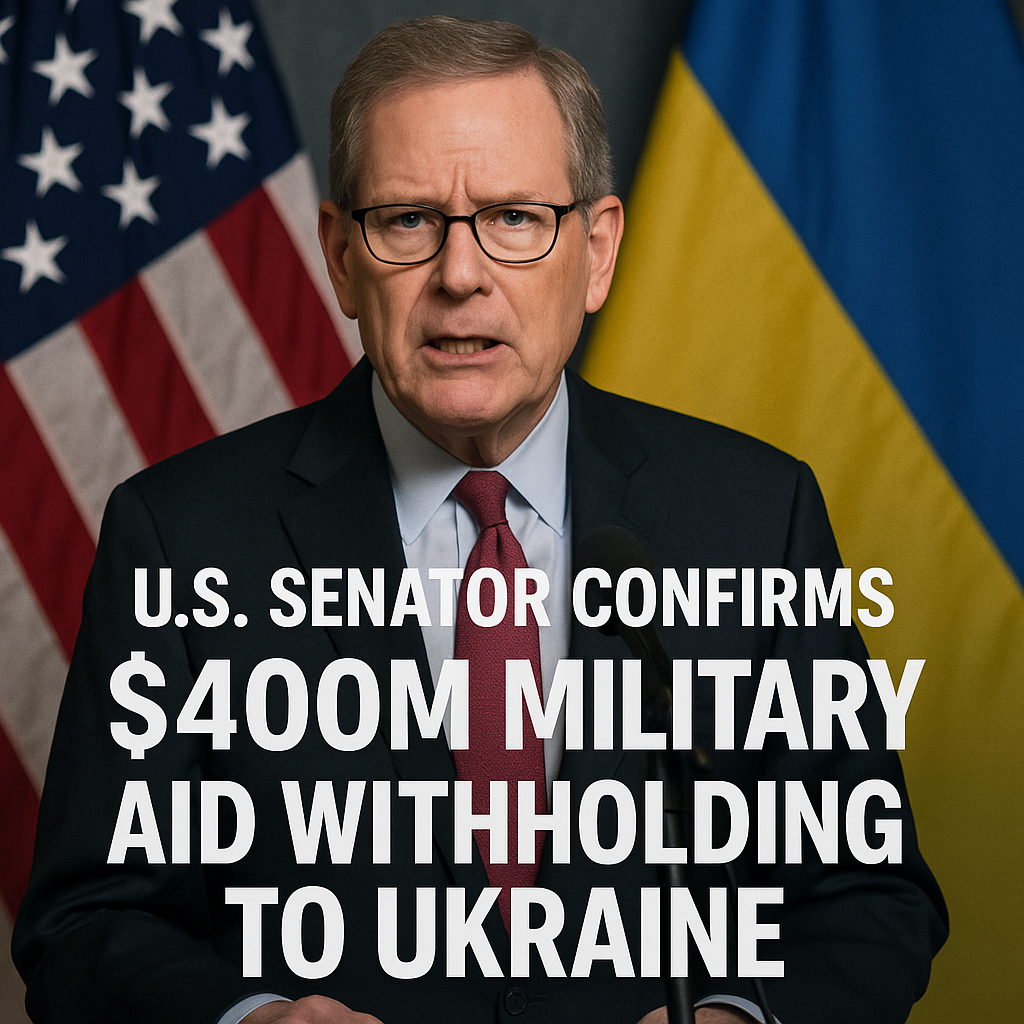
US Senator Confirms $400M Military Aid Withholding to Ukraine
US Senator Confirms $400M Military Aid Withholding to Ukraine
In a significant development amidst ongoing geopolitical tensions, a U.S. senator has confirmed the withholding of $400 million in military aid to Ukraine, a decision that has sparked diverse reactions both domestically and internationally. This decision underscores the complexities surrounding U.S. foreign policy and the continuing support for Ukraine amid its conflict with Russia.

The Context of Aid Withholding
As the war in Ukraine, which began in February 2022, nears its second anniversary, the U.S. government has been a crucial ally, providing substantial military assistance. However, recent statements from Senator Ted Cruz highlight a shift in the dynamics of this support. Cruz’s announcement has raised eyebrows, not only because of the amount but also due to the implications for U.S. foreign policy.

According to reports, Cruz argued that the funds could not be disbursed until specific accountability measures are established regarding the oversight of military aid. This reflects a growing sentiment among some U.S. lawmakers who demand greater transparency and oversight of how funds are utilized in Ukraine. Cruz has stated that “we need to ensure that every dollar is spent wisely” and that “the money must serve America’s interests.”

This sentiment is echoed by other politicians who have expressed concerns about the lack of accountability for military aid. These critics emphasize that transparency is paramount, particularly as billions of dollars have already been channeled into Ukraine, raising questions about overall effectiveness and long-term strategy.
Diverging Perspectives on Foreign Aid
However, contrasting viewpoints emerge from various quarters regarding this aid withdrawal. Supporters of continued military assistance argue that halting aid could embolden Russian aggression, undermining Ukraine’s ability to defend itself. They assert that an empowered Russian military poses a direct threat not just to Ukraine, but to European stability as a whole.
Prominent voices in international relations stress that military aid is essential for Ukraine to sustain its defense against Russian advances. An analysis from a political expert on Al Jazeera highlighted that “supporting Ukraine is not solely about aid; it’s about upholding international norms regarding sovereignty and autonomy.” This viewpoint emphasizes the broader implications of U.S. foreign policy decisions on global stability.
Moreover, some analysts warn that cutting off military assistance could set a precarious precedent. The ongoing conflict in Ukraine is viewed as part of a broader confrontation between Western nations and authoritarian regimes. According to an observation from Sky News, “if the U.S. withdraws support, it could signal to other nations that such aggressions can proceed unchecked.”
Implications for U.S.-Ukraine Relations
The withholding of military aid raises questions about the future of U.S.-Ukraine relations. While the humanitarian aspect of aid cannot be ignored, the strategic considerations currently overshadow these concerns. Critics of the funding freeze point out that this decision could undermine Ukraine’s ongoing military initiatives aimed at regaining territories lost to Russian forces.
Additionally, there is unease regarding how this decision might affect the bipartisan consensus that has typically underpinned U.S. support for Ukraine. Some politicians fear that the withdrawal could sow division among lawmakers and complicate future legislative efforts aimed at addressing Ukraine’s needs.
A Tenuous Balance
In this evolving landscape, finding a balance between scrutiny and support remains crucial. Legislative decisions regarding military aid must consider both accountability and the urgent needs of a nation fighting for its survival. The multifaceted nature of this situation implies no clear-cut solutions; instead, it requires continuous dialogue among policymakers.
As stakeholders navigate these turbulent waters, it becomes evident that the stakes extend beyond the immediate battlefield. The U.S. role in Ukraine represents not just a reactionary posture to Russian actions but also an affirmation of its commitment to uphold global democratic values.
In conclusion, the confirmation of the $400 million military aid withholding reflects a significant pivot in U.S. foreign aid policies towards Ukraine. While concerns over accountability are valid and necessary, the potential risks associated with withdrawing support must not be underestimated. As policymakers deliberate on this matter, the implications for Ukraine, the U.S., and international stability must remain at the forefront of their discussions.