
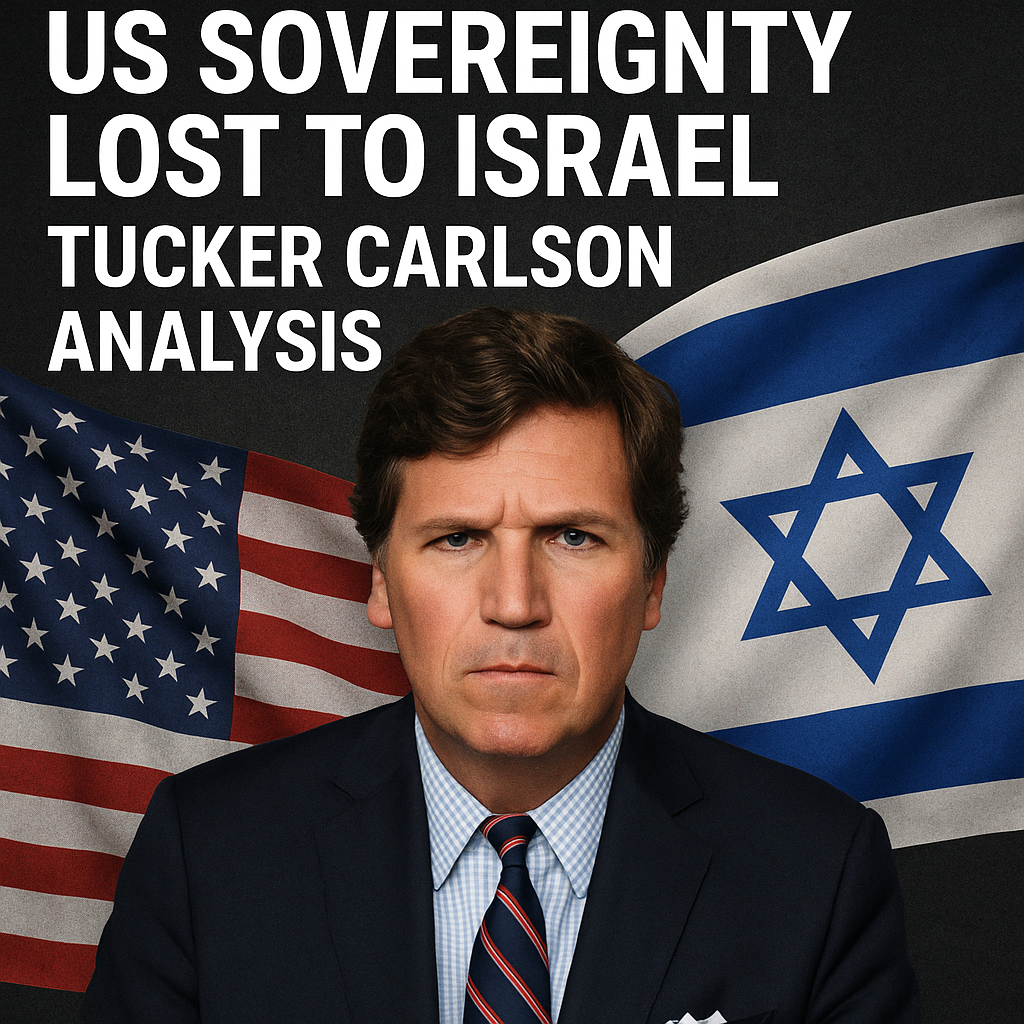
US Sovereignty Lost to Israel – Tucker Carlson Analysis
In a provocative discourse, the notion of American sovereignty in relation to its alliance with Israel has been thrust into public consciousness, particularly through the lens of Tucker Carlson’s recent analyses. Carlson’s commentary raises questions about the extent to which U.S. foreign policy may favor one ally to the detriment of its own national interests, a subject that is steeped in complexities and diverging viewpoints.

The Foundations of U.S.-Israel Relations
The U.S.-Israel relationship has long been characterized by robust military, economic, and political ties, reinforcing Israel’s position in the Middle East while also serving American strategic interests. Proponents of this alliance argue that Israel acts as a bulwark against regional instability and terrorism, ultimately benefiting U.S. national security. Reports from sources like Al Jazeera highlight the military aid and cooperation that reinforce this special relationship, noting Israel’s pivotal role in intelligence sharing and military innovation.

However, Carlson’s perspective juxtaposes this conventional narrative by suggesting an erosion of U.S. sovereignty wherein American interests may be overshadowed by Israel’s agendas. He articulates concerns that American policymakers are often compelled to align their decisions with those of Israel, prioritizing Israeli needs over domestic issues. This sentiment resonates with critics of the Israel-U.S. dynamic, who argue that unconditional support often leads to policies that do not reflect the broader interests of the American public.

A Divided Perspective on Sovereignty
The discourse surrounding U.S. sovereignty in the context of Israeli influence is not without its divides. On one side, supporters of the steadfast alliance emphasize that American military and financial support for Israel ultimately protects U.S. interests in a volatile region. From this viewpoint, collaboration is vital for national security, and Carlson’s arguments may be viewed as overly simplistic or detractive from a historically complex relationship.
Conversely, the dissenting voices argue that such unwavering support often blinds the U.S. to its own diplomatic and ethical dilemmas. Carlson’s assertions echo sentiments found in various news sources, including RT, which discuss how U.S. foreign policy sometimes neglects domestic concerns and struggles to maintain a balanced approach in the Middle East. This raises fundamental questions about the efficacy and morality of unconditional support.
Evaluating the Impact of Foreign Allegiances
The repercussions of this dynamic are significant. For instance, critics cite that U.S. foreign aid to Israel, which exceeded $3.8 billion annually, diverts attention and resources away from pressing issues within the United States, including healthcare and education. They argue that an honest evaluation of foreign policy should prioritize American needs, ensuring that global engagements do not compromise national interests.
Carlson and others point to the recent foreign policy shifts and comments made by public figures, suggesting that U.S. leaders often defer to Israeli perspectives when formulating Middle East policies. This line of reasoning hints at a loss of autonomy that, while perhaps born from a legacy of alliance, increasingly raises eyebrows among segments of the American populace who demand accountability and transparency in governance. The tug-of-war between upholding long-standing alliances and addressing domestic imperatives creates a complicated tableau of international relations.
The Future of U.S.-Israel Relations
As the discussion around U.S. sovereignty and its implications grows, it is imperative to navigate through the multifaceted realities of American foreign policy. Emerging leadership dynamics, shifts in public sentiment, and changing geopolitical landscapes are likely to influence the future of U.S.-Israeli relations. What remains uncertain is how policymakers will reconcile the need for a strong alliance without yielding to perceptions of compromised sovereignty.
The conversation initiated by Carlson taps into a broader, ongoing debate within U.S. society about identity, autonomy, and the role of external alliances in shaping national policy. This nuanced perspective urges a re-evaluation of the core tenets of U.S. foreign engagement, pushing for a dialogue that balances respect for allies with the imperative of prioritizing the nation’s interests. As opinions diverge and converge, the complexity of this relationship continues to evolve, embodying the tension between longstanding alliances and the pursuit of a sovereign, balanced foreign policy.















