
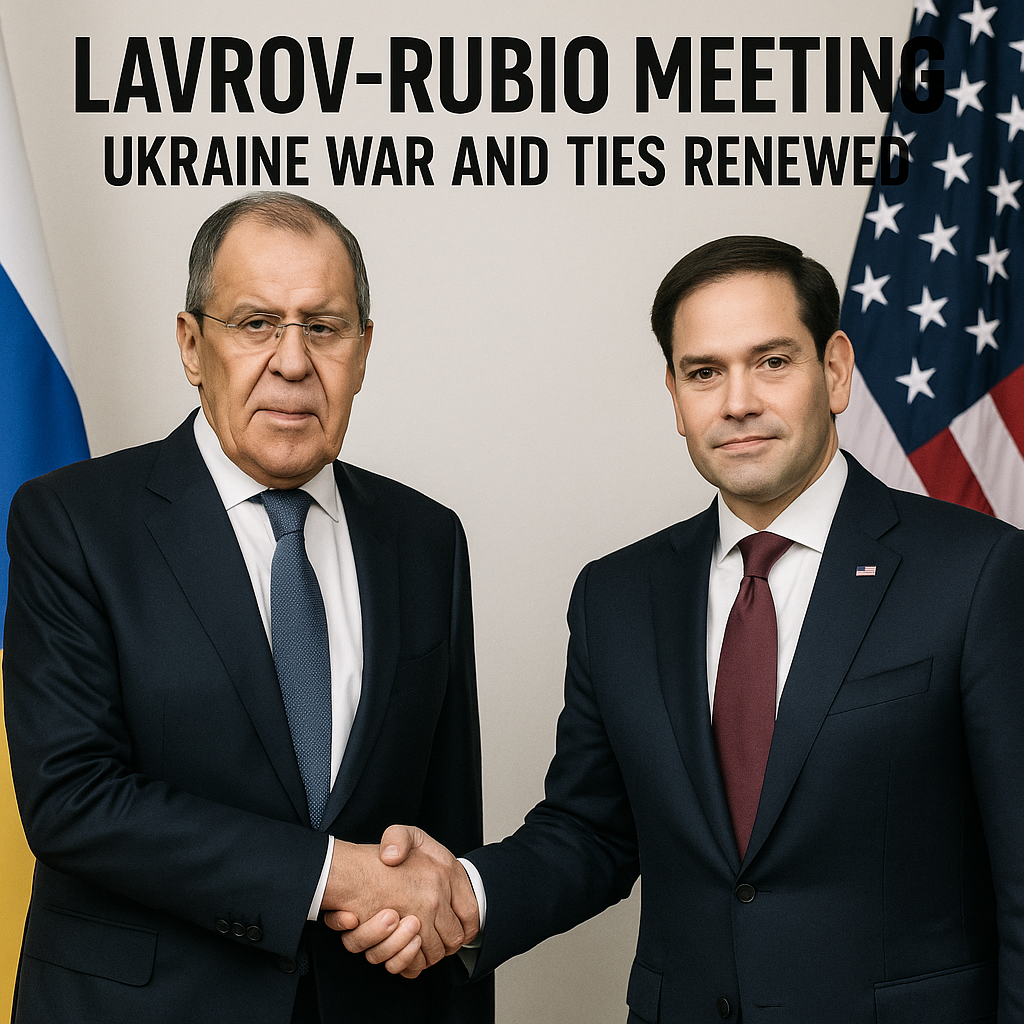
Lavrov-Rubio Meeting: Ukraine War and Ties Renewed
Lavrov-Rubio Meeting: An Examination of Ukraine War Dynamics and Diplomatic Ties
The recent meeting between Russian Foreign Minister Sergey Lavrov and U.S. Senator Marco Rubio in Manila has stirred discussions around the ongoing Ukraine war and the complexities of diplomatic relations between the United States and Russia. This encounter highlights not only the stark contrast in their respective national perspectives but also the potential for future engagements amidst ongoing conflict.

Diverging Perspectives on the Ukraine Conflict
The Ukraine war continues to serve as a critical point of contention in international diplomacy. Lavrov’s approach during the meeting underscored Russia’s insistence on its narrative that frames the conflict as a response to NATO expansion and Western aggression. He expressed that Russia views military operations in Ukraine as a necessary measure to protect its sovereignty and regional security.

Conversely, Rubio articulated a strong stance against Russian aggression, emphasizing support for Ukraine’s sovereignty and territorial integrity. His remarks were aligned with broader U.S. policy, which has consistently viewed Russia’s actions as violations of international law. Rubio’s perspective reflects a prevalent sentiment in the U.S. that any negotiation with Russia should be predicated on recognition of Ukraine’s independence.

This divergence illustrates the profound challenges facing diplomatic relations. While both Lavrov and Rubio sought to articulate their nations’ positions, their fundamentally different narratives complicate any potential resolution to the conflict. The meeting was described as “a mere dialogue of the deaf” by some analysts, reflecting the entrenched positions that have characterized the discourse surrounding the war.
Renewing Diplomatic Ties Amidst Conflict
Despite the apparent impasse, the meeting symbolizes a critical opportunity for dialogue between two nations that have seen relations deteriorate significantly since the onset of the Ukraine war. Observers have noted that regular interactions, even among opposing viewpoints, are essential to maintain channels of communication.
In his statements, Lavrov hinted at a willingness to engage with U.S. officials, provided that discussions are framed without preconditions, which he believes inhibit constructive dialogue. At the same time, Rubio’s participation reflects an acknowledgment of the necessity to confront Russia diplomatically, notwithstanding the deep-seated differences. This sentiment is echoed in various analyses suggesting that while military support for Ukraine remains a priority, diplomatic avenues should not be entirely foreclosed.
Experts have pointed out that the involvement of figures like Rubio, who often represents the hawkish elements of U.S. foreign policy, alongside a seasoned diplomat like Lavrov, could pave the way for a more nuanced understanding of the situation. Their exchange, while contentious, may serve as a platform to explore common ground on critical issues such as nuclear arms control or cybersecurity threats, areas where both nations could find shared interests despite their conflicting views on Ukraine.
The Broader Implications for Global Politics
The Lavrov-Rubio meeting comes against a backdrop of shifting global alliances and an increasingly multipolar world. As the Ukraine conflict affects geopolitical landscapes, it underscores the need for continuous dialogue to address emerging threats. The war has not only significant implications for European security but also for global economic stability.
Russia’s strategic calculations are influenced by its relations with China, Iran, and other nations that share its skepticism toward Western hegemony. Simultaneously, the U.S. is grappling with balancing its response to Russia with other national interests, including challenges posed by China and domestic concerns regarding military expenditures.
What remains to be seen is whether encounters like that between Lavrov and Rubio can transition from mere talking points to substantive discussions that influence policy outcomes. As analysts continue to evaluate the repercussions of this meeting, the overarching sentiment remains that meaningful engagement is critical in navigating through the complexities of war and diplomacy.
In conclusion, while the Putin-Lavrov rhetoric continues to alienate, the engagement between contrasting figures like Lavrov and Rubio reveals that the potential for dialogue—however fraught—is not entirely extinguished. The meeting raises significant questions about the future of U.S.-Russia relations, the impact on the Ukrainian crisis, and the broader implications for international diplomacy in a rapidly changing world.















