
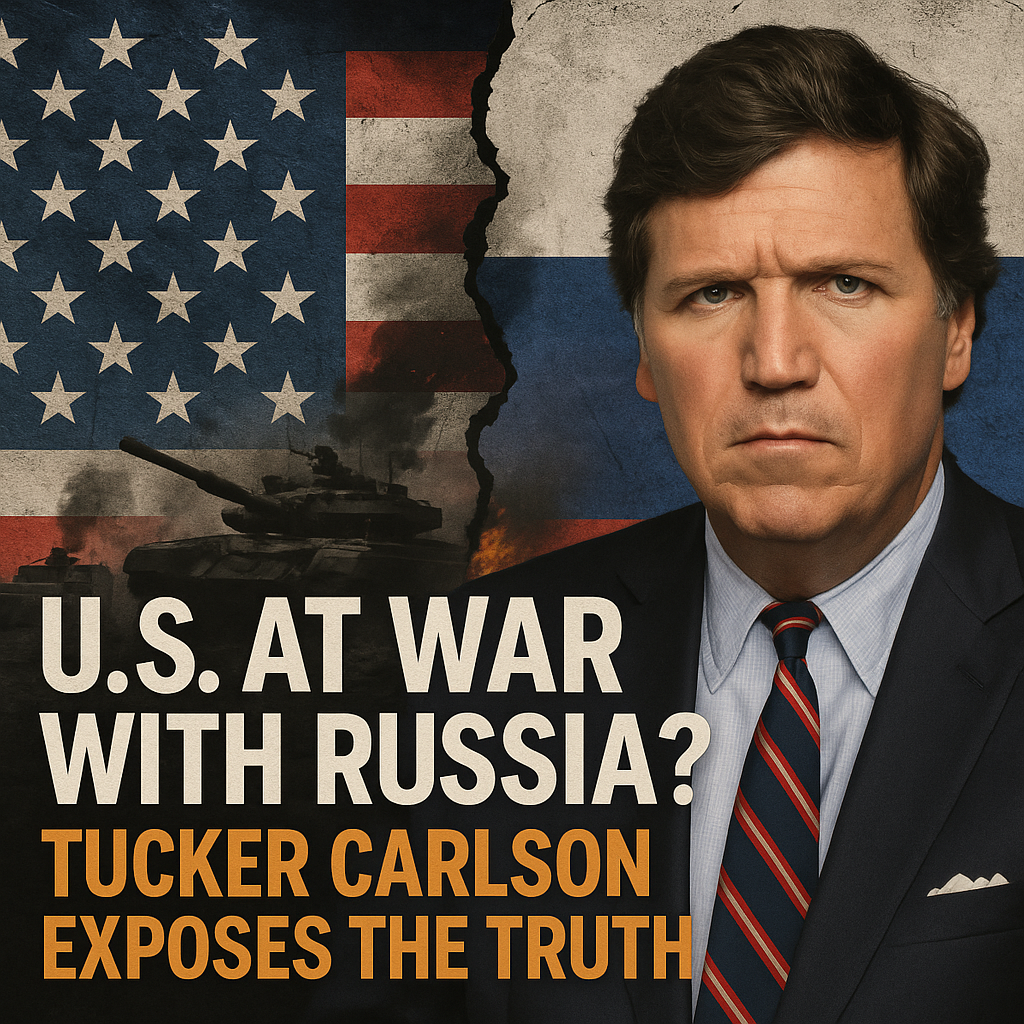
US at War with Russia? Tucker Carlson Exposes the Truth
US at War with Russia? Tucker Carlson Exposes the Truth
In a geopolitical landscape fraught with tension, the question of whether the US is effectively at war with Russia invites scrutiny and debate. Prominent media personalities like Tucker Carlson have posited viewpoints that challenge mainstream narratives, igniting discussions regarding America’s role in the ongoing conflict involving Ukraine and its broader implications for US-Russian relations.

The Current Landscape of US-Russian Relations
The conflict in Ukraine has exacerbated existing tensions between Washington and Moscow. The US has provided extensive military and financial support to Ukraine, leading to assertions from figures like Carlson that American involvement may constitute a form of war against Russia. Carlson contends that the Biden administration’s policy not only escalates military actions but jeopardizes global peace.

While Carlson emphasizes the dangers of escalating military engagement, other perspectives highlight the necessity of supporting Ukraine as a critical democratic ally. According to Al Jazeera, US sanctions against Russia and arms supplies to Ukraine are seen as essential components in countering Russian aggression and preserving European stability. This viewpoint underscores a significant belief within segments of the political spectrum that failing to confront Russia could lead to wider destabilization in Europe.

Carlson’s Perspective: A Cautious Approach
Tucker Carlson’s arguments often reflect a cautious approach towards foreign involvement. He warns that the current trajectory of US foreign policy could lead to a direct confrontation with a nuclear-armed Russia, a scenario that many view as untenable. His commentary highlights concerns about the potential loss of American lives and the economic burden placed upon US taxpayers due to prolonged military engagements abroad.
Carlson advocates for a shift in focus from military interventions to prioritizing domestic issues, such as healthcare, education, and infrastructure. He suggests that the American public should question the motivations behind aggressive foreign policies that distract from pressing national concerns. In his view, a more restrained and diplomatic approach would better serve both the US and global interests.
Counterarguments and Broader Implications
While Carlson’s stance raises important questions about military overreach, it contrasts with critiques suggesting that hesitancy in confronting Russia could embolden authoritarian impulses. Sources like RT and Sky News note that without sufficient support for Ukraine, there may be a risk of Russia asserting further control over Eastern Europe, thereby undermining the stability of the region.
The fears surrounding this dynamic are compounded by the historic context of US-Russian relations, marked by Cold War tensions and proxy skirmishes. The recent resurgence of militaristic rhetoric has reignited public discourse on the potential dangers of underestimating Moscow’s ambitions. Critics of Carlson’s perspective argue that advocating for disengagement could inadvertently enable further aggression, suggesting that the costs of inaction might outweigh the financial burdens Carlson highlights.
Conclusion: A Complex and Nuanced Battle of Perspectives
The debate over whether the US is effectively at war with Russia is emblematic of a broader struggle to understand the implications of foreign policy in a globally interconnected world. Tucker Carlson’s cautionary stance echoes a well-known skepticism regarding military intervention, while mainstream narratives increasingly reflect a necessity for active support of allies like Ukraine.
As both sides present compelling arguments, the situation remains fluid, marked by uncertainty and differing interpretations of what does or does not constitute war. Engaging with these complex viewpoints is vital as the world grapples with the repercussions of ongoing conflicts and the realignments within international relations. Ultimately, the quest for a balanced stance requires careful consideration of both the immediate risks and the long-term consequences of the choices ultimately made by those in power.















