
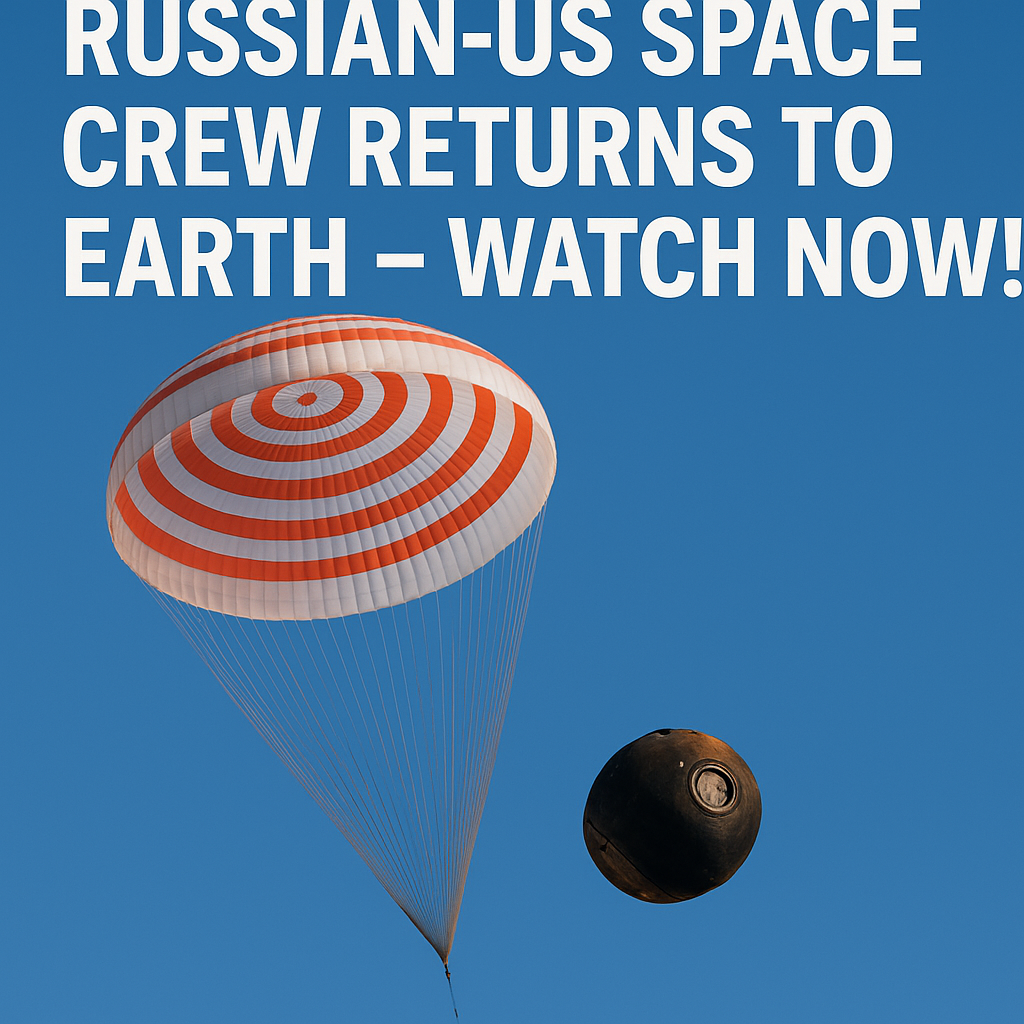
Russian-US Space Crew Returns to Earth – Watch Now!
Russian-US Space Crew Returns to Earth: A Moment of Collaboration Amid Tensions
The recent return of a Russian-American space crew to Earth has sparked discussions about the complexities of international cooperation in space, particularly against a backdrop of geopolitical tensions. The landing, which took place in Kazakhstan, involved an astronaut from NASA and cosmonauts from Roscosmos, highlighting a longstanding collaboration that continues despite ongoing conflicts on Earth.

A Successful Landing: Details and Reactions
On September 14, 2023, the Soyuz MS-24 spacecraft made a successful landing in the steppes of Kazakhstan, carrying NASA astronaut Josh Cassada, along with Russian cosmonauts Oleg Kononenko and Dmitry Petelin. The crew had spent 355 days aboard the International Space Station (ISS), where they participated in various scientific research projects and international outreach efforts.

Reports from RT emphasized the mission’s scientific achievements, pointing to how the collaboration between US and Russian astronauts has fostered advancements in fields like medicine and engineering. The astronauts expressed a sense of pride in their work, emphasizing how space exploration transcends national borders. “Despite the challenges back home, our time aboard the ISS was focused on exploration and discovery,” Cassada remarked during the post-landing press conference.

The Broader Context of Space Collaboration
While this successful mission serves as a symbol of cooperation, it is essential to consider the context in which it is occurring. The relationship between Russia and the United States is strained, particularly due to the ongoing conflict in Ukraine and various sanctions affecting numerous sectors. Articles from Al Jazeera and Sky News highlight that while astronauts from both nations work successfully together in orbit, Earthly political tensions loom large.
The ISS remains one of the few domains where collaboration seems to prevail. Experts argue that this relationship is vital not only for scientific advancement but also for fostering communication between nations. American astronaut Mark Vande Hei, who spent a record-breaking year on the ISS, previously commented that “working together in space builds bonds that can help relationships on Earth.”
The Future of Space Exploration: Opportunities and Challenges
The return of the Russian-US crew raises questions about the future of space collaboration. Will the successful missions of the ISS be sustainable, or are they merely temporarily set against the backdrop of current geopolitical turmoil? According to various analysts, maintaining cooperation might depend significantly on the political landscape.
1. Continued Cooperation: There is a consensus among some space experts that international collaborations like the ISS may serve as a model for cooperative efforts in other areas of technology and science. Facilitating partnerships in space could mitigate some of the geopolitical tensions observed on Earth.
2. Potential for Competition: Conversely, the technological race to dominate space exploration is intensifying. Countries like China have substantially increased their investments in space technology, which could necessitate a strategic shift in US and Russian cooperation. If this competition grows more pronounced, it could pose risks to collaborative efforts like those on the ISS.
3. The Role of Private Enterprises: The emergence of private companies in space exploration adds another layer of complexity. With companies like SpaceX paving the way for new missions and partnerships, the landscape of space exploration may undergo significant changes that could impact US-Russia collaborations.
Conclusion: A Time for Reflection and Future Planning
As the space community reflects on the successful return of the Russian-US crew, it is crucial to underscore both the achievements made and the challenges that lie ahead. The cooperation witnessed aboard the ISS showcases humanity’s potential to work together, transcending the barriers created by politics and conflict. However, it also serves as a reminder of the fragile nature of these alliances in the face of changing global dynamics.
While uncertainty surrounds the future of such collaborations, the importance of dialogue, research, and shared goals in space remains indisputable. As stakeholders assess the implications of this return, it may not just be a matter of celebrating a safe landing, but also recognizing the greater responsibility that comes with the continued exploration of the final frontier—together.















