
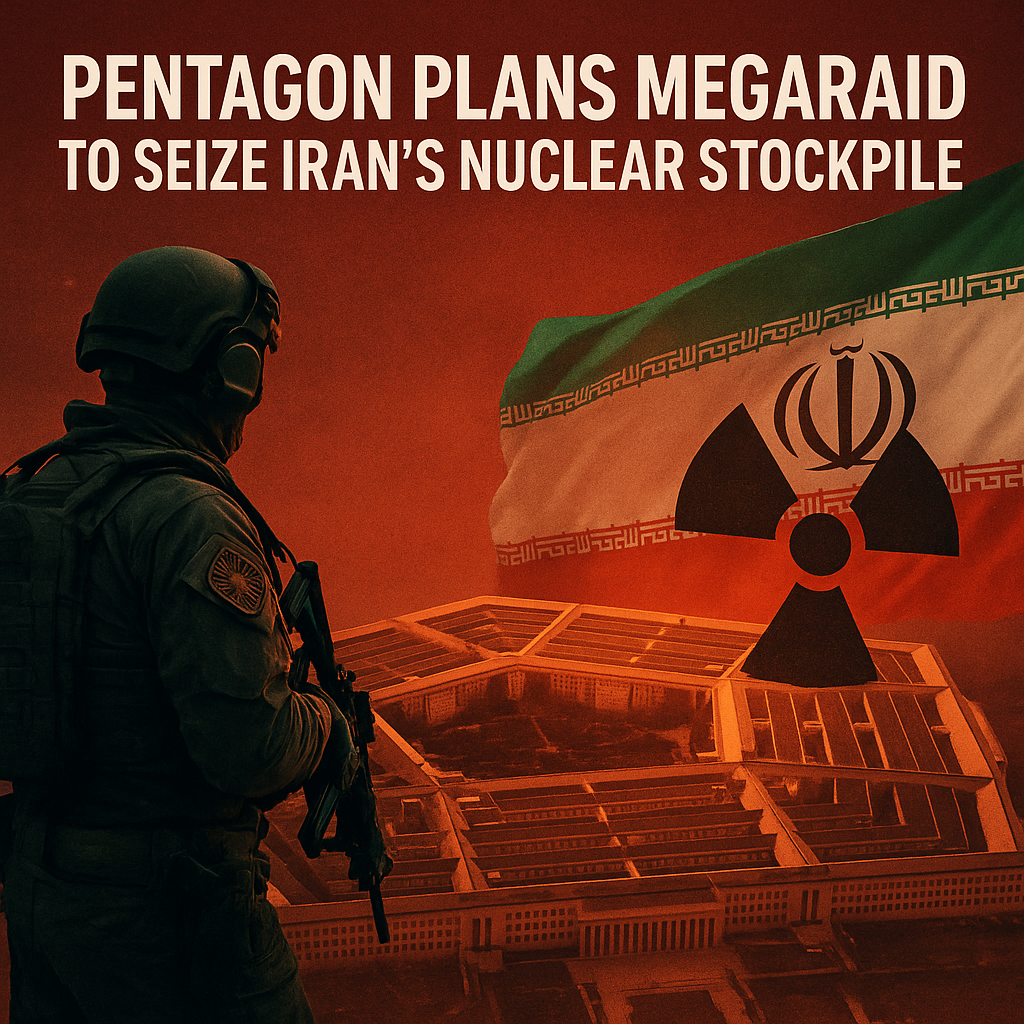
Pentagon Plans Megaraid to Seize Iran’s Nuclear Stockpile
Analyzing the Pentagon’s Plans for a Megaraid on Iran’s Nuclear Stockpile
The Pentagon’s consideration of a “megarraid” to seize Iran’s nuclear stockpile raises pressing questions about international security and the delicate balance of power in the Middle East. As tensions continue to rise, differing perspectives on this strategy exemplify the complexities surrounding the issue.

The Strategy Behind the Megaraid
Reports emerging from various sources indicate that U.S. military planners are contemplating a large-scale operation aimed at disrupting and potentially dismantling Iran’s nuclear capabilities. The underlying motivation is rooted in concerns that Iran might be nearing the ability to produce nuclear weapons. The proposed operation involves a multifaceted approach, utilizing advanced technology and intelligence to target Iran’s enrichment facilities.

According to some analysts, the rationale for such a dramatic step stems from the perceived failure of diplomatic efforts to rein in Iran’s nuclear program, particularly after the U.S. withdrawal from the Joint Comprehensive Plan of Action (JCPOA) in 2018. In this light, a preemptive strike—or “megarraid”—is seen by some as a necessary evil to ensure broader regional stability and prevent a potential arms race.

However, critics caution against the risks associated with such actions. The consequences of a military raid could escalate tensions significantly, leading to widespread retaliatory measures from Iran, further destabilizing an already volatile region. As Al Jazeera points out, military action could derail ongoing diplomatic efforts and alienate allies who favor a more measured approach.
Responses from the International Community
The international community is closely observing these developments, with reactions varying across the spectrum. Countries like Russia and China have openly condemned any consideration of military options, warning that such actions would provoke a fierce backlash. They argue for renewed dialogue instead, emphasizing the importance of multilateral negotiations to address nuclear non-proliferation in the region.
On the other hand, several U.S. allies share the concerns about Iran’s ambitions but differ in their approach. Nations such as Israel view military action as a last resort but may support a tactical intervention if Iran’s nuclear capabilities continue to expand unchecked. This divergence in perspectives highlights the intricate web of alliances and rivalries that characterize the Middle Eastern geopolitical landscape.
Moreover, public opinion in the U.S. reveals a complicated picture. While some segments support a hardline stance against Tehran, others express skepticism regarding military intervention, advocating instead for diplomatic channels to be fully explored. Polls indicate that a significant portion of Americans favors non-military solutions, reflecting a war-weary sentiment among the populace.
Weighing the Risks and Rewards
The potential benefits of a successfully executed megarraid could be substantial, leading to temporary disruption in Iran’s nuclear capabilities. However, the risks involved are equally pronounced. Beyond immediate military repercussions, such an action could lead to long-term geopolitical ramifications.
The history of military interventions in the region serves as a cautionary tale. Past actions have often resulted in unintended consequences, such as the rise of extremist groups and heightened sectarian violence. The possibility of increased hostilities may also alienate moderate factions within Iran who could otherwise be engaged in constructive dialogue.
In light of these complex dynamics, the situation surrounding the Pentagon’s proposed megarraid remains decidedly ambiguous. While the desire to curb Iran’s nuclear ambitions is clear, the means of achieving that goal is fraught with uncertainty. Stakeholders must carefully assess whether military action will lead to a more stable outcome or exacerbate existing conflicts.
Conclusion: A Balanced Perspective
As the Pentagon contemplates its options regarding Iran’s nuclear stockpile, the implications of each potential action are significant and far-reaching. Engaging with diverse viewpoints and weighing the broader impact of a megarraid is essential.
The ongoing debate underscores the importance of a cohesive international strategy that prioritizes diplomacy while simultaneously addressing security concerns. As tensions remain high, a balanced approach may very well be the key to fostering long-term peace and stability in the region.















