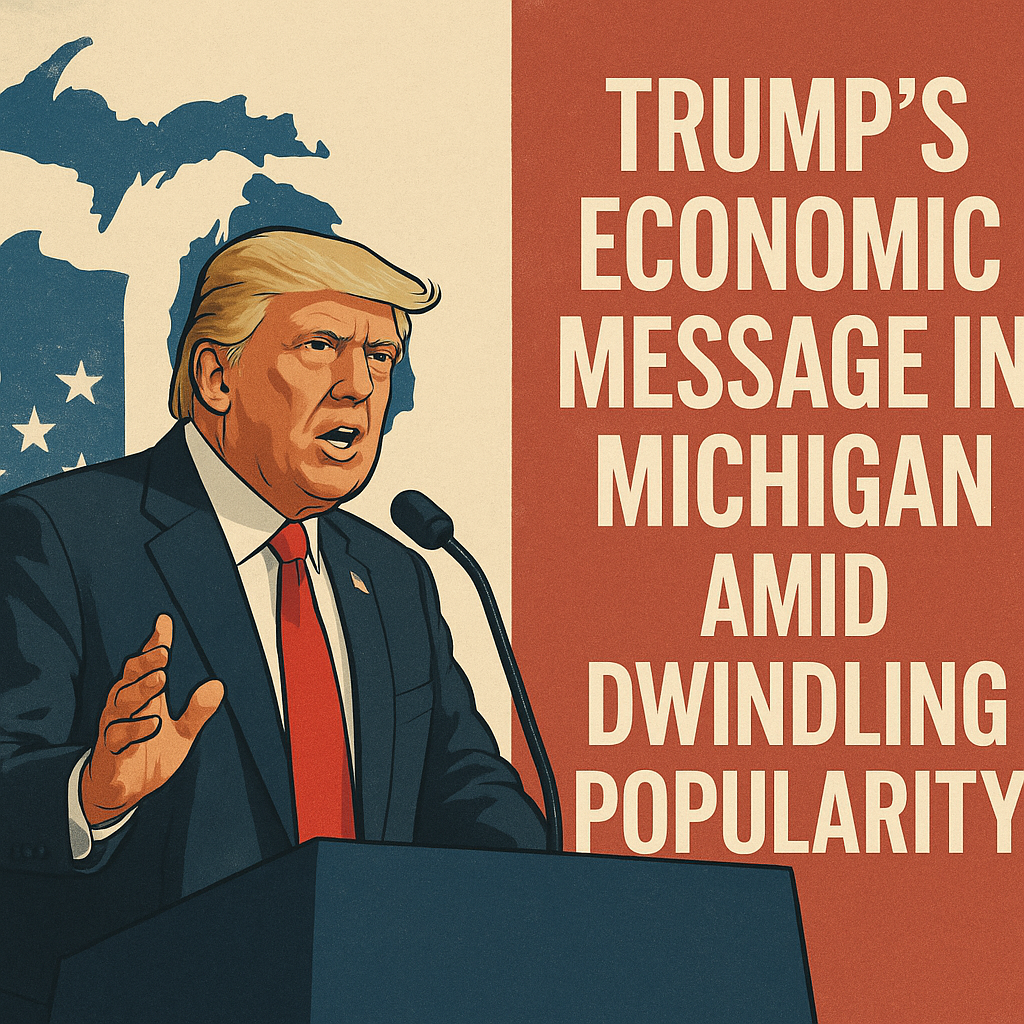
Trump’s Economic Message in Michigan Amid Dwindling Popularity

Trump’s Economic Message in Michigan: A Test of Resilience Amid Dwindling Popularity
In a landscape shaped by shifting voter sentiments and a turbulent economic backdrop, Donald Trump is taking his economic message to Michigan. This state, vital for securing victories in past elections, has increasingly shown signs of discontent with the former president. Yet, he aims to reinvigorate his base by highlighting policies and economic achievements from his previous administration.

The Michigan Landscape: Jobs and Automakers
Michigan’s economy, once heavily reliant on the automotive industry, has faced significant challenges. Job losses during the pandemic and ongoing supply chain issues have compounded local frustrations. Observers note that Trump’s messaging focuses on boosting American manufacturing and reviving jobs, particularly in sectors like automotive production. According to Al Jazeera, Trump’s planned return to Michigan comes amid calls for revitalizing the local economy through job creation, which remains a pivotal concern for voters.


Conversely, while Trump aims to capture attention with promises of economic rebirth, critics argue that his narrative oversimplifies the intricacies of Michigan’s economic struggles. Many believe that Trump’s previous policies did not sufficiently address the long-term shifts in the automotive industry or the pressing needs of everyday Michiganders. Local analysts emphasize that while rallying his base, Trump risks alienating those seeking feasible solutions to genuine economic woes.

Weighing the Message: Support and Skepticism
The contrast in reactions to Trump’s economic pitch in Michigan paints a complex picture. Some supporters remain steadfast, citing past achievements like tax cuts and deregulation as catalysts for economic growth. They argue that these policies helped resurrect industries and encouraged job creation. Supporters are eager to hear about returning to these strategies, seeing Trump’s past as a pathway to future prosperity.
On the other hand, detractors highlight the decline in his popularity and the perceived disconnect between his message and the current state of affairs. As reported by RT, many Michiganders have expressed skepticism about Trump’s ability to deliver real change, especially given that many of the desired reforms seem aimed more at regaining political traction than addressing the nuanced realities of their lives. These critics contend that the former president’s approach lacks a solid foundation rooted in the current needs of struggling communities.
The Future Landscape: An Uncertain Economic Promise
As Trump continues to mobilize support in Michigan, the efficacy of his economic narrative remains to be seen. Surveys and public sentiment suggest that, while some remain loyal, a significant portion of the electorate is looking for concrete policies rather than rhetoric. This fluctuation may jeopardize his appeal not just in Michigan but also in broader battleground states.
Undoubtedly, economic discussions in Michigan are intertwined with broader issues, such as public health, education, and infrastructure development. Voters are becoming increasingly discerning, demanding comprehensive plans rather than promises. The outcome of Trump’s efforts to reconnect with his base in Michigan could very well set the tone for his political future and influence the Republican Party’s path leading into upcoming elections.
Conclusion: A Balancing Act
Trump’s economic message is layered and reflects both the hopes and apprehensions of Michigan’s voters. As he straddles the line between addressing past successes and acknowledging current hurdles, his ability to resonate with a diverse electorate will be crucial. While his message may resonate with some, the question remains: can it bridge the widening gap between rhetoric and reality in today’s Michigan? This is a narrative that will surely evolve and require careful attention as both voters and politicians seek to navigate an uncertain economic landscape.