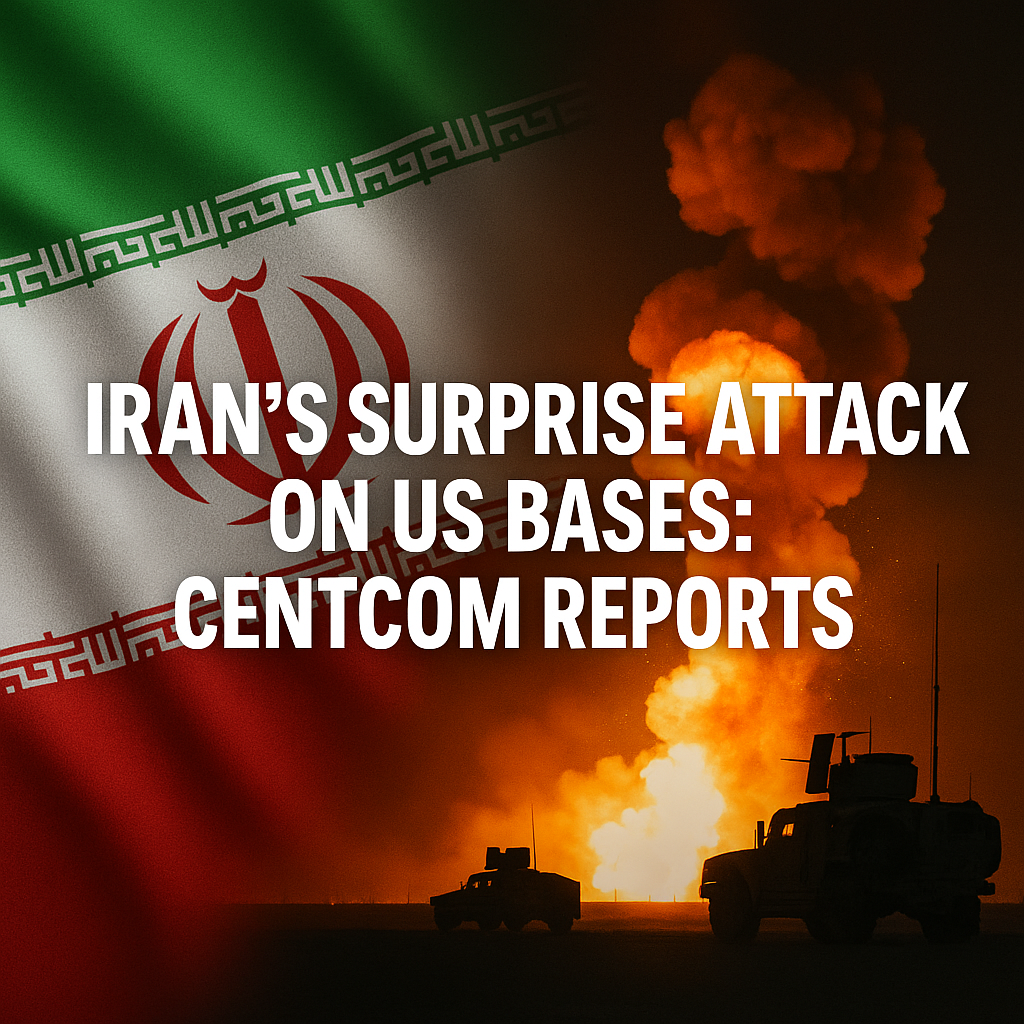
Iran’s Surprise Attack on US Bases: CENTCOM Reports
Iran’s Strategic Assault on US Bases: Insights from CENTCOM Reports
In an unexpected maneuver that has reverberated through geopolitical circles, Iran has conducted a surprise attack on US military bases in the region, as highlighted in recent CENTCOM reports. This event has sparked varied interpretations and responses from various news sources, reflecting the complexity of Middle Eastern geopolitics and the ongoing tensions between Iran and the United States.

Understanding the Context of the Attack
The intricacies surrounding the attack hinge on Iran’s escalating tensions with the US. CENTCOM, the US military’s Central Command, stated that these bases, crucial for maintaining American presence and influence in the Middle East, were targeted in response to perceived aggression and sanctions from the US. This incident marks a significant shift in Iran’s military strategy and underlines the broader narrative of power dynamics in the region.

It’s essential to consider Iran’s motivations. Analysts suggest that the attack may have been intended as a show of force, aimed at bolstering domestic support for the Iranian government amid internal challenges. Furthermore, a recent article from Al Jazeera highlights that Iran could be testing the limits of US responses and signaling to its regional adversaries that it has the capability and willingness to retaliate against foreign military presence.

Conversely, RT emphasizes the strategic nature of the timing, suggesting that actions like these serve to distract from regional unrest and economic turmoil within Iran itself. The relationship between domestic politics and military action has long been significant in Iranian governance, and this incident possibly serves multiple purposes: projecting power externally while reinforcing the government’s narrative of resistance to foreign intervention.
Implications for US-Iran Relations
The ramifications of this attack extend beyond immediate military concerns, potentially reshaping diplomatic relations between the two countries. Following the incident, there has been a swift international reaction. From a diplomatic standpoint, experts believe that further engagement may be necessary to prevent escalation. Sky News reports a polarized reaction within the US, where policymakers are debating the merits of either retaliatory military action or pursuing dialogue to mitigate future conflicts.
A critical question emerges: how should the US respond? The contrast in opinions among policymakers reflects a broader ideological divide. Some argue for an aggressive stance, suggesting that a strong military response is necessary to deter future Iranian maneuvers. Others advocate for dialogue, stressing that escalation could lead to a broader conflict with severe global implications, especially as power vacuums continue to manifest throughout the region.
The complexity deepens when considering Iran’s regional allies and responses. Nations such as Russia and China have previously expressed support for Iran’s assertive stance against US forces. Their involvement complicates any potential military response from the US, as it could invite broader geopolitical engagements, raising the stakes considerably.
Regional Stability and Future Prospects
The attack on US bases not only highlights the precariousness of US-Iran relations but also poses a significant threat to regional stability. Countries surrounding Iran, particularly those allied with the US, are likely to reevaluate their security postures. A renewed understanding of these geopolitical complexities is essential for comprehending future interactions.
Moreover, analysts recommend monitoring the responses of neighboring countries, including Saudi Arabia and Israel, who could be prompted to reassess their strategies in light of Iran’s provocative actions. The regional balance of power may shift, as neighboring nations either align closer to US interests or seek to be more self-reliant in defense matters.
In conclusion, Iran’s surprise attack on US military bases articulates a calculating strategy enriched by both domestic and international motives. The multi-faceted nature of this event illustrates the challenges facing policymakers in addressing not only the attack itself but also the larger tapestry of Iranian influence and the US’s military commitments in the Middle East. Moving forward, an emphasis on diplomacy might be the most prudent course—though fraught with its own set of complications—if the goal is to avert further conflict and foster stability in an already tumultuous region.