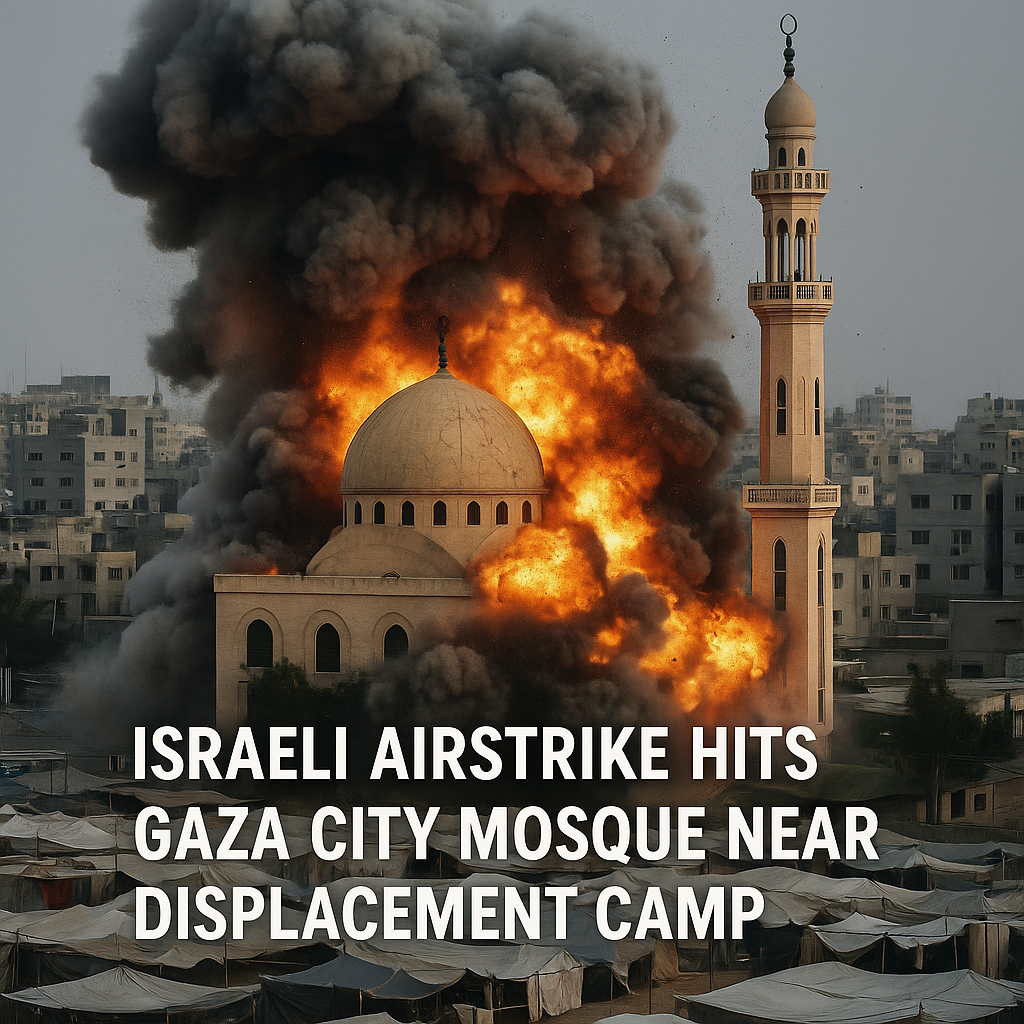
Israeli Airstrike Hits Gaza City Mosque Near Displacement Camp
Escalation of Conflict: Israeli Airstrike Targets Mosque in Gaza
In a recent escalation of violence, an Israeli airstrike destroyed a mosque in Gaza City, close to a displacement camp, raising significant concerns over the humanitarian implications and the broader impacts on the already strained situation in the region. This incident underscores the ongoing hostilities that have claimed numerous civilian lives and exacerbated the suffering of those caught in the conflict.

Context of the Airstrike
The airstrike, which occurred amidst persistent accusations of military aggression, has drawn sharp criticism from various international organizations and local officials. Reports indicate that the mosque was struck during a period when many families are already displaced, resulting in a devastating blow to the community that sought refuge nearby. Eyewitness accounts describe scenes of chaos and trauma, as both families who had fled their homes and individuals seeking shelter from conflict were directly impacted by the strike.

Local authorities, including health officials, reported significant casualties among civilians, raising urgent outcries for humanitarian protection. According to reports from Al Jazeera, the mosque was not merely a religious site but a gathering point for the community, which highlights the broader implications of targeting such spaces during military operations.

International Reactions
International reactions have varied, revealing a complex mosaic of perspectives surrounding this incident. Human rights organizations have condemned the airstrike and called for accountability, emphasizing the risks posed to civilians in conflict zones. A spokesperson for the United Nations stated that attacks on religious sites are a violation of international law, urging all parties to refrain from actions that exacerbate civilian suffering.
Conversely, Israeli officials defended their military actions, asserting that strikes target Hamas military infrastructure hidden within civilian areas. Israel maintains that its operations are conducted to eliminate threats to its national security, arguing that Hamas uses mosques and other civilian structures to launch attacks. This justification often leads to contention over the responsibility for civilian harm, as critics argue that such military strategies disregard the lives of innocents caught in the crossfire.
Humanitarian Impact
The destruction of the mosque and the displacement of families provide a stark reminder of the humanitarian crisis unfolding in Gaza. Many displaced individuals face a dire situation—limited access to food, healthcare, and shelter—compounded by the psychological toll of living through continuous violence. NGOs operating in the area report escalating needs for medical assistance and basic resources. They emphasize the importance of addressing both immediate and long-term needs as the conflict persists.
While the international community calls for immediate ceasefires and dialogue to de-escalate tensions, the path forward remains fraught with challenges. The ongoing cycle of retaliation further complicates efforts, with both sides entrenched in their respective narratives.
A Path Towards Peace
The tragic airstrike on the mosque underscores the urgent necessity for comprehensive peace initiatives that prioritize humanitarian considerations. Engaging in open dialogues that include voices from civil society could pave the way toward a more sustainable resolution. Acknowledging the human impact of both military actions and political rhetoric is essential for fostering an understanding that transcends nationalistic narratives.
As calls for accountability grow louder amid cries for peace, it remains critical for all stakeholders—local, regional, and international—to engage constructively to mitigate civilian suffering and set the stage for renewed diplomacy. Failure to address the underlying issues of the conflict risks further entrenchment of animosities and continued cycles of violence that have devastated countless lives.
In conclusion, the recent airstrike highlights not only the immediate danger facing civilians in Gaza but also the broader implications of warfare in densely populated areas. With open discussions on potential resolutions, there is a faint glimmer of hope that future attitudes towards conflict may shift towards equity and mutual respect, ultimately working towards lasting peace in the region.