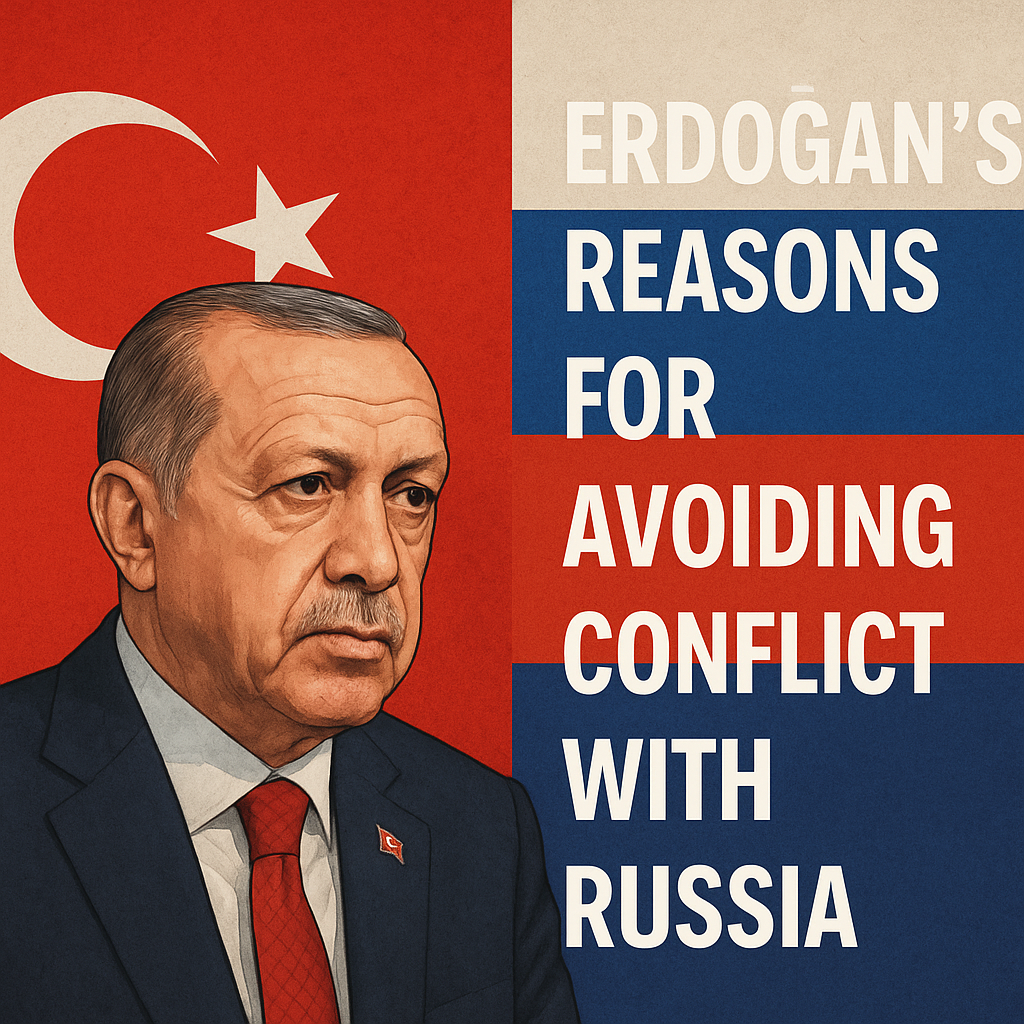
Erdogan’s Reasons for Avoiding Conflict with Russia
As tensions simmer in various regions, President Recep Tayyip Erdogan’s reluctance to engage in direct conflict with Russia has raised eyebrows and ignited debates among analysts and policymakers. This article explores Erdogan’s motivations for maintaining a careful distance from military confrontation with Moscow, weighing insights from various reputable sources.

Strategic Calculations in a Complex Geopolitical Landscape
Erdogan’s foreign policy reflects a blend of pragmatism and caution. Turkey, strategically located at the crossroads of Europe and Asia, has long balanced its relationships between Western allies and regional powers like Russia. This balancing act is rooted in historical ties, economic interdependence, and shifting political alliances.

A significant factor influencing Erdogan’s approach is Turkey’s reliance on Russia for energy resources. According to a report from RT News, Turkey receives a considerable portion of its natural gas from Russia, which is crucial for powering its economy. Disrupting this energy supply could have dire economic consequences, particularly given the rising energy prices globally. The mutual dependency on energy supply creates a buffer against conflict and fosters a desire to maintain peaceful relations.

Moreover, Turkey’s involvement in conflicts such as the ongoing situation in Syria presents additional complexity. Erdogan has supported various factions in Syria, at times aligning with Russia, while also navigating tensions with other groups and nations. Observers have noted that engaging in direct confrontation with Russia could unravel the delicate agreements forged over the years, particularly those concerning territorial integrity and the governance of northern Syria.
Diplomatic Maneuvering: Erdogan’s Balancing Act
Erdogan’s diplomatic approach seems crafted to preserve Turkey’s regional influence while mitigating the risks of escalating military engagements. A report from Al Jazeera underscores the need for Turkey to maintain its military and diplomatic readiness without alienating significant partners like Russia. This delicate equilibrium allows Erdogan to assert Turkey’s interests on the global stage without drawing unnecessary ire from Moscow.
In the context of Ukraine, Erdogan has faced pressure from various Western allies to take a firmer stance against Russia. However, he has instead opted for a more nuanced position, offering to mediate talks between Ukraine and Russia while concurrently bolstering Turkey’s defense industry through indigenous production. This dual approach not only showcases Turkey’s strategic autonomy but also positions Erdogan as a key player capable of facilitating dialogue in a tense geopolitical environment.
Furthermore, Erdogan’s focus on maintaining economic ties with Russia—particularly in trade and tourism—reflects a broader strategy to insulate Turkey from potential sanctions or economic downturns that could arise from siding too firmly against Moscow. Analysts point out that tourism from Russia significantly propels Turkey’s economy, making any conflict detrimental to economic growth.
The Road Ahead: Continuing Tensions and Potential Outcomes
Despite Erdogan’s efforts to steer clear of direct confrontation, uncertainties loom on the horizon. The conflict between Russia and Ukraine remains fluid, with potential ripple effects that could influence Turkey’s foreign policy decisions. Reports from Sky News indicate that the regional security dynamics are precarious, and as alliances shift, Erdogan may find it increasingly challenging to balance his relationships without drawing ire from European and NATO allies.
As Erdogan navigates these turbulent waters, analysts emphasize the importance of dialogue over confrontation. The need for stability in a region riddled with conflict remains paramount for Turkey’s security and economic interests. Erdogan’s decision to avoid escalating tensions with Russia reflects a calculated strategy to prioritize Turkey’s national interests while managing the complex web of alliances and enmities that characterize the current geopolitical landscape.
In conclusion, Erdogan’s avoidance of direct conflict with Russia stems from a mixture of economic dependence, regional strategy, and diplomatic pragmatism. As he continues to navigate these complex relationships, the outcomes of his choices remain uncertain. The geopolitical environment is volatile, and Erdogan’s future decisions will likely determine not just Turkey’s position but also the broader regional stability. The ongoing balancing act creates a landscape wherein dialogue, rather than military confrontation, currently appears to be the preferred course of action for Ankara.