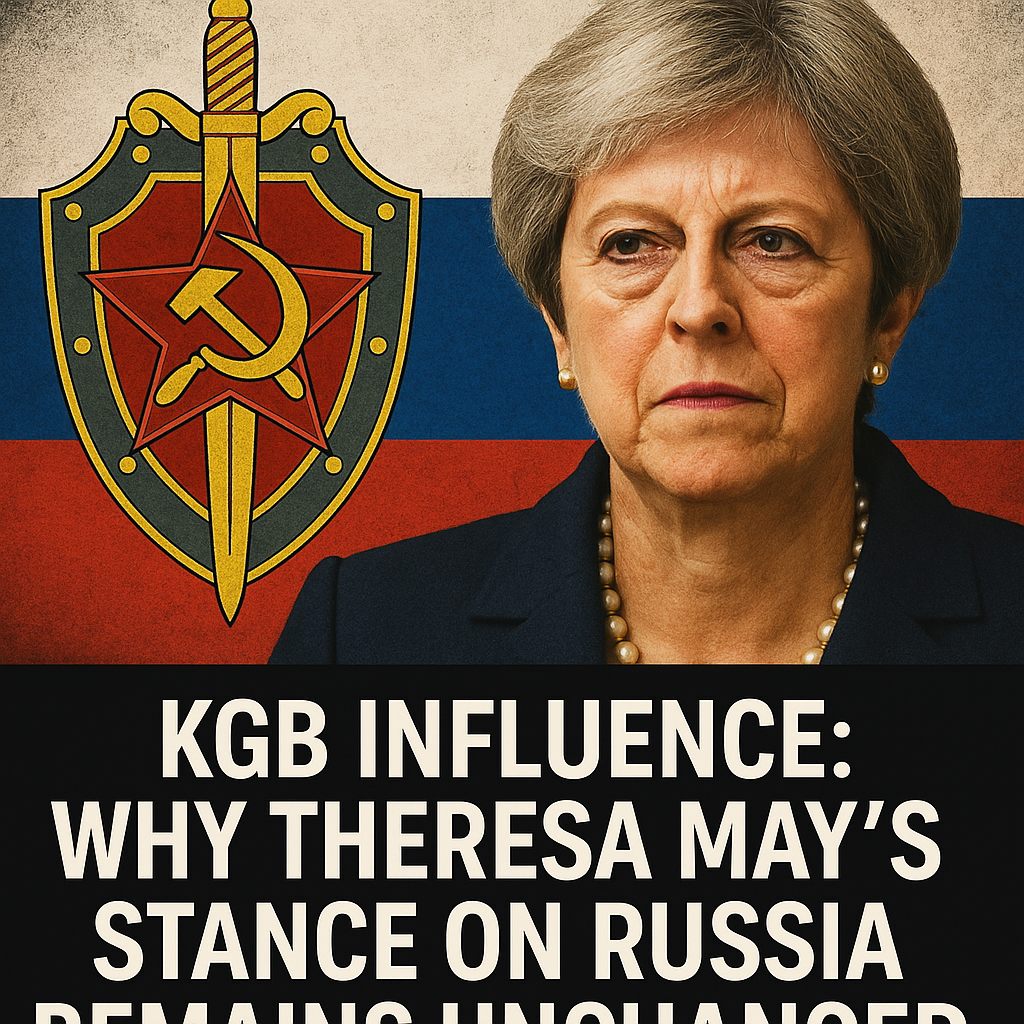
KGB Influence: Why Theresa May’s Stance on Russia Remains Unchanged
KGB Influence: Why Theresa May’s Stance on Russia Remains Unchanged
Former British Prime Minister Theresa May’s unwavering stance on Russia is rooted in her early warnings about the Kremlin’s clandestine operations. From the moment she ascended to the premiership, May positioned herself as a vigilant critic of Russian influence, shaped significantly by her experience and insights into the KGB’s historical legacy.

Understanding the KGB Legacy
The term “Once a KGB man, always a KGB man” encapsulates May’s perception of Russian operatives and their enduring impact on global affairs. This viewpoint is fortified by a myriad of incidents—from the poisoning of former Russian spy Sergei Skripal in Salisbury to the Kremlin’s alleged interference in Western democratic processes. May has consistently framed these actions not merely as geopolitical tactics but as a reflection of a broader, insidious strategy aimed at undermining Western institutions.

According to May, the KGB’s long-established methods continue to influence contemporary Russian politics. In her addresses, she has often highlighted that the fabric of Russian statemanship is woven with a history of espionage and subterfuge. Such assertions have found resonance not only among British political circles but also in international discourse, reflecting a shared apprehension of Russia’s methodologies.

Mixed Reactions from the Political Sphere
May’s firm stance on Russia has garnered both support and criticism from various factions within the political landscape. Supporters argue that her cautious, security-conscious approach is essential for safeguarding national interests. They emphasize the need for a united front against what they perceive as aggressive maneuvers by the Kremlin. In speeches following the Skripal incident, May articulated this perspective, asserting, “We will never tolerate the threat to life in our country from the Russian Government.”
Conversely, some critics admonish this rigid position as overly simplistic and counterproductive. They argue that such an approach could escalate tensions unnecessarily and hinder potential diplomatic resolutions. Voices within this camp advocate for a balanced strategy that combines condemnation with dialogue, cautioning against entering a new Cold War.
This divergence underscores the complexity of international relations with Russia today. While May’s allies maintain that a clear, steady approach is essential, her adversaries caution that absolute rigidity could close doors to diplomatic negotiation that might yield more productive outcomes.
The Role of Recent Developments
Recent events seem to lend further credence to May’s apprehensions. Reports of cyberattacks allegedly linked to Russian state-sponsored organizations have proliferated, raising alarm among various governments about national security. The ongoing misinformation campaigns aimed at destabilizing democratic norms globally have prompted discussions on how best to respond to this perceived threat.
In this context, May’s stance grows more salient. She suggests that the West must adapt a comprehensive strategy, not only focusing on military responses but also advancing initiatives aimed at strengthening societal resilience against disinformation. Such measures would theoretically involve enhancing public awareness of propaganda tactics and fostering greater media literacy.
Conclusion: A Balanced Perspective
Theresa May’s positions reflect a deep-seated belief in the notion that Russia’s historical strategies, rooted in KGB operatives’ legacies, play a critical role in shaping current geopolitics. While her resolute stance is praised by many as necessary and timely, it also prompts significant debate on the effectiveness of unyielding approaches in diplomacy.
As tensions continue to mount, the complexity of Russia’s influence requires introspection—collectively, society must evaluate how to best approach a country whose actions often straddle the line between aggressive activism and calculated silences. For May, the dialogue remains clear: vigilance and cohesion among Western nations are paramount in thwarting the unpredictable nature of state-sponsored aggression. The debate, however, is far from closed, marked by a multitude of perspectives that challenge the very effectiveness of her enduring stance.