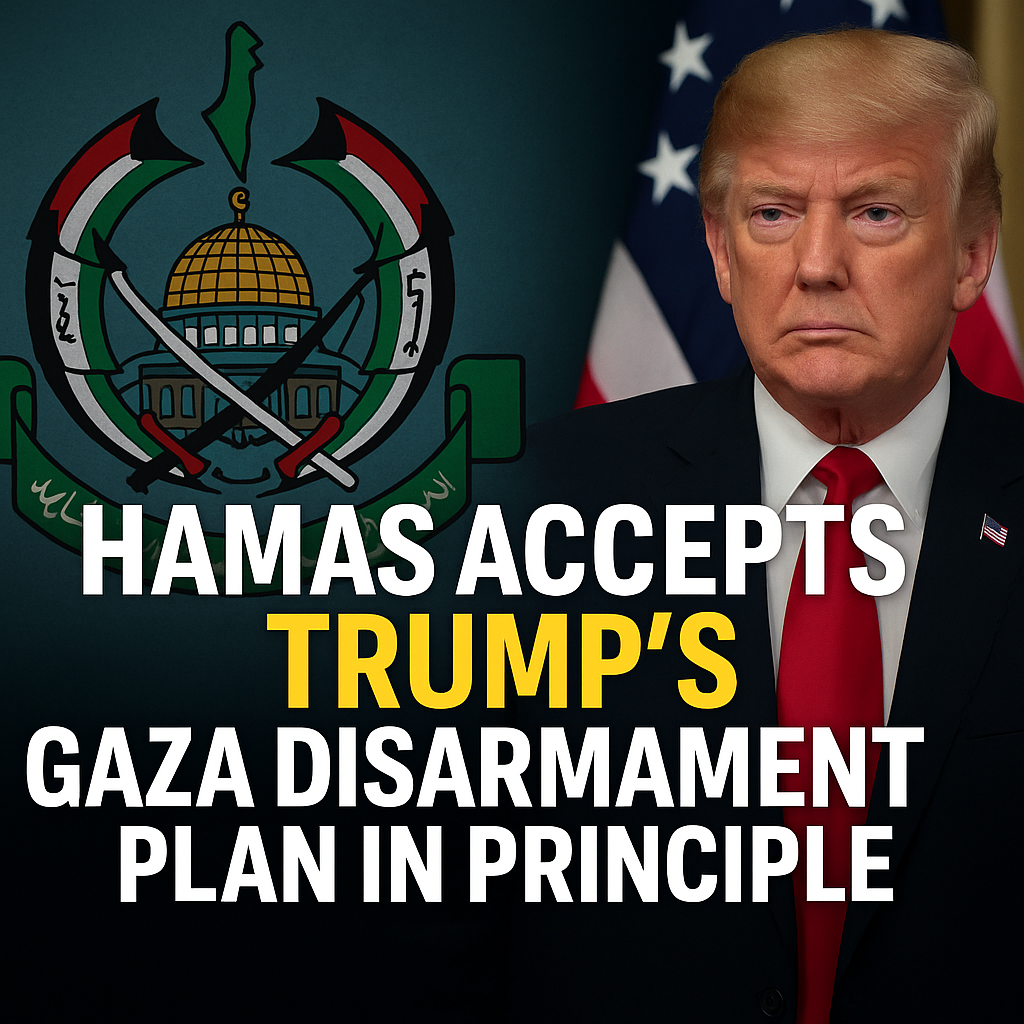
Hamas Accepts Trump’s Gaza Disarmament Plan in Principle
Hamas has reportedly accepted Donald Trump’s Gaza disarmament plan in principle, marking a potential shift in the long-standing conflict dynamics in the region. This development raises complex questions about the implications for peace, security, and the future of Israeli-Palestinian relations.

Understanding Hamas’s Acceptance
Hamas’s willingness to consider Trump’s proposal is significant. Traditionally resistant to frameworks imposed by external actors, the group’s agreement signals a possible recalibration of its stance in response to shifting geopolitical currents. According to discussions reported by various news outlets, including Al Jazeera, this newfound openness may stem from multiple pressures facing Hamas, both domestically and internationally.

Economic Factors and Internal Pressures

The dire economic situation in Gaza cannot be overstated. Years of blockade and conflict have led to crippling poverty and high unemployment rates. As such, Hamas’s leadership is possibly seeking relief through engagement with new diplomatic paradigms. In a statement, a Hamas representative indicated that “while we support disarmament in principle, this must come with substantial economic support and acknowledgment of our political rights.” This sentiment points to a dual need for security and economic stability.
On the flip side, analysts caution that Trump’s approach, which has been criticized for lacking a comprehensive understanding of the ground realities, might face challenges in implementation. The apparent acceptance could also be viewed as a tactical maneuver rather than a genuine commitment. Experts opine that Hamas is unlikely to fully relinquish its armament without concrete assurances from Israel and its allies.
The Broader Geopolitical Context
The acceptance of Trump’s disarmament plan must also be examined within the broader international context. The shifting allegiances in the Middle East post-normalization agreements between Israel and several Arab states are influencing how Palestinian factions strategize. As reported by Sky News, Hamas may be recalibrating its approach to prevent isolation in a rapidly changing geopolitical environment.
U.S. Interests and Regional Dynamics
Trump’s administration, despite its past controversies, remains a key player in Middle Eastern politics. Previous engagements with various Palestinian factions have been inconsistent, with some representatives expressing skepticism about the viability of proposals that emanate from Washington. However, the idea that the U.S. could leverage its influence to foster a more stable Gaza resonates with some factions who are desperate for change.
Amidst this geopolitical backdrop, the complexities of the Israeli-Palestinian conflict must not be oversimplified. While Hamas’s acceptance of the disarmament plan could indicate a willingness to enter negotiations, divergent views within Palestinian political factions and civil society must also be considered. For instance, the Palestinian Authority’s perspective is often more moderate, focusing on diplomatic solutions that may differ starkly from Hamas’s militant history.
Challenges Ahead
Despite the potential for progress, significant hurdles remain. Observers highlight the absence of a consistent policy framework from both the U.S. and Israel concerning Gaza. Without a robust, mutually agreed-upon pathway, any tentative acceptance by Hamas may lead to further tensions. Moreover, internal dissent within Palestinian factions could derail any reconciliatory efforts.
Critically, there’s no clear indication of how Israel will respond to this renewed dialogue. The reaction from the Israeli government, particularly under the current hardline leadership, will be crucial in determining the viability of these plans. Analysts suggest that unless Israel views the disarmament plan favorably and engages with it constructively, the prospects for a sustainable resolution remain bleak.
Conclusion
Hamas’s in-principle acceptance of Donald Trump’s Gaza disarmament plan introduces a nuanced layer to an already complex geopolitical situation. While it may pave the way for potential negotiation and reconciliation, the associated economic, political, and military obstacles cannot be ignored. Stakeholders on all sides must navigate these intricacies carefully if they are to foster a long-lasting peace that addresses the underlying issues rather than merely presenting a patchwork of temporary solutions. As developments unfold, the international community’s response will play a critical role in shaping the future of Gaza and the broader Israeli-Palestinian relations.