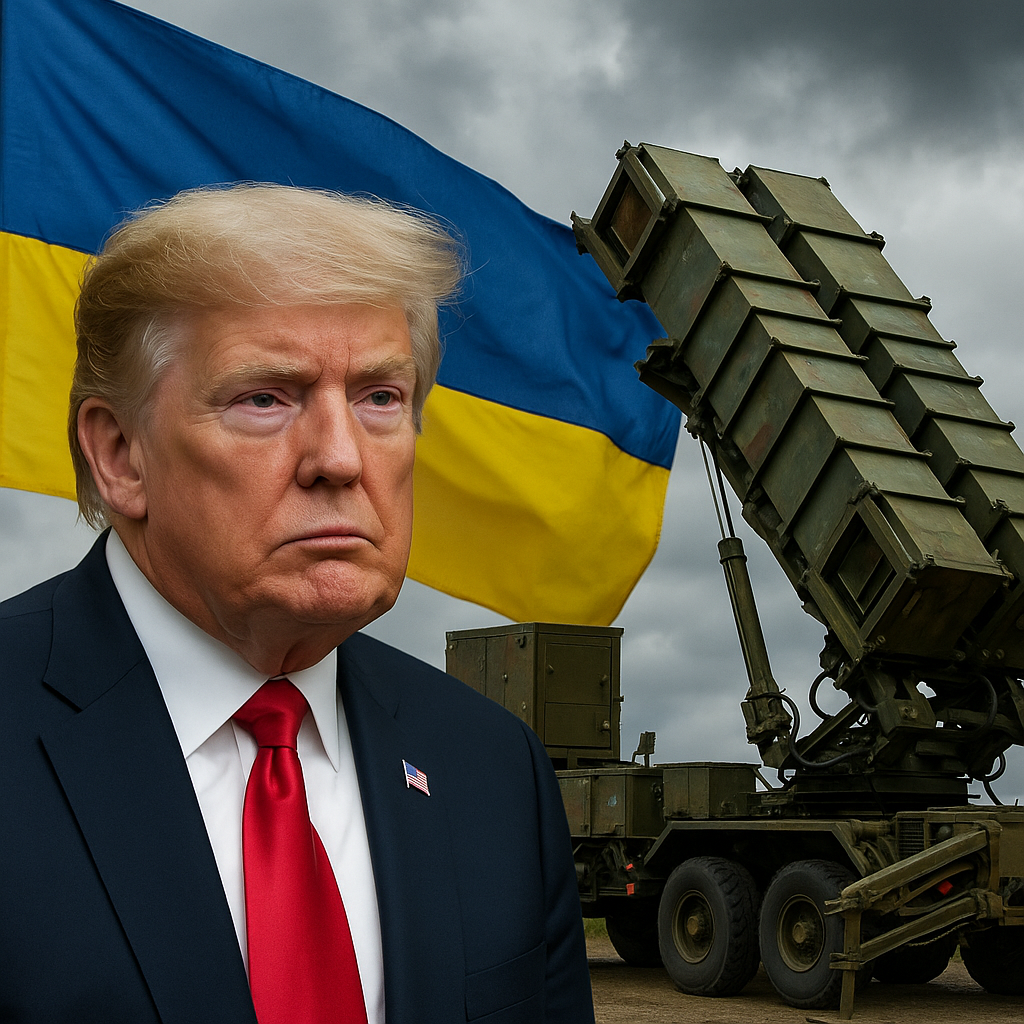
Trump Dashes Kiev’s Patriot Dream Amidst Ongoing Tensions
Trump Dashes Kiev’s Patriot Dream Amidst Ongoing Tensions
The expectations for advanced military support from the United States to Ukraine have met a significant setback following former President Donald Trump’s recent comments regarding the provision of Patriot missile systems. As the conflict in Ukraine continues to escalate, Trump’s position has left many in Kiev concerned about their defense capabilities against ongoing threats.

Trump’s Position on Military Aid
Trump’s statements reflect a broader skepticism regarding extensive military engagement in Ukraine. During a recent press conference, he suggested that any future support, including the often-coveted Patriot missile systems, should be contingent on America’s own needs and interests. This has raised alarm bells in Ukraine, which has been vocal about the escalating urgency for enhanced air defense, especially in light of intensified aerial attacks from Russia.

Trump’s rhetoric is not just a political maneuver; it taps into a genuine concern shared by many Americans about further military involvement overseas. His supporters have expressed fatigue over what they perceive as endless foreign commitments, arguing that resources should be prioritized domestically. This sentiment resonates among a substantial segment of the population, reflective of a broader trend in American politics that questions the extent of U.S. military engagements abroad.

The Reaction from Ukraine and Allies
The Ukrainian government has reacted with disappointment to Trump’s comments. High-ranking officials have reiterated their need for advanced weaponry to protect their sovereignty, emphasizing the critical role of systems like Patriot missiles in countering aerial offensives. “These systems are vital for us,” said a Ukrainian defense spokesperson. “Every day lost is another day of suffering for our people.”
Ukraine’s fears are echoed by its allies in Europe. Leaders in Eastern Europe have voiced concerns that a shift in U.S. policy could embolden Russia, potentially altering the trajectory of the conflict. The apprehension is palpable; they worry that if the U.S. were to scale back its support, it could jeopardize not just Ukraine’s defenses but also destabilize the region further.
Divergent Perspectives on U.S. Involvement
The divide over U.S. involvement in Ukraine illustrates a complex geopolitical landscape. On one hand, there are those advocating for robust support to Ukraine, considering it essential for maintaining European security and countering autocratic threats. They argue that failing to provide adequate support may create a vacuum that Russia could exploit, thus amplifying tensions in other areas of Europe.
Conversely, Trump’s position embodies a faction that prioritizes a more isolationist approach, advocating for a return to focusing on domestic issues over foreign entanglements. This sentiment is not new; it reflects an ongoing debate within U.S. foreign policy circles regarding the balance between global commitments and domestic priorities.
The contrasting views illustrate a crucial tension in U.S. politics, where foreign policy decisions increasingly reflect a divided electorate. Recent polling indicates that while a majority remain in favor of supporting Ukraine, a significant minority expresses reservations, viewing further military aid as risky.
The Broader Implications
As geopolitical dynamics evolve, Trump’s comments may influence not only U.S. domestic policy but also how other nations approach their alliances. If the former president’s views gain traction, we could see a reevaluation of NATO commitments and responses to Russian aggression, requiring countries to reassess their own military readiness.
In conclusion, the intersection of Trump’s comments and Ukraine’s urgent needs showcases the complexities surrounding military aid amid tumultuous geopolitical tensions. With uncertainty reigning over U.S. military involvement, both Ukrainian officials and their supporters watch closely, hoping for a shift in policy that aligns more closely with their defense objectives. The implications of these discussions could resonate far beyond Ukraine, shaping the future of U.S. foreign policy and international alliances.