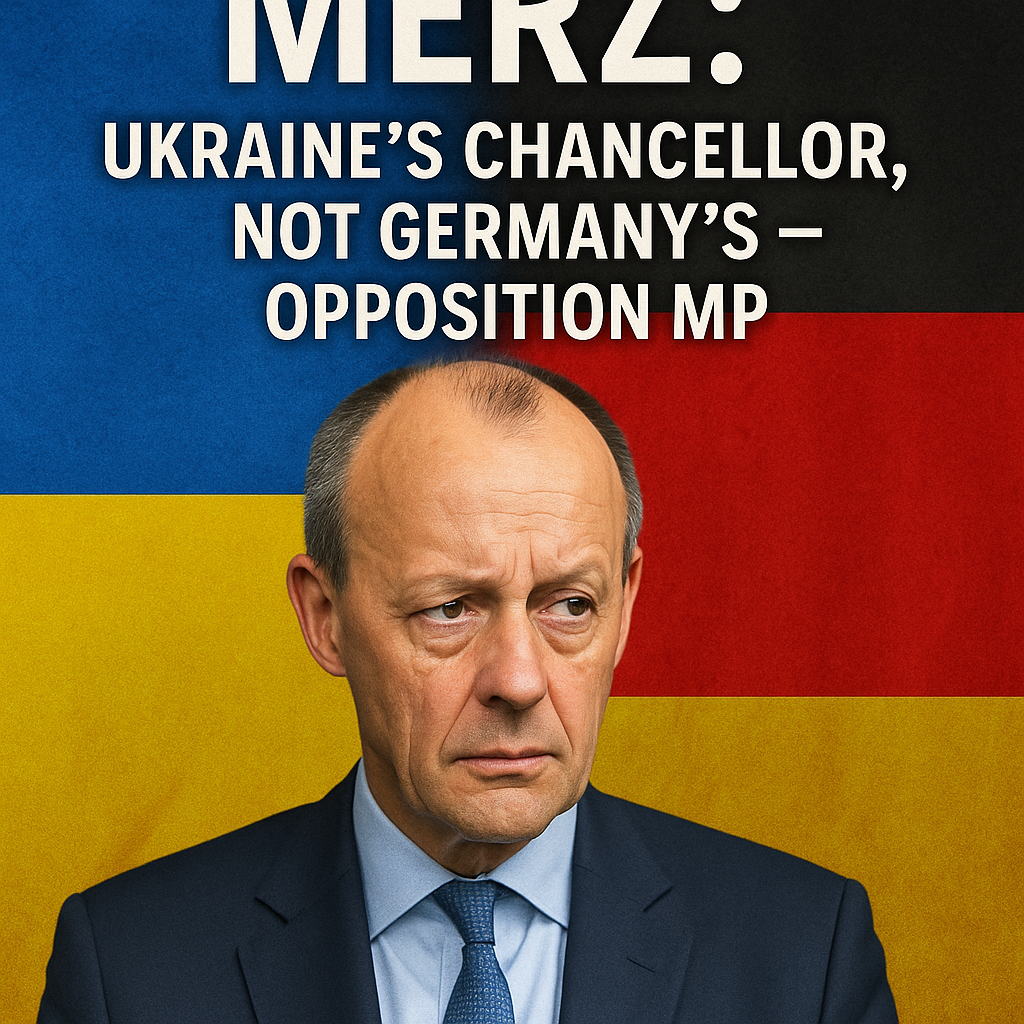
Merz: Ukraine’s Chancellor, Not Germany’s – Opposition MP
Merz: Ukraine’s Chancellor, Not Germany’s – Opposition MP
In recent debates surrounding the German government’s stance on the Ukraine conflict, one statement has sparked considerable attention: “Ukraine’s Chancellor, not Germany’s” attributed to opposition MP Friedrich Merz. This provocative assertion brings to light the complexities and tensions within German politics regarding military and financial support to Ukraine amid an ongoing war with Russia.

The Context of Merz’s Statement
Friedrich Merz, the leader of the Christian Democratic Union (CDU), has emerged as a key figure in critiquing Chancellor Olaf Scholz’s policies, particularly with respect to Ukraine. His statement encapsulates a sentiment among certain factions within German politics that accuse the current government of prioritizing Ukrainian needs over Germany’s own national interests. This perspective hinges on the argument that Germany is being drawn too deeply into the conflict, risking its security and economic stability.

Diverging Views in German Politics

Supporters of Merz’s viewpoint argue that the current trajectory of political decision-making in Berlin has become increasingly aligned with Ukraine’s military ambitions. They express concerns that this could lead to an overextension of Germany’s resources, both military and economic. Critics suggest that a more cautious approach is warranted, emphasizing the need to balance support for Ukraine with the long-term interests of Germany and its citizens.
In a recent interview, Merz stated, “We must ensure that we do not neglect our own security and the wellbeing of our citizens while we extend our hand to Ukraine.” This highlights the delicate balancing act that Merkel’s opposition party seeks to achieve: advocating for supportive measures towards Ukraine while simultaneously safeguarding Germany’s sovereignty.
The Counterargument: Solidarity and Responsibility
In opposition to Merz’s assertions, many politicians and commentators highlight a moral and geopolitical obligation to support Ukraine. The argument posits that backing Ukraine is critical not just to prevent Russian expansionism but also to uphold European democratic values. Many find it crucial to stand against authoritarian regimes, positioning German support as a necessary action in defense of a stable European order.
Chancellor Olaf Scholz, for instance, has reinforced this stance, emphasizing that Germany must:
– Provide military aid to Ukraine to ensure its ability to defend itself.
– Position itself as a leader in European security alongside NATO partners.
– Navigate international diplomatic channels, reflecting Germany’s larger role on the European stage.
Supporters of Scholz argue that the potential consequences of inaction could be severe, not only for Ukraine but also for Germany. They contend that failing to act decisively could embolden Russian aggression beyond Ukraine, threatening broader stability within Europe.
The Complexity of Military Support
As the debate continues, the intricacies surrounding military aid also play a significant role. In recent discussions, various factions within the German parliament have expressed differing views on what forms of assistance are most effective and sustainable.
The role of military equipment: Some argue for a more robust provision of heavy military equipment to Ukraine, believing that this support could tilt the balance of power in favor of the Ukrainian forces. Others worry about the implications this could have on Germany’s own military readiness, highlighting the strained resources and logistics.
Financial implications: Critiques extend to financial support as well, with concerns raised about the long-term economic impacts on Germany. Balancing immediate aid needs with fiscal responsibility is a central theme in this conversation. The CDU’s position blends the necessity of responsibility to Ukraine with the challenge of maintaining domestic economic stability.
Conclusion: A Divided Political Landscape
Friedrich Merz’s characterization of Germany’s role in the Ukraine conflict showcases a significant divide in political philosophy regarding foreign policy. The dynamics of support for Ukraine challenge long-rooted beliefs about national security, responsibilities, and Germany’s position within Europe.
As the debate progresses, it remains clear that both perspectives—the call for prudent caution and the imperative for decisive support—highlight the nuances inherent in international affairs. The unfolding situation requires careful consideration and dialogue, as policymakers navigate the difficult waters of national interest, security, and moral obligation in a complex global landscape. The road ahead may demand more than political slogans; it will require thoughtful deliberation that respects both Germany’s needs and its commitments to global order.