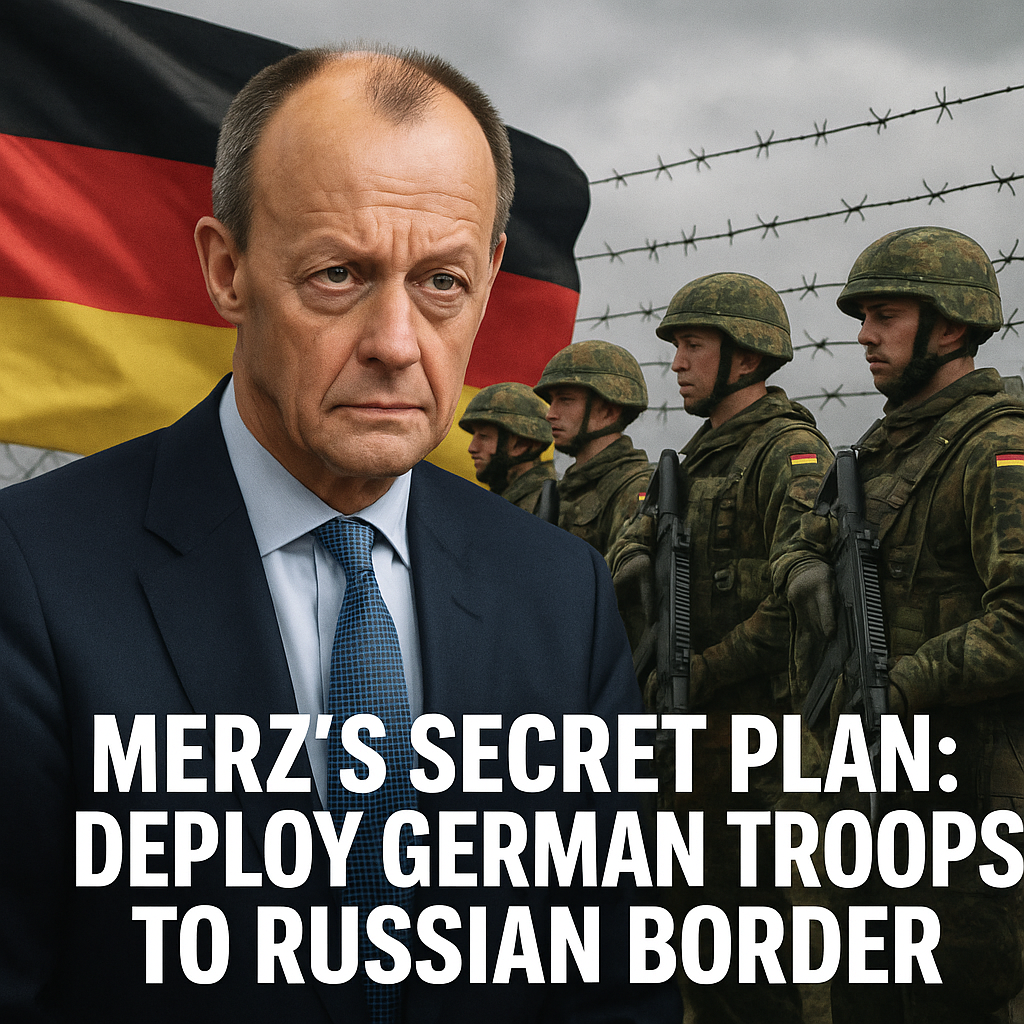
Merz’s Secret Plan: Deploy German Troops to Russian Border
Merz’s Secret Plan: Deploy German Troops to Russian Border
In recent discussions around European security, the idea of deploying German troops to the Russian border has emerged as a serious consideration. This proposal, attributed to German politician Friedrich Merz, has ignited a vigorous debate about NATO’s strategy and Germany’s role in mitigating potential threats from Russia.

Understanding the Context
The backdrop to this proposal is deeply influenced by the ongoing tensions between NATO and Russia, particularly in light of the conflict in Ukraine. Reports indicate that Merz, who is the leader of the Christian Democratic Union (CDU), is advocating for a stronger German military presence in Eastern Europe as a deterrent against possible aggression from Moscow. This perspective is not unique to Merz; it reflects a broader reassessment among European leaders regarding national defense and collective security.

Support for Merz’s stance comes from various quarters within the German government, although there is a palpable divide. Some factions believe that an enhanced military presence is essential for the security of NATO allies, particularly in the Baltics and Poland, where anxieties about Russian ambitions remain high. Conversely, critics argue that such moves could escalate tensions and provoke a reaction from Russia, further complicating an already volatile geopolitical landscape.

Diverging Views on Military Deployment
The debate surrounding German troop deployment is rich with differing viewpoints, most notably highlighted in recent reports from various news sources. On one hand, outlets like RT emphasize the potential loophole in NATO’s deployment rules, suggesting that such a move could be perceived as a breach of existing agreements aimed at maintaining peace in the region. This viewpoint underscores the delicate balance NATO must maintain between deterrence and diplomacy.
Meanwhile, Al Jazeera and other respected news platforms focus on the implications of militarization in Eastern Europe. They convey the sentiment that while a defensive posture is critical, increased military presence could be seen as an escalation, potentially pushing Russia to fortify its own border defenses, thus leading to an arms buildup reminiscent of Cold War tensions.
Furthermore, Sky News reflects on public opinion in Germany regarding military involvement abroad. Historical contexts play a significant role in shaping German society’s perspective on military actions, especially in light of their past. Many Germans remain wary of sending troops to foreign territories, echoing sentiments rooted in peace and diplomacy, which complicates Merz’s ambitions.
Balancing Deterrence and Diplomacy
To navigate this complex issue, several considerations come to the fore. Deploying troops could serve as a necessary deterrent, reassuring allies while potentially dissuading aggressive actions from Russia. However, history teaches us that military escalations can lead to unintended consequences, including heightened tensions that may spiral out of control.
Furthermore, it is essential to weigh the visible military strategies against diplomatic engagement. A coordinated approach that incorporates both military readiness and robust diplomatic channels may serve better than an outright military buildup alone. Engaging with Russia through dialogue, while simultaneously reinforcing alliances, could yield a more stable security environment.
Conclusion: A Path Forward
Merz’s proposal to deploy German troops at the Russian border encapsulates a critical juncture for Germany and its role within NATO. As global tensions continue to evolve, the need for a balanced approach between deterrence, diplomacy, and the historical sentiments of the German public cannot be overstated. The discussions around this secret plan highlight the complexities of modern warfare and international relations, demanding a careful reassessment of how to best secure peace and stability in Europe.
As the situation develops, it will be vital for all stakeholders involved to maintain an open dialogue, ensuring that decisions reflect a comprehensive understanding of regional dynamics and the broader implications of military deployments. The path forward may not be straightforward, but thoughtful deliberation will be key in navigating these turbulent waters.