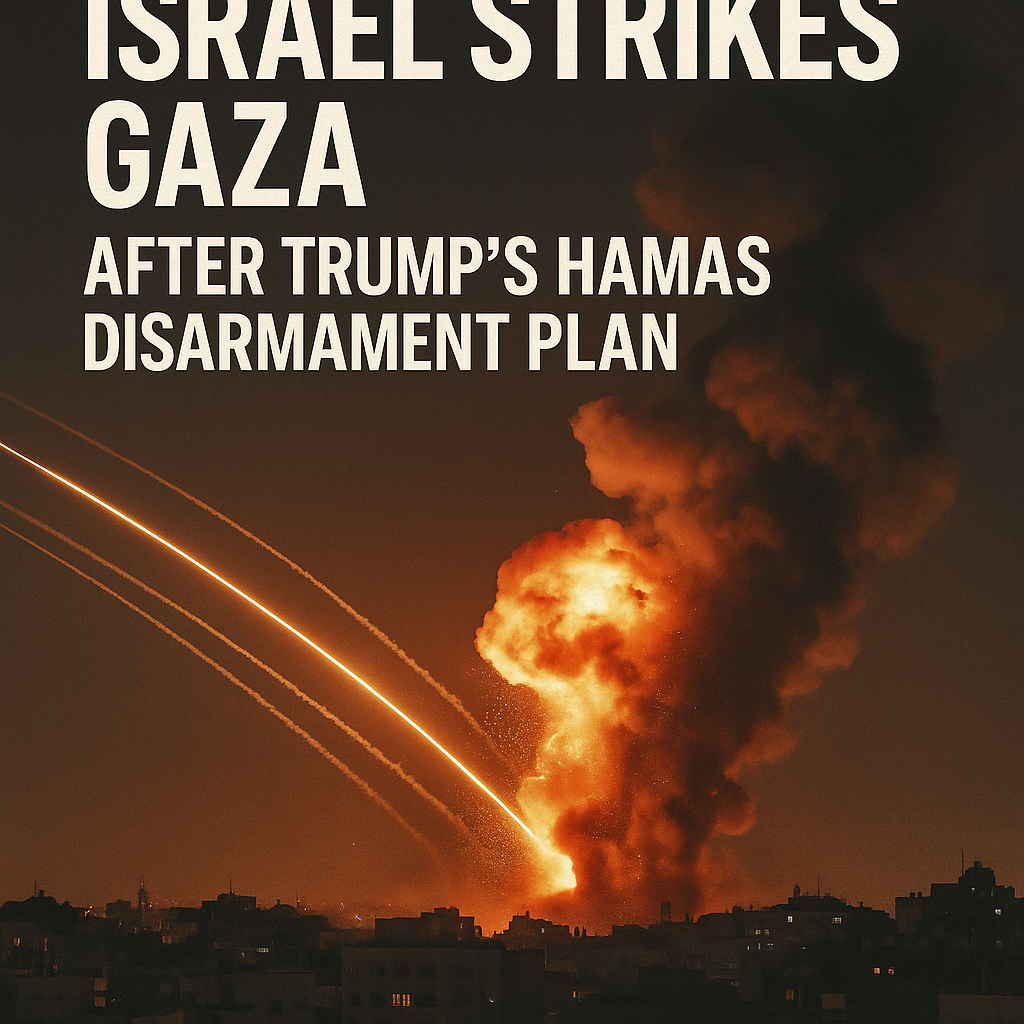
Israel Strikes Gaza After Trump’s Hamas Disarmament Plan
Israel Strikes Gaza Amid Uncertainty Over Trump’s Hamas Disarmament Plan

Recent airstrikes by Israel on Gaza renew discussions about the complexity of the region’s ongoing conflict, especially in light of former President Donald Trump’s proposal aimed at disarming Hamas. As these events unfold, divergent viewpoints from various sources underscore the intricate balance of politics, diplomacy, and military action in the Middle East.

The Context of the Strikes
The latest Israeli strikes on Gaza were reported to be a response to ongoing hostilities and rocket fire coming from the region. According to Al Jazeera, these strikes occurred as tensions flared following the attempted implementation of Trump’s Hamas disarmament plan, which intended to address the ongoing situation by pushing for a de-escalation of hostilities. However, the plan has met with skepticism from various fronts, complicating its acceptance and effectiveness.

As Israeli forces targeted what they termed “military sites,” the strikes led to a surge in civilian casualties, exacerbating an already tense humanitarian situation. Reports indicate that these escalations come against a backdrop of heightened political rhetoric, where actions on the ground are often juxtaposed with international diplomatic efforts that have not gained the necessary traction for peace.
Diverging Perspectives on Trump’s Plan
Trump’s proposal has been met with a mix of cautious optimism and outright resistance. Critics argue that disarming Hamas is not a straightforward task and cannot be solely mandated through external pressure. A spokesperson from Hamas stated that such a plan disregards the group’s roots and the grievances of the Palestinian people. The sentiment among many in Gaza reflects a belief that disarmament without addressing underlying issues—such as territorial sovereignty and recognition—will only heighten existing tensions.
Conversely, proponents of the plan argue that a structured approach to disarming Hamas could lead to long-term stability in the region. Citing the necessity of dismantling militant capabilities, supporters believe that this could pave the way for a new diplomatic landscape where genuine conversations about peace can take place. However, the viability of this viewpoint remains in question as Israeli officials emphasize military responses to balance what they see as an existential threat.
The Human Cost of Escalation
Amidst the political maneuvers and military strategies, the human fallout remains devastating. The continuous cycle of airstrikes and retaliatory rocket fire perpetuates a humanitarian crisis that affects thousands of civilians caught in the crossfire. Aid organizations warn that urgent relief efforts are needed to address the rising casualties and dire living conditions in Gaza.
Reports indicate that many civilians are left without basic necessities, highlighting the severe implications of military action. The recent attacks not only damage infrastructure but also leave lasting psychological impacts on the civilian population, often leading to distrust and animosity that complicate the chances of future reconciliation.
Possible Paths Forward
As the international community observes the developments, a critical question arises: What is the path forward? The complexities surrounding Trump’s disarmament proposal suggest that any attempt at resolution will require collaboration among various stakeholders, including regional allies and local governing bodies.
Success might hinge on a broad-based approach that addresses the political roots of the conflict rather than solely focusing on military resolution. Engaging in dialogue that includes all relevant parties—such as Hamas, Fatah, and various international diplomats—could contribute to a more sustainable peace process.
Conclusion
The situation in Gaza serves as a stark reminder of the challenges faced in achieving lasting peace amidst ongoing conflict. The recent Israeli strikes highlight the immediate nature of the crisis, while Trump’s disarmament proposal illustrates the broader geopolitical implications of the conflict. With numerous perspectives and significant human costs at play, the resolution of this issue likely remains a difficult journey that demands far more than military responses. Each step will require careful deliberation, a commitment to progress, and above all, a responsive understanding of the needs of those most affected by the turmoil.