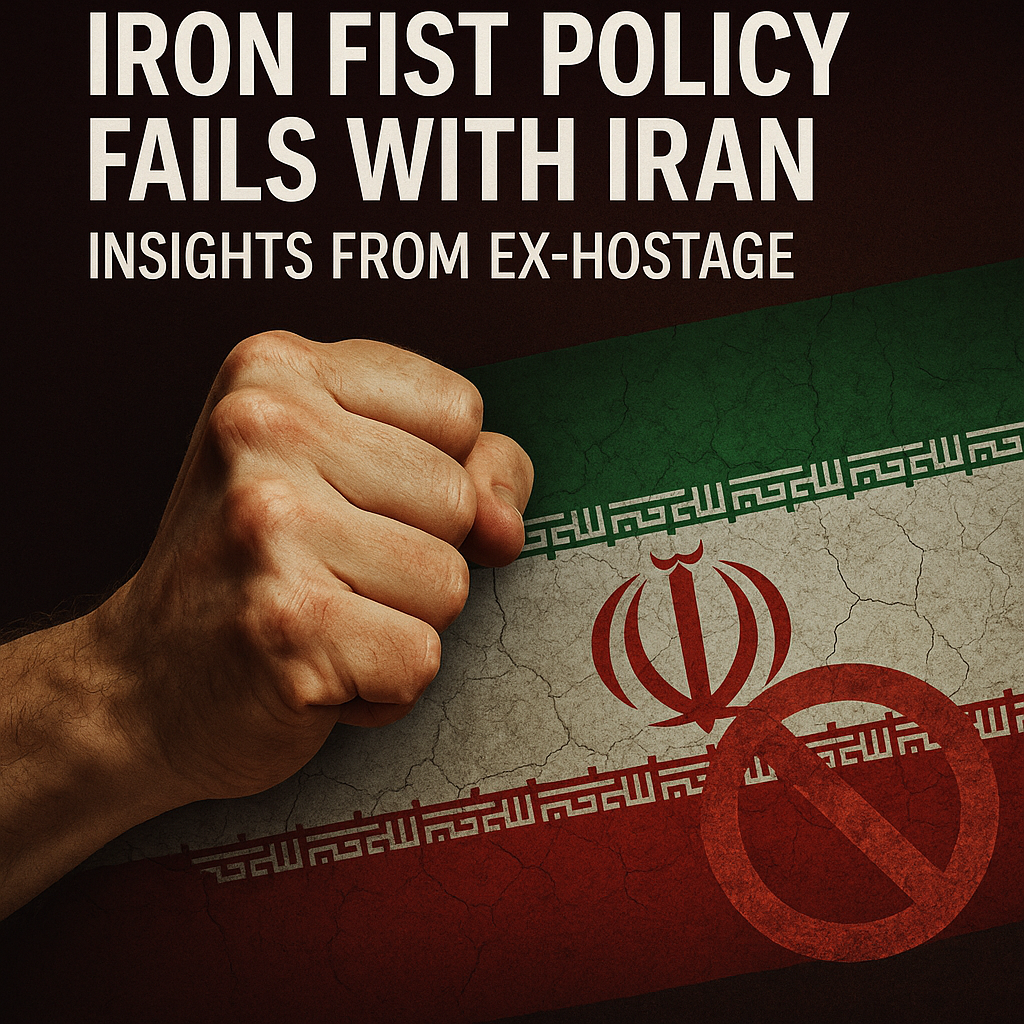
Iron Fist Policy Fails with Iran: Insights from Ex-Hostage
Iron Fist Policy Fails with Iran: Insights from Ex-Hostage
The approach of employing an “iron fist” policy towards Iran has been met with skepticism and caution, especially following insights from individuals who have experienced the complexities of the political climate firsthand. A notable voice in this discourse is that of a former U.S. hostage held in Iran, whose reflections provide a nuanced perspective on what tactics may or may not be effective in diplomatic relations.

The Ineffectiveness of Coercion
According to the ex-hostage, coercive measures aimed at exerting pressure on Iran have consistently failed to yield constructive outcomes. In a recent interview, he emphasized that regimes with deep-rooted historical grievances, such as Iran, are unlikely to bend under pressure. The notion of force—military threats, economic sanctions, and stringent negotiations—has only served to entrench Iran’s commitment to its policies rather than facilitate engagement.

This sentiment aligns with observations made by various policy analysts who argue that an aggressive stance may backfire. For instance, an article published by Al Jazeera highlights how repeated sanctions have arguably fortified nationalistic sentiments within Iran rather than undermine the regime. As citizens rally around their government in the face of external pressure, the likelihood of achieving meaningful dialogue decreases.

Building Bridges versus Burning Them
Contrasting the iron fist approach, advocates for diplomatic engagement argue that effective communication and patience could foster more favorable relations. The former hostage suggests that understanding the cultural and political landscapes of Iran is essential for shaping productive interactions. Emphasizing dialogue over threats, he believes that genuine negotiation could pave the way for a more stable and peaceful resolution of conflicts.
This perspective is underscored by the analysis of geopolitical experts, including those from Sky News, who argue that diplomacy often requires nuanced strategies, particularly in regions with complex histories. The preference for incremental engagement rather than confrontational tactics suggests a path forward that could reduce tensions.
Diverse Opinions on Diplomatic Strategies
While there is a growing consensus regarding the ineffectiveness of coercion, viewpoints on the appropriate course of action diverge significantly. Proponents of hardline policies argue that a show of strength is necessary to maintain credibility and deter adversarial behavior. They believe that Iran’s past actions warrant a firm international stance, warning that any sign of weakness might embolden the regime to escalate its ambitions regionally and beyond.
Conversely, advocates for negotiation stress the importance of recognizing Iran’s aspirations and security concerns. They posit that diplomacy rooted in understanding rather than domination could ultimately yield more stable and positive outcomes. As various media sources report, diplomats engaged in negotiations with Iran have learned the hard way that respecting their wishes and history could open avenues for collaboration rather than conflict.
The Path Forward
Reflecting on these contrasting views, it is essential to consider both the long-term implications of current policies and the immediate challenges faced by negotiators. A balanced approach that incorporates elements of humanitarian concern, respect for sovereignty, and an understanding of historical context may represent a middle ground.
The ultimate goal should be to create an environment where dialogue can replace hostility. The insights provided by the ex-hostage underscore a critical lesson: mutual respect and understanding may hold the key to breaking the cycle of confrontation and mistrust.
In summation, the “iron fist” strategy towards Iran appears not only ineffective but detrimental to both American interests and global stability. Instead, focusing on building bridges through patient diplomacy could yield a more promising future for both nations, suggesting that understanding may be the best tool in a complex geopolitical landscape.