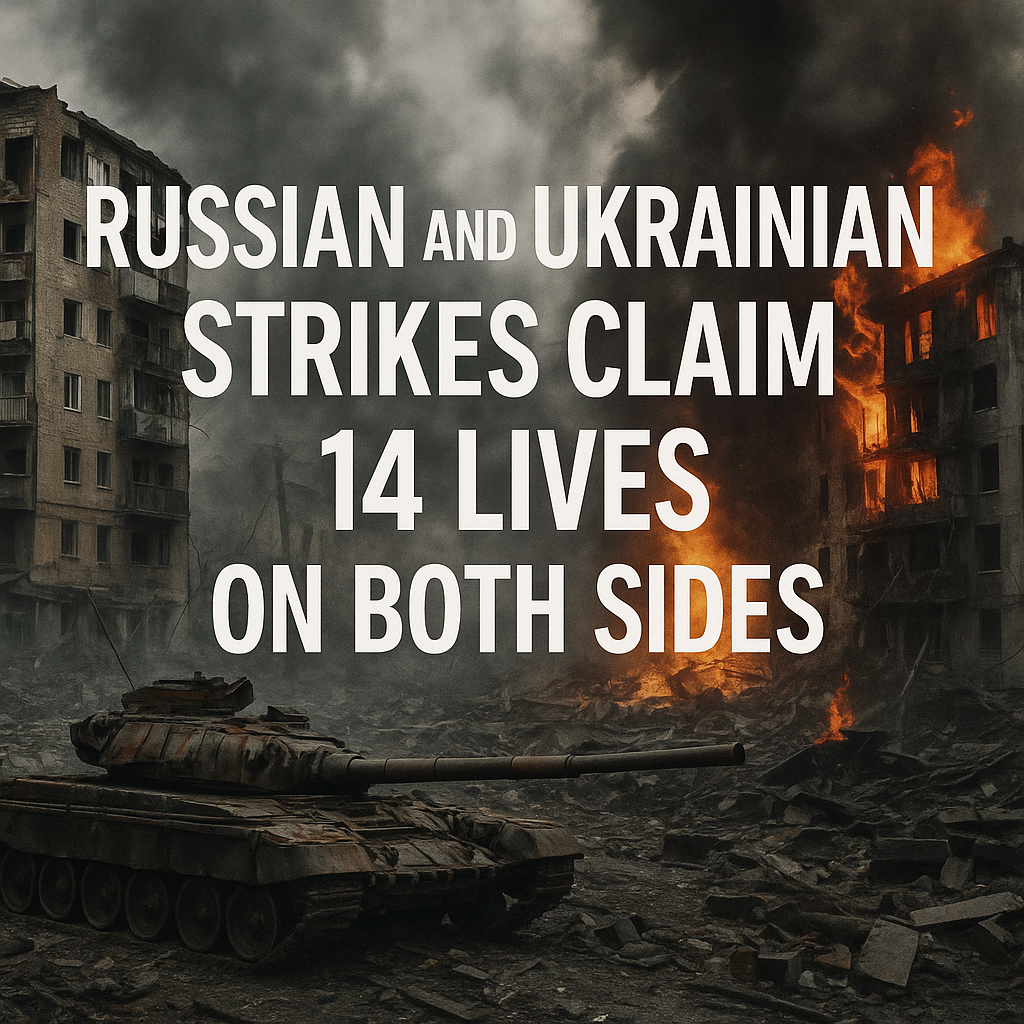
Russian and Ukrainian Strikes Claim 14 Lives on Both Sides
Escalation in Hostilities: A Recent Overview of Casualties in the Ukraine Conflict
Recent events in the ongoing conflict between Russia and Ukraine have resulted in significant loss of life, with both sides reporting casualties in unusually high numbers. According to multiple sources, strikes from both Ukrainian and Russian forces have claimed at least 14 lives this week, underlining the stark reality of a war that remains far from resolution.

Ukrainian Drone Attacks and Russian Retaliation
Following Russian missile strikes, which reportedly killed eight civilians in Ukraine, the Ukrainian military launched drone attacks targeting key Russian positions. Al Jazeera reported that these strikes were a direct response, intended to retaliate against previous artillery fire that had decimated civilian areas. The Ukrainian perspective focuses on the justification of these drone strikes as necessary for national defense. Ukrainian President Volodymyr Zelensky has been clear about the necessity of protecting civilians, emphasizing that the Ukrainian military’s actions aim not just at military gains but also at safeguarding lives from Russian aggression.

Conversely, Russian state media offers a different narrative. RT reported that the missile attacks were aimed at military targets in Ukraine, asserting that civilian casualties are tragic but often exaggerated. Russian sources insist that Ukrainian strikes, while branded as retaliation, have also resulted in significant collateral damage, often leading to civilian suffering. The Kremlin’s justifications rely heavily on the premise that their military operations are in response to Ukraine’s aggression and the need to restore order in what they view as a critical conflict for Russian security.

The Growing Toll of Conflict
This recent surge in violence could be indicative of a broader trend in the conflict, where both sides escalate attacks as they vie for control and dominance over contested regions. The last few weeks have seen a notable uptick in military operations, with each side ramping up their arsenal. Analysts suggest that the apparent cycle of retaliation might further complicate peace talks that have long been seen as stagnant.
A deeper exploration of the ongoing conflict reveals that while both sides seem entrenched in their positions, there is also a devastating humanitarian cost. Civilians caught in the crossfire bear the brunt of these military exchanges, leading to calls from international observers for restraint and dialogue. Critics argue that both Ukrainian and Russian leadership need to find a pathway back to negotiations rather than allowing the situation to devolve further into what seems to be an unending cycle of violence.
Voices from the Ground
Reports from both Ukrainian and Russian territories underscore the emotional and physical toll this conflict has taken on civilians. Eyewitness accounts document the chaos that ensues from these aerial assaults, with families losing loved ones and communities devastated. The shared sentiment among those affected is one of despair and frustration, as families mourn their losses amidst the backdrop of ongoing hostilities.
The humanitarian perspective emphasizes the need for both sides to consider the human cost of military actions. Some experts advocate for a renewed focus on diplomacy, calling for international mediators to step in and facilitate discussions between Russian and Ukrainian authorities. As civilian lives hang in the balance, the time for dialogue grows increasingly urgent.
Conclusion: A Cycle of Violence Without Resolution
While both sides make claims of necessary military actions to secure their respective interests, the tragic loss of life emphasizes the complexity of this ongoing conflict. With 14 lives claimed this week alone, it’s a stark reminder of the direct human consequences of warfare. The challenge remains as to how both leaderships can be encouraged to pursue a path that prioritizes human life above military objectives. As the situation unfolds, the international community watches closely, hopeful for an eventual return to peace but aware of the significant obstacles that lie ahead.