The Moon Was Hit by a Rare Space Rock — And Scientists Found the Evidence Later
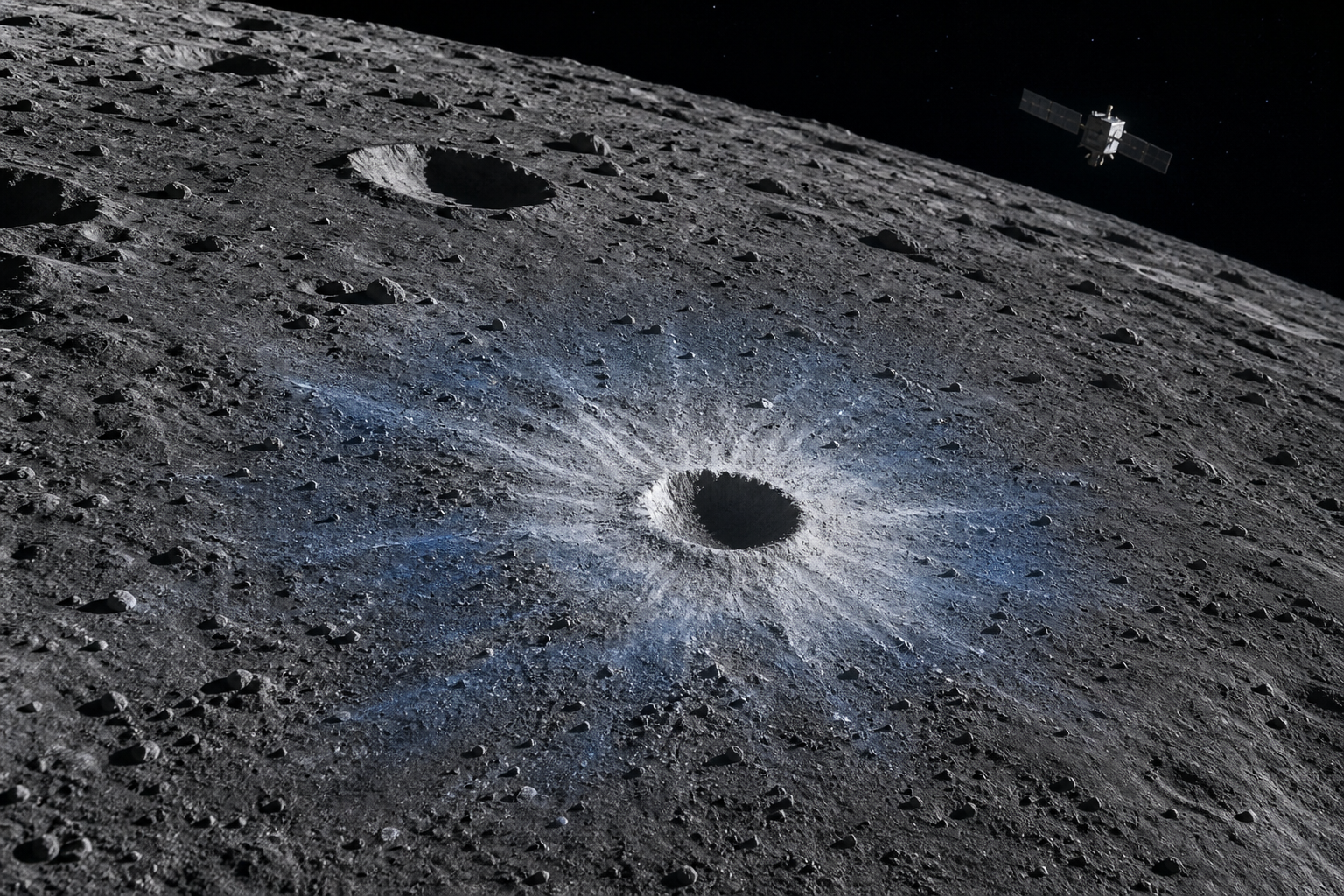
NASA researchers identified the McGetchin crater, a 222-meter-wide, 43-meter-deep crater formed on the Moon between April and May 2024 by an asteroid or comet fragment. The impact may occur only once a century or longer.
Researchers discovered the crater in October 2025 by comparing Lunar Reconnaissance Orbiter images. The impact also altered lunar soil and nighttime temperatures across the surrounding area, providing information about lunar surface changes relevant to future exploration.
The Moon was struck by a space object powerful enough to carve a crater more than 700 feet wide. But scientists did not discover the new scar until more than a year later.

NASA researchers have identified the largest newly formed crater ever found in the solar system in the modern era. The crater, officially named McGetchin, formed on the Moon sometime between April 11 and May 22, 2024.

The impact happened when an asteroid or comet fragment roughly the size of a three- to six-story building crashed into the lunar surface. The resulting crater is about 222 meters wide and 43 meters deep, roughly the length of two football fields.

Scientists estimate that an impact of this scale may occur on the Moon only about once every century or longer, making the event an unusually valuable opportunity to study how the lunar surface changes.
The remarkable part of the story is how long the evidence remained unnoticed.
On October 24, 2025, NASA’s Lunar Reconnaissance Orbiter Camera team was comparing images of the Moon taken at different times when scientist Robert Wagner noticed an unusual bright area surrounded by a dark halo.
Further investigation showed that the pattern was fresh impact debris. Higher-resolution images later confirmed the new crater and revealed its size and shape.
The impact also changed the Moon beyond the crater itself.
NASA’s Lunar Reconnaissance Orbiter later detected a roughly four-mile-wide area around the crater that becomes significantly colder at night than the surrounding surface. Scientists believe the impact disturbed and loosened the lunar soil, changing how it retains heat.
That detail could matter for future lunar exploration. Changes in the surface can affect how spacecraft and rover wheels move across the Moon, while studying new impacts helps scientists understand how quickly the lunar landscape is being reshaped.
NASA’s Lunar Reconnaissance Orbiter has been studying the Moon for more than 17 years. During that time, researchers have identified at least 1,000 new impact craters and tens of thousands of other surface changes caused by impacts and resulting debris.
The discovery offers a striking reminder that the Moon is not a completely static world. Rocks from space continue to hit its surface, leaving geological changes that can sometimes remain hidden until researchers compare years of orbital observations.
In this case, a collision that happened in 2024 became a scientific discovery in 2025 and a major research story in 2026.
The Moon had already recorded the event. Scientists simply needed the right data to notice it.