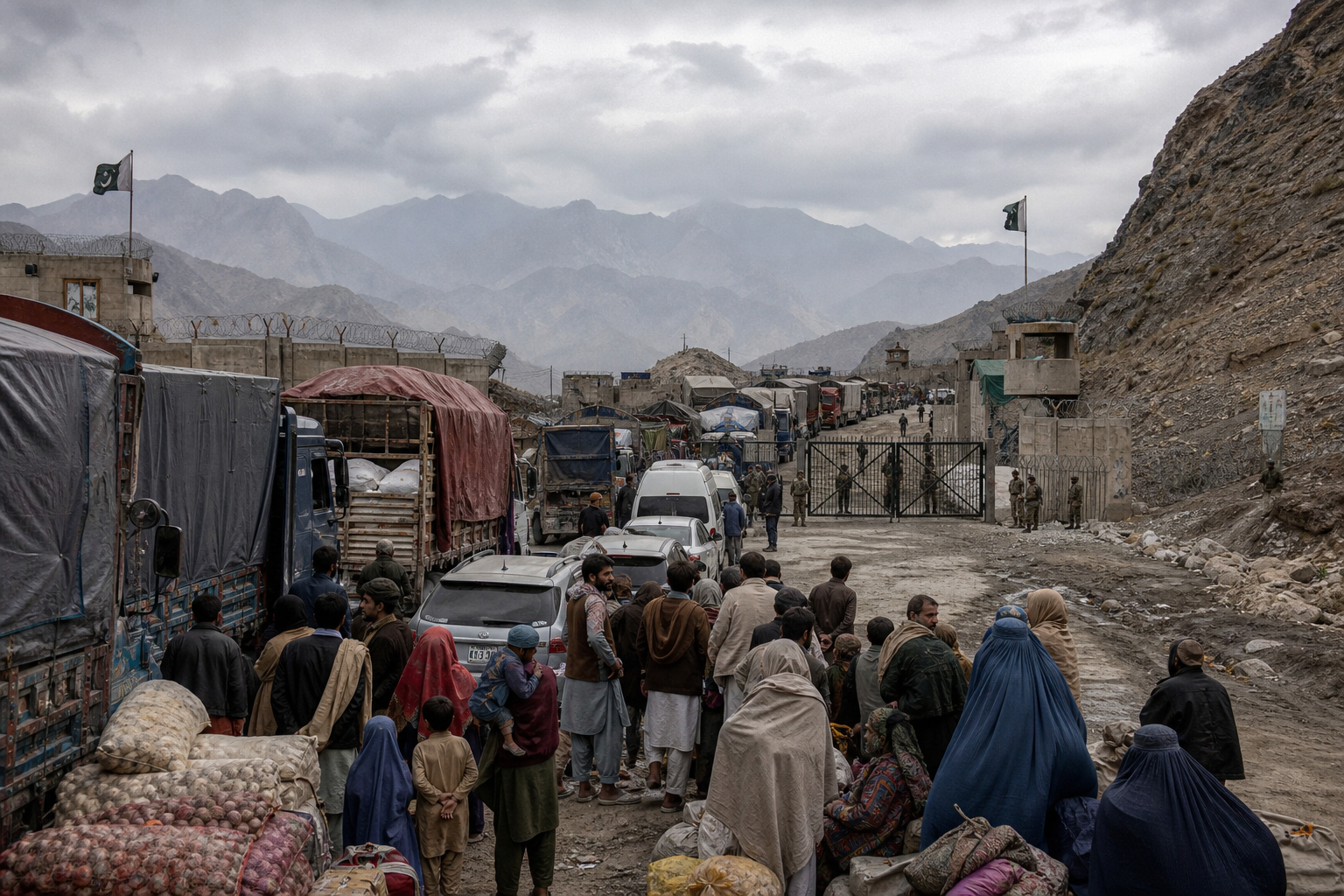
Afghanistan-Pakistan Tensions Put Border Trade and Regional Stability Under Pressure
Tensions between Afghanistan and Pakistan have intensified after deadly attacks in Pakistan and competing claims over cross-border militancy. Afghan authorities deny that attacks originate from Afghan territory, while both sides warn against military escalation.
The dispute threatens border trade and transport, which are important to Afghanistan’s economy and food access. International officials are monitoring the security, humanitarian and economic consequences as both countries face pressure to prevent further disruption.
Tensions between Afghanistan and Pakistan have again moved into focus after a series of security incidents and increasingly sharp statements from both sides. Pakistani officials have linked recent militant violence to groups they say operate from Afghan territory, while authorities in Kabul have rejected accusations that Afghanistan is being used as a base for attacks against Pakistan. The dispute is adding pressure to an already complicated relationship between the two neighboring countries.

The latest concern follows a deadly attack in Pakistan’s northwestern Khyber Pakhtunkhwa province. Pakistani authorities reported that a suicide attack at a police compound in Kohat killed and injured dozens of people. The incident came shortly after another attack that killed Pakistani soldiers in the same region. The attacks have intensified debate in Pakistan over cross-border militancy and the security situation along the Afghan frontier.

Afghan authorities have continued to deny allegations that militant groups are being allowed to launch attacks from Afghan soil. Taliban officials have also warned Pakistan against taking military action inside Afghanistan, arguing that security concerns should not be used to justify attacks across the border. The disagreement has become one of the major security issues discussed by international officials monitoring Afghanistan.

The tensions also carry economic consequences. Afghanistan depends heavily on regional trade routes, while Pakistan has historically served as an important transit route for Afghan imports and exports. Previous border closures and clashes have disrupted the movement of trucks, traders and passengers, creating additional costs for businesses on both sides. Pakistani officials have indicated that reopening border crossings and restoring trade could depend on cooperation over security concerns.
The wider situation comes as Afghanistan faces serious economic and humanitarian pressures. The Food and Agriculture Organization estimates that about 13.8 million people in Afghanistan are experiencing acute food insecurity during 2026. Although the country’s wheat harvest has improved food availability in some areas, high transport costs, unemployment and reduced humanitarian assistance continue to affect households.
Further disruption to major trade routes could therefore create additional difficulties for communities dependent on affordable food and imported goods.
International attention is now focused on whether the two countries can prevent another escalation. During a recent United Nations Security Council discussion, members raised concerns about terrorism, relations between Afghanistan and Pakistan, humanitarian conditions and the future of international engagement with Afghanistan. For ordinary Afghans and Pakistanis living near the border, the immediate concern is whether political disagreements can be contained without further disrupting trade, travel and daily life.