From Algorithms to Biology: Anthropic Pushes AI Into Real-World Drug Research
Anthropic is expanding its life-sciences efforts by combining AI-based analysis with physical biological research. The company has established a wet laboratory, launched a beta program for biology-focused AI tools, and partnered with Novo Nordisk on drug-discovery research.
Its work also includes optimizing biomolecular models and supporting protein-design experiments. These initiatives position AI as a tool for designing and analyzing research while laboratory testing, validation, and clinical evaluation remain essential to developing medicines.
Artificial intelligence is moving beyond computer screens and deeper into laboratory science, as technology companies increasingly explore how AI can contribute to medicine and drug development. Anthropic, the company behind Claude, has expanded its life-sciences work with a new focus on combining AI systems with physical biological research.

The development reflects a broader shift in the technology industry toward using AI not only to analyze scientific information but also to support real-world experiments.
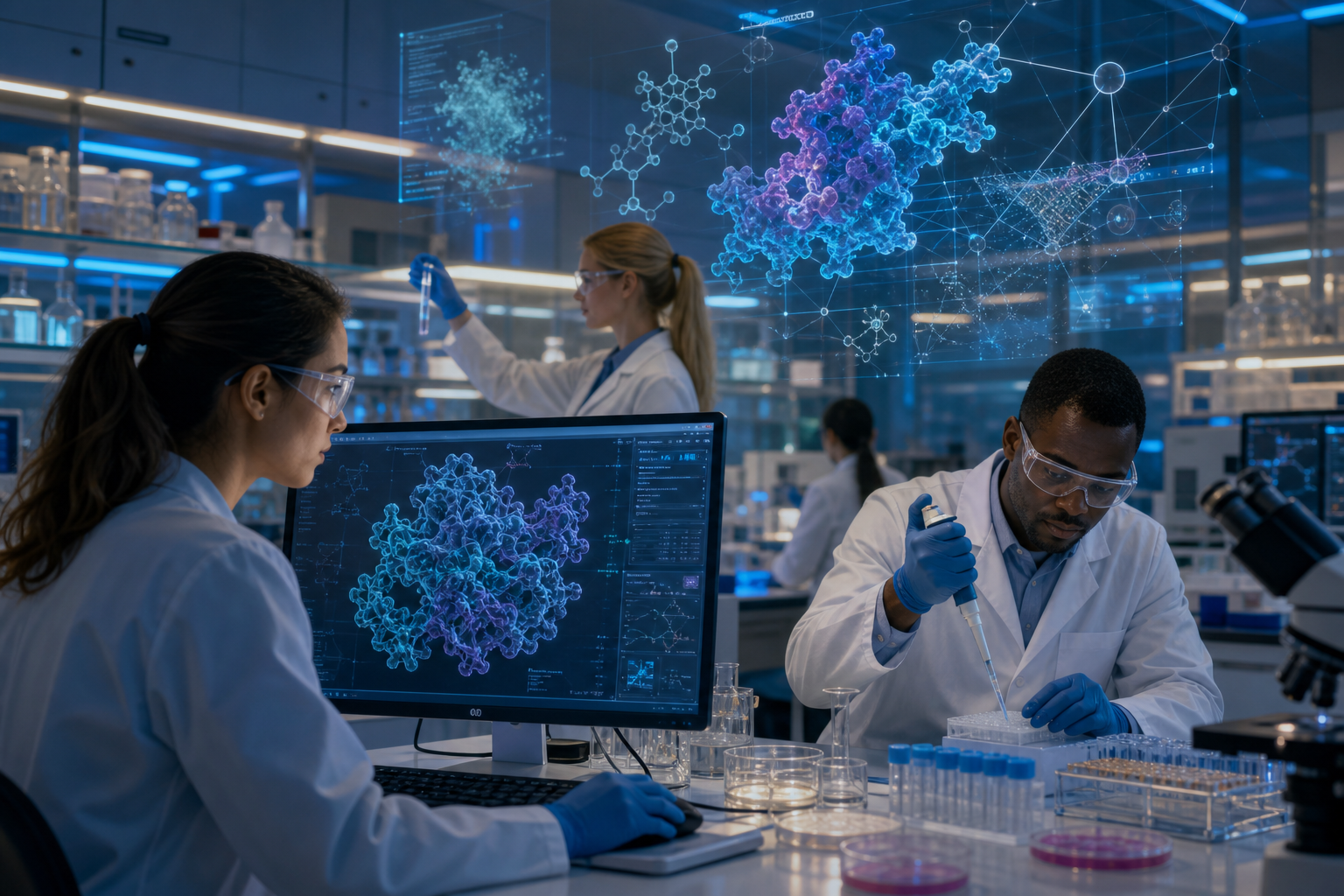
Anthropic has established a wet laboratory in the San Francisco Bay Area, according to people familiar with the company’s plans and comments from its head of life sciences, Eric Kauderer-Abrams. Unlike computer-based simulations, wet labs allow researchers to conduct physical biological experiments.

Anthropic has said that real laboratory work remains an important part of testing ideas generated through computational methods, particularly as the company explores potential solutions for diseases that have received limited attention from traditional drug developers.
The company’s expansion comes alongside new efforts to make its AI models more useful for scientists. Anthropic recently introduced a Life Sciences Verification Program, giving selected research organizations access to models with safeguards designed for a wider range of biology-related tasks. The program includes areas such as drug discovery, research biology, clinical development and manufacturing, although the company says it is still in beta and access is being expanded gradually.

Anthropic is also working directly with pharmaceutical companies. In September, Novo Nordisk announced a collaboration with Anthropic to use Claude and Claude Science for scientific research and the development of new medicines. The partnership is intended to help researchers address specific drug-discovery challenges and improve biological reasoning and research workflows. The companies have not announced specific medicines that will result from the collaboration.
Another part of Anthropic’s research involves biomolecular modeling. The company says Claude helped optimize more than 30 open-source models used by scientists to predict and design biomolecules, with the optimized systems becoming faster and more memory-efficient. Anthropic has also announced a protein-design competition involving laboratory validation, showing how computational AI work can increasingly be connected with physical experiments rather than remaining entirely digital.
The growing use of AI in drug research does not mean that computers can replace laboratories or medical researchers.
Drug development still requires extensive testing, validation and clinical evaluation before a treatment can reach patients. Anthropic’s latest moves instead point toward a model in which AI assists scientists with analysis, design and research workflows while physical experiments provide evidence about whether those ideas work in reality. If this approach continues to develop, the relationship between AI systems and life-science research could become an increasingly important part of future medical innovation.