
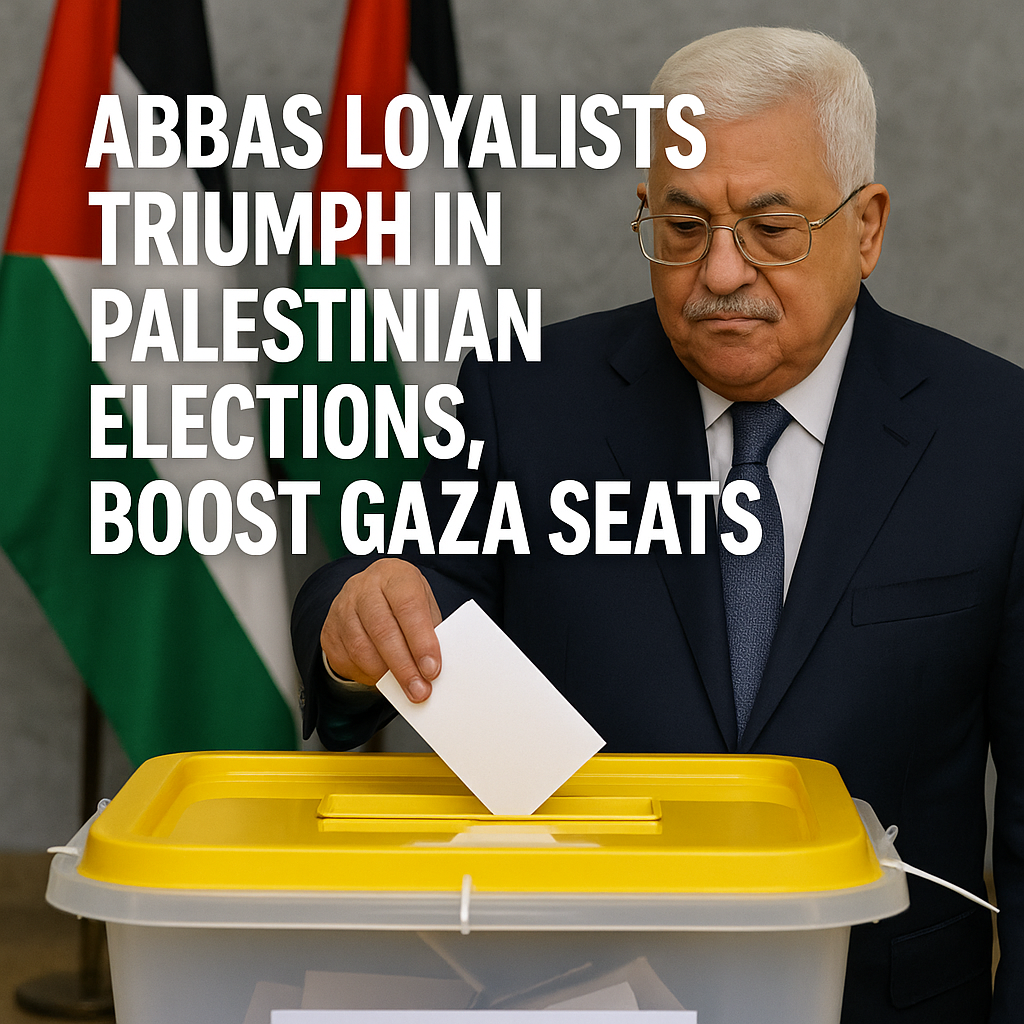
Abbas Loyalists Triumph in Palestinian Elections, Boost Gaza Seats

Abbas Loyalists Triumph in Palestinian Elections, Boost Gaza Seats
The recent Palestinian elections have resulted in a significant victory for loyalists of President Mahmoud Abbas, marking a notable shift in the political landscape. With a focus on the implications of this electoral outcome, this article examines the diverse interpretations from various media outlets and presents a nuanced view of the situation.

A Shift in Political Dynamics
The elections, which took place across the occupied West Bank and Gaza, saw Abbas’s Fatah party capitalizing on public sentiment, bolstered by promises of reform and unity. According to Al Jazeera, the electoral success in Gaza provides a crucial boost to Fatah’s influence, particularly in an area historically dominated by Hamas. Analysts suggest that this shift could create new dynamics in Palestinian governance and its implications on Israeli-Palestinian relations.


Conversely, RT presents a more cautious perspective, highlighting concerns about the legitimacy of the electoral process. The election’s conduct has drawn skepticism from critics who argue that such events often lack transparency. This suggests a complex interplay of perceptions regarding the integrity of the electoral mechanisms and how these perceptions might affect public trust in the government.


Voter Sentiment and Expectations
Upon delving deeper into the voter sentiment in these areas, it becomes evident that many Palestinians are seeking a change. Al Jazeera reports that many citizens expressed enthusiasm for the new leadership under Abbas loyalists, optimistic about potential reforms and improved governance. Issues like economic stability, public services, and national unity were at the forefront of voters’ minds.
However, dissenting voices emerged, as citizens also highlighted a degree of apathy towards electoral politics. Some voters voiced skepticism about whether the newly elected officials would be able to effect meaningful change. RT notes that public disillusionment is prevalent due to previous unfulfilled promises from leaders, which raises questions about long-term support for Abbas’s faction.
Reactions and Future Implications
The resounding victory for Abbas loyalists has evoked varying responses both locally and internationally. Supporters believe this triumph could pave the way for a more unified Palestinian stance against Israeli occupation, particularly if the new leaders prioritize dialogue with both Hamas and other factions. Al Jazeera emphasizes the potential for increased collaboration that could lead to a stronger Palestinian front.
In contrast, international observers have expressed concerns over the implications of this election for peace negotiations. The lack of participation from major factions like Hamas and the overall low electoral turnout—reported to be a mere fraction of eligible voters—raises important questions about representativity. The pessimism voiced by RT suggests that a fractured political landscape may hinder genuine negotiations with Israel, as disparate factions struggle to find common ground.
Balancing Perspectives
The divergence in viewpoints underscores the complexities facing Palestinian politics. While Abbas loyalists celebrate their electoral success, the voices of dissent remind us of the fragile state of public trust and expectations. Many believe that without addressing the internal divisions and ensuring greater transparency in governance, the current wave of support for Abbas may quickly dissipate.
Moreover, as the political landscape evolves, the potential for a unified Palestinian strategy remains tentative. Both Al Jazeera and RT reflect on the pressing need for dialogue among all factions to solidify a collective political front that can effectively address the myriad challenges facing the Palestinian people.
Conclusion: A Mixed Outlook Ahead
In summary, the electoral triumph of Abbas loyalists in the Palestinian elections marks a pivotal moment in the region’s politics. While there is optimism for change, rooted in a desire for better governance and unity, the challenges posed by past grievances and current divisions cannot be overlooked. With the eyes of the world on Palestine, the new leadership will need to navigate a complex path forward—balancing public expectations with the realities of governance in a deeply divided and historically fraught context.
As this narrative unfolds, ongoing reporting will be crucial to understand not only the immediate implications of this electoral outcome but also its far-reaching effects on the future of Palestinian and Israeli relations.















